
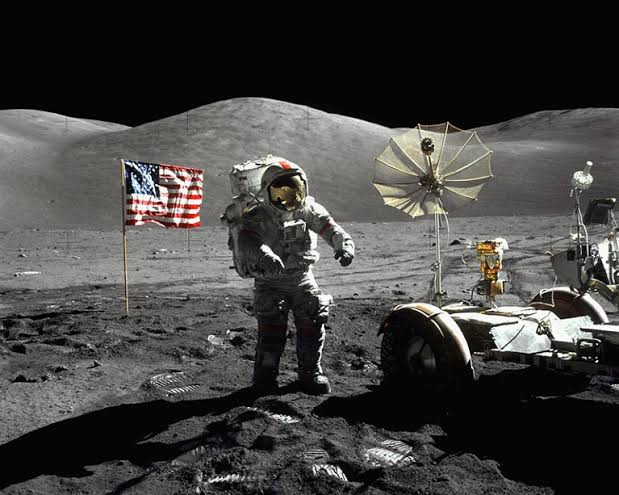
NASA’s vision of putting humans back on the Moon is evolving into something much bigger: building a permanent foothold on the lunar surface. The agency has now awarded nearly $600 million in new commercial contracts to support four robotic missions that will deliver cargo, scientific equipment, and critical infrastructure to the Moon’s south pole before the end of 2028.
The contracts represent another major step toward NASA’s long-term goal of beginning construction of a lunar base around 2029, laying the groundwork for sustained human exploration and eventually using the Moon as a launchpad for missions to Mars.
The announcement also comes at a challenging moment. Just weeks earlier, Blue Origin’s New Glenn rocket suffered a major explosion during a ground test, raising fresh questions about launch schedules and NASA’s reliance on commercial partners.
Why NASA wants a permanent Moon base
NASA’s Artemis program was initially centered around Gateway, a small space station planned to orbit the Moon. But earlier this year, the agency shifted its priorities toward building permanent infrastructure directly on the lunar surface.
That strategic pivot reflects a broader vision.
Instead of brief astronaut visits every few years, NASA wants humans to live and work on the Moon for extended periods. A permanent base would allow scientists to conduct continuous research, test technologies needed for deep-space exploration, and prepare for future missions to Mars.
The agency has pledged roughly $20 billion over the next seven years to support this transition.
Why the Moon’s south pole matters
NASA isn’t choosing the Moon’s south pole by accident.
Scientists believe permanently shadowed craters in the region contain significant deposits of frozen water. If confirmed and successfully extracted, that ice could become one of the Moon’s most valuable resources.
Potential uses include:
- Drinking water for astronauts
- Oxygen production for breathable air
- Hydrogen and oxygen for rocket fuel
- Supporting long-duration human missions
- Reducing dependence on supplies launched from Earth
Finding and mapping these ice deposits is now one of NASA’s highest priorities.
Which companies won NASA’s $600 million contracts?
Rather than relying entirely on brand-new spacecraft, NASA is expanding partnerships with companies that already have experience building lunar landers.
The latest awards are divided among three commercial firms.
Astrobotic
The Pittsburgh-based company received the largest share of funding.
Contract value: $297.9 million
Astrobotic will carry out two cargo missions using upgraded versions of its Peregrine lunar lander platform.
Intuitive Machines
The Houston company secured funding for another robotic delivery mission.
Contract value: $148.3 million
Its lander will transport scientific payloads and technology demonstrations to the Moon’s surface.
Firefly Aerospace
Firefly Aerospace received funding for a separate landing mission.
Contract value: $144.2 million
Its spacecraft will carry equipment designed to study lunar terrain and help identify future construction sites.
What these robotic missions will actually do
The robotic landers are designed to solve many of the practical challenges astronauts would face before permanent habitats can be built.
Their objectives include:
- Mapping underground water ice
- Testing lunar navigation systems
- Measuring soil strength and stability
- Studying dust movement and erosion
- Delivering scientific instruments
- Identifying suitable locations for habitats, power stations, and landing zones
Think of these missions as the Moon’s version of a construction survey before workers arrive.
NASA may send a Mars rover to the Moon
One of the most surprising announcements involved a vehicle that wasn’t originally built for lunar exploration.
NASA is considering sending PROMISE (Polar Rover for Observation, Mapping, and In-Situ Exploration), a rover prototype developed at the Jet Propulsion Laboratory.
Unlike many lunar rovers that rely on solar panels, PROMISE uses a Radioisotope Thermoelectric Generator (RTG), the same nuclear power system used by Mars rovers such as Curiosity and Perseverance.
That gives it one enormous advantage.
Why nuclear power matters on the Moon
A lunar night lasts roughly 14 Earth days, during which temperatures plunge dramatically and sunlight disappears.
Solar-powered vehicles struggle under those conditions.
An RTG-powered rover could:
- Continue operating throughout the lunar night
- Explore permanently shadowed craters
- Search directly for water ice
- Conduct scientific observations without interruption
NASA Administrator Jared “Rook” Isaacman said the agency is actively evaluating whether PROMISE can be adapted for lunar missions.
Blue Origin’s setback hasn’t derailed NASA’s plans
NASA’s latest announcement arrives shortly after Blue Origin experienced a significant setback.
During a static-fire test in May, the company’s New Glenn rocket reportedly exploded on the launch pad, damaging infrastructure and forcing engineers to reassess launch schedules.
Blue Origin remains one of NASA’s important commercial partners, particularly under the Artemis program.
Carlos García-Galán, NASA’s Moon Base program manager, acknowledged the incident but emphasized that the agency is working closely with Blue Origin while also evaluating alternative launch options to keep the overall schedule moving.
Why NASA is relying on private companies
The new contracts highlight how much NASA’s exploration strategy has changed over the past decade.
Instead of designing and operating every spacecraft itself, the agency increasingly purchases transportation services from commercial providers.
This approach offers several advantages:
- Lower development costs
- Faster mission timelines
- Competition that encourages innovation
- Multiple providers instead of relying on a single contractor
- Greater flexibility if one mission encounters delays
It’s a model similar to NASA’s Commercial Crew Program, which now transports astronauts to the International Space Station using privately built spacecraft.
Could humans really live on the Moon by 2029?
The answer depends on how one defines “live.”
NASA has not announced plans for a fully operational lunar city by 2029.
Instead, the agency hopes to begin constructing the first elements of a permanent lunar outpost, supported by robotic infrastructure and regular cargo deliveries.
Several major milestones still lie ahead:
- Successful robotic cargo missions
- Reliable heavy-lift launches
- Demonstration of water extraction technologies
- Development of lunar habitats
- Sustainable power generation
- Safe transportation systems for astronauts
If these pieces come together, astronauts could begin spending increasingly longer periods on the Moon during the next decade.
Why this matters beyond the Moon
NASA’s lunar ambitions extend well beyond scientific exploration.
The Moon is increasingly viewed as a testing ground for technologies that could eventually enable human missions to Mars.
Living on another world presents enormous engineering challenges, from generating oxygen and water to protecting astronauts from radiation and surviving extreme temperatures.
Mastering those systems just three days from Earth provides a safer environment for testing than attempting them for the first time during a months-long journey to Mars.
In that sense, the Moon is becoming less of a destination and more of a proving ground for humanity’s next era of space exploration.
TL;DR
- NASA has awarded nearly $600 million to three commercial companies for four robotic Moon missions.
- The missions will deliver cargo and scientific instruments to the Moon’s south pole by late 2028.
- NASA hopes to begin building a permanent lunar base around 2029.
- Water ice at the lunar south pole is central to the agency’s long-term strategy.
- NASA is also exploring sending a modified Mars rover prototype powered by nuclear technology to the Moon.
- Despite Blue Origin’s recent launch setback, NASA says the overall Moon Base timeline remains on track.