
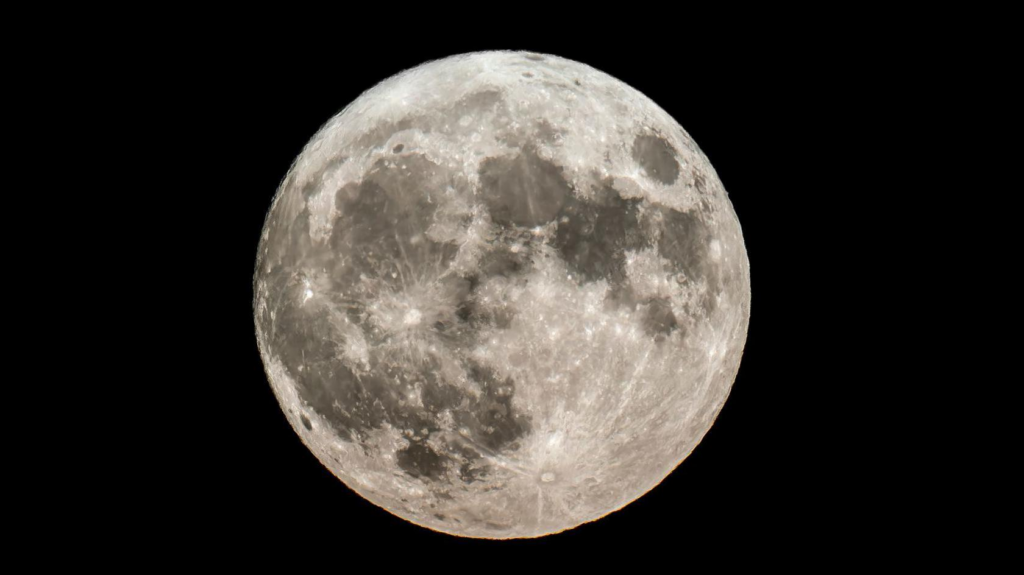
A dramatic phrase. A viral headline. And a policy that’s far more nuanced than it sounds. Recent statements tied to the White House and NASA have sparked chatter that the United States wants to “take over the Moon.” But strip away the rhetoric, and what emerges is a long-term plan for sustained lunar presence, not ownership.
Here’s what’s actually happening and why it matters.
What did the White House actually say about the Moon?
The phrase grabbing attention is simple: the goal is not just to reach the Moon, but to stay.
That message aligns with broader US space policy, which emphasizes:
- Establishing a long-term human presence on the Moon
- Expanding scientific exploration
- Strengthening economic and strategic leadership in space
This is not a sudden pivot. It builds on years of planning under the Artemis program.
According to official policy documents, the US aims to “expand human reach and American presence in space” and return astronauts to the Moon by 2028.
What is Artemis II and why is it important?
At the center of this conversation is Artemis II, NASA’s upcoming crewed mission.
Scheduled for early April 2026, Artemis II will send four astronauts on a 10-day journey around the Moon without landing.
Mission highlights
- First crewed lunar mission since 1972
- Tests life support, navigation, and deep-space systems
- Uses a “free-return trajectory” around the Moon
- Acts as a rehearsal for future landings
The crew includes:
- Reid Wiseman
- Victor Glover
- Christina Koch
- Jeremy Hansen
This mission is less about planting flags and more about proving that humans can safely travel deeper into space again.
Is the US trying to “own” the Moon?
Short answer: No. And legally, it can’t.
Under the 1967 Outer Space Treaty, no country can claim sovereignty over the Moon or any celestial body.
So what does “stay on the Moon” actually mean?
The real goal
- Build a sustained human presence
- Establish research bases
- Enable commercial activity (like mining or manufacturing)
- Create infrastructure for future Mars missions
Think of it less like claiming territory and more like setting up a permanent research station in Antarctica.
Why does the US want a long-term lunar presence?
The Moon has quietly become the next arena of global competition.
Strategic reasons
- Scientific research: Studying lunar geology and early solar system history
- Resource potential: Water ice at the lunar south pole could support fuel production
- Technology testing: Systems for Mars missions
- Geopolitics: Competing with countries like China for leadership in space
NASA’s Artemis program explicitly aims to establish an “enduring presence” on the Moon.
And yes, there’s a race element. Not quite Cold War 2.0, but definitely a high-stakes chessboard in orbit.
What comes after Artemis II?
Artemis II is just the opening move.
Planned roadmap
- Artemis III (expected 2027–2028): First human lunar landing of the program
- Artemis IV (2028): Expanded missions and infrastructure
- Post-2028: Regular missions and early base development
NASA is also exploring:
- Lunar bases instead of orbiting stations
- Nuclear power systems on the Moon
- Increased mission frequency with commercial partners
The long-term vision? A continuous human foothold on the Moon.
How serious is this plan?
Very.
NASA’s leadership has openly stated that the US intends not just to visit the Moon again, but to build a lasting presence.
Plans include:
- Annual or near-annual missions
- Permanent or semi-permanent infrastructure
- Collaboration with private companies like SpaceX and Blue Origin
- International partnerships through agreements like the Artemis Accords
“We’re going to stay,” NASA officials have reiterated in multiple briefings.
That’s not a slogan. It’s a strategy.
Why the “ominous” framing is misleading
Headlines suggesting a “Moon takeover” play on geopolitical tensions and familiar Earth-based narratives.
But space doesn’t work like Earth.
Key differences
- No land ownership rights
- Heavy reliance on international cooperation
- Shared scientific goals
- Strict legal frameworks governing activity
The real story is less about domination and more about presence, influence, and capability.
Still, perception matters. As more countries and companies eye the Moon, even neutral actions can be interpreted as competitive moves.
What this means for the future of space exploration
The shift from “flags and footprints” to “bases and permanence” marks a turning point.
What to watch
- Who builds the first long-term lunar habitat
- How resources like lunar ice are regulated
- Whether global cooperation holds or fractures
- How quickly missions scale up
TL;DR
- The US is not planning to “take over” the Moon in a legal sense
- The goal is to establish a long-term human presence through NASA’s Artemis program
- Artemis II (April 2026) is a key step, sending astronauts around the Moon
- Future missions aim to build infrastructure and eventually a lunar base
- The move reflects growing global competition and scientific ambition in space