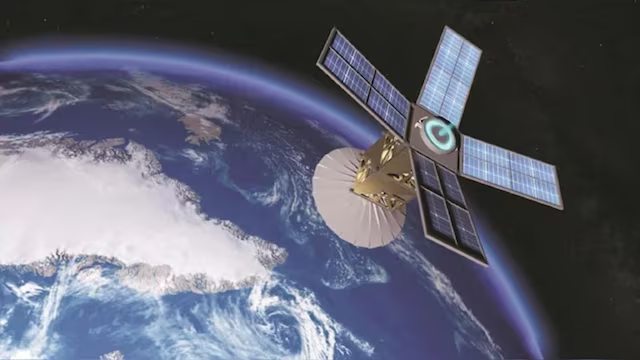
A defunct NASA satellite from the 1960s just sent an unexpected radio signal, raising questions about space debris, electrostatic phenomena, and the future of satellite tracking.
The Mysterious Signal From a Ghost Satellite
On June 13, 2025, astronomers at the Australian Square Kilometre Array Pathfinder (ASKAP) detected an unusual radio pulse, brief but incredibly intense. At first, researchers thought they had discovered a new pulsar or another deep-space phenomenon. But further analysis revealed something far stranger: the signal came from NASA’s Relay 2 satellite, a relic from 1964 that had been dormant for six decades.
“This was an incredibly powerful radio pulse that vastly outshone everything else in the sky for a very short amount of time,” said Clancy James, an astrophysicist at Curtin University.
The satellite, part of NASA’s early communications relay program, was last operational in 1965 and presumed dead by 1967. So why did it suddenly transmit a signal after all these years?
What Caused the Signal?
Scientists quickly ruled out the possibility that Relay 2 had somehow “woken up.” Instead, they believe the burst was triggered by an external event, such as:
- Electrostatic discharge (a buildup and sudden release of static electricity in space).
- A micrometeorite impact shaking loose residual energy in the satellite’s components.
- Collision with space debris, though no evidence of fragmentation was found.
Karen Aplin, a physicist at the University of Bristol, noted that this phenomenon could be useful for tracking electrostatic discharges—a growing concern as more small satellites fill Earth’s orbit.
“In a world with increasing space debris and small, low-cost satellites, this detection may offer a new way to evaluate electrostatic events in space,” Aplin explained.
Why This Discovery Matters
1. A New Way to Monitor Space Junk
With over 27,000 pieces of trackable orbital debris (NASA, 2024), scientists need better methods to detect and analyze inactive satellites. This event suggests that radio telescopes could help track unexpected energy releases from defunct spacecraft.
2. Implications for Modern Satellites
Many modern satellites, especially small CubeSats, lack robust shielding against electrostatic discharges. Studying events like Relay 2’s signal could improve future satellite designs.
3. A Reminder of Early Space History
Relay 2 was a pioneer in global communications, helping transmit early TV signals and telemetry data. Its sudden reappearance is a fascinating nod to the early days of space exploration.
What’s Next?
The findings, set to be published in The Astrophysical Journal, have sparked discussions among astronomers and engineers. Possible next steps include:
- Targeted observations of Relay 2 to see if the event repeats.
- Re-examining old satellites for similar unexplained signals.
- Developing new detection methods for space debris interactions.