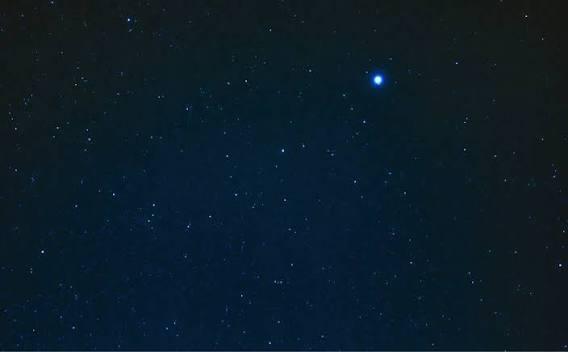
The Suhail star, better known to astronomers as Canopus, is set to return to the pre-dawn skies over the United Arab Emirates around August 24, 2026. For centuries, its first appearance has been used across the Arabian Peninsula as a seasonal marker, traditionally signaling that the most intense summer heat is beginning to ease.
But the star does not actually cause temperatures to fall.
Suhail’s appearance coincides with a broader seasonal shift driven by Earth’s changing position relative to the Sun. As daylight shortens and the Sun’s angle gradually changes, nights eventually become cooler and humidity and weather patterns begin to shift.
What is the Suhail star?
Suhail is the Arabic name commonly used for Canopus, the exceptionally bright star in the constellation Carina.
Canopus is one of the brightest stars visible from Earth and is located roughly 310 light-years away. In the Arabian Peninsula, however, its importance goes far beyond its brightness.
For generations, people have watched for the star’s annual appearance as a natural calendar. Its return near the end of August became associated with the gradual transition away from the harshest part of summer.
That tradition is still strong in the UAE today.
When will Suhail rise in the UAE in 2026?
According to the information provided by Emirates Astronomy Society chairman Ibrahim Al Jarwan, Suhail is expected to become visible around August 24 this year.
The exact first visible date can vary depending on location and atmospheric conditions. In previous observations, the Suhail star has been detected earlier in the far south of the UAE and later in northern areas because of the geometry of its rising and the effects of humidity, dust and atmospheric clarity.
The best chance of spotting it comes shortly before sunrise, when Canopus rises low over the southeastern horizon.
For practical viewing, skywatchers should look toward the southeast roughly 30 to 50 minutes before sunrise, ideally from a location with a clear horizon and limited light pollution.
How can you spot Suhail in the UAE?
Finding Canopus can be tricky during its first appearances because it remains close to the horizon.
The best conditions are:
- A clear southeastern horizon
- Minimal buildings or mountains blocking the view
- Low light pollution
- A viewing location with an unobstructed horizon
- Looking shortly before sunrise
The Suhail star may initially appear only briefly before dawn, making timing important.
Historical observations in the UAE have shown that atmospheric conditions can make the difference between spotting Suhail with the naked eye and needing binoculars or a telescope.
A useful visual here would be a simple sky map showing Canopus’s position low in the southeastern sky before sunrise, with the viewing direction marked for UAE observers.
Does Suhail star actually make the UAE cooler?
No. The star itself has no physical influence on the UAE’s weather.
What people have observed for centuries is a correlation between the star’s seasonal appearance and the gradual change in weather conditions.
As summer progresses, Earth’s seasonal cycle changes the amount and angle of sunlight reaching the region. Daylight gradually decreases, the Sun’s position shifts and nighttime temperatures can begin to moderate.
Suhail is therefore better understood as a celestial calendar marker than a weather-maker. An astronomer quoted by Gulf News described it as effectively a “cosmic clock” whose appearance coincides with natural seasonal changes rather than causing them.
What weather changes traditionally follow Suhail?
The appearance of Suhail has traditionally been associated with several changes in the UAE’s weather and environment.
These include:
- Gradually cooler nighttime temperatures
- Higher humidity
- Early morning fog in some areas
- Changing wind patterns
- More moderate temperatures inland
- Increasing cloud development around the Hajar Mountains
- A gradual transition toward the autumn season
Al Jarwan has previously linked Suhail’s appearance with a fall in temperatures, higher humidity and south-easterly winds affecting parts of the UAE and Oman.
The important word is “gradual.”
The arrival of Canopus does not mean the UAE’s extreme heat will suddenly disappear on August 24.
Why is Suhail important in Arab culture?
Long before modern weather forecasting, people across the Arabian Peninsula relied on observations of the sky to organize aspects of daily life.
The seasonal appearance of Suhail helped communities recognize changes in the agricultural, fishing and travel calendar. Its arrival became embedded in regional sayings, poetry and traditional knowledge.
That gives the star an unusual status: it is simultaneously an astronomical object and a cultural time marker.
Historical traditions associated the appearance of Suhail with changes in fishing seasons, farming conditions, winds and rainfall patterns.
For many people in the Gulf, therefore, spotting the star is less about astronomy alone and more about recognizing the arrival of a familiar seasonal milestone.
Why does Suhail appear around late August?
The timing is connected to Earth’s orbit around the Sun and the changing position of the night sky throughout the year.
Stars appear to rise at different times as Earth moves around its orbit. A star that is difficult to see before dawn during one part of the year can become visible during the early morning months later.
Canopus is particularly notable because of its low position in the sky from the UAE. Its visibility therefore depends not only on the season but also on geography and atmospheric conditions.
This explains why people in different parts of the UAE may report seeing Suhail on different dates.
Is August 24 the same date everywhere in the UAE?
Not necessarily.
The commonly cited August 24 date is a useful reference for the UAE as a whole, but actual naked-eye visibility can vary according to location.
Previous observations cited by Al Jarwan indicate that southern parts of the country can potentially see the star earlier, while northern areas may have to wait longer.
Atmospheric conditions also matter.
Dust, humidity and haze near the horizon can make a bright star surprisingly difficult to see, even when astronomical calculations indicate that it has already risen.
This is why an astronomically calculated “first rising” and the first time an observer actually sees the star are not always the same thing.
How long does the Suhail season last?
Traditional descriptions vary, but Suhail’s appearance is generally treated as the beginning of a broader seasonal transition lasting several weeks.
The supplied source describes the traditional Suhail season as lasting about 53 days, while other regional accounts describe periods of roughly 40 to 52 days associated with seasonal transitions after the star’s appearance.
These labels reflect traditional calendars rather than a single universally defined meteorological season.
The broader change continues well beyond the first morning on which Canopus becomes visible.
Why is Suhail difficult to see in cities?
The main problem is not the star’s brightness. It is its position.
When Canopus first becomes visible in the UAE, it appears extremely low in the southeastern sky. Buildings, hills, trees, haze and atmospheric moisture can all obstruct it.
Urban light pollution adds another layer of difficulty by brightening the sky close to the horizon.
This is why desert areas and elevated locations with open horizons are generally better for spotting Suhail.
Previous UAE observations have successfully recorded the star from desert and mountain locations, including Jebel Hafeet and other areas with clear views toward the southeast.
What does Suhail mean for UAE weather in 2026?
Suhail’s appearance is a sign that the seasonal shift is underway, not a promise that the heat will immediately disappear.
The UAE can continue to experience very high temperatures after August 24. Instead, the transition tends to emerge gradually through changes in nighttime temperatures, humidity, winds and the broader pattern of weather.
Current UAE seasonal outlooks also point to increasing humidity and changes in wind and cloud patterns during the latter part of summer.
So the traditional saying that Suhail “breaks” the summer heat is best understood as a marker of a transition rather than a precise meteorological event.
Why does the Suhail star still matter today?
Modern UAE residents have access to satellites, weather stations, numerical forecasts and smartphone apps. Yet Suhail still attracts attention every year.
That persistence reflects the unusual relationship between astronomy and culture.
A star more than 300 light-years away has become a familiar annual signal for millions of people because generations before modern meteorology noticed that its appearance coincided with the changing season.
The science explains why the weather changes.
The tradition explains why people still look up for the star.
Both can coexist without suggesting that Canopus itself controls the weather.
The bigger story behind Suhail
The return of Suhail is not an astronomical switch that turns off summer.
It is a visible marker of the Earth’s seasonal cycle, wrapped in centuries of Arabian history and observation.
Around August 24, UAE residents who wake before sunrise and have a clear southeastern horizon may be able to catch the bright point of Canopus emerging above the horizon.
The heat will not vanish overnight. But as the weeks progress, the days will slowly shorten, nights can become more comfortable and the region will edge toward its cooler season.
That is the real significance of Suhail: not that the star changes the weather, but that its arrival has long told people to start watching for the weather to change.