Former footballer Rade Bogdanovic has apologized after making racist comments about Black players during a television broadcast of the FIFA World Cup 2026 match between Belgium and Iran. The remarks, made while Bogdanovic was appearing as a guest analyst on Serbian broadcaster RTS, sparked immediate criticism and prompted an apology from both the former striker and the network.
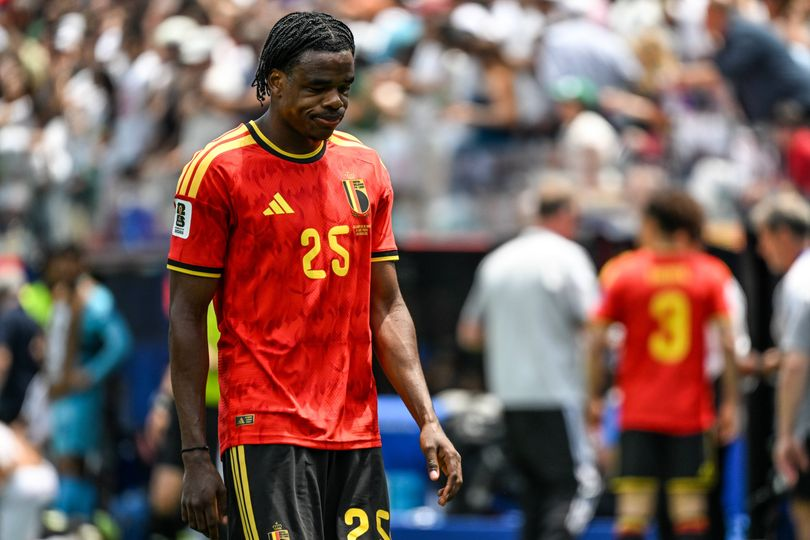
The controversy emerged during Belgium’s group-stage clash against Iran after Belgian defender Nathan Ngoy was shown a red card. While discussing the incident, Bogdanovic made comments linking concentration and performance levels to race, drawing widespread backlash from viewers and football observers.
The incident has reignited discussions about racism in football broadcasting and the responsibilities of commentators covering major international tournaments.
What did Rade Bogdanovic say?
The controversy began during coverage of Belgium’s FIFA World Cup 2026 group-stage match against Iran.
While discussing the red card shown to Belgian defender Nathan Ngoy, Bogdanovic suggested that Black players generally struggle to maintain concentration throughout an entire match.
The comments immediately drew criticism because they relied on racial stereotypes rather than individual analysis of the player’s performance.
Bogdanovic’s co-host reportedly challenged the remarks during the broadcast, but the former striker continued defending his position before the segment concluded.
Who is Rade Bogdanovic?
Rade Bogdanovic is a former Serbian footballer who played as a striker during the 1990s and early 2000s.
Throughout his professional career, he represented several clubs across Europe, including Spanish giants Atlético Madrid and German side Werder Bremen.
Following retirement, Bogdanovic transitioned into media work and has frequently appeared as a football analyst and commentator on Serbian television.
How did Rade Bogdanovic respond?
After the backlash intensified, Bogdanovic issued a public apology.
In a statement reported by multiple media outlets, he expressed regret for his comments and apologized to anyone offended by the remarks.
The apology came amid growing criticism on social media and calls for broadcasters to address discriminatory language in sports coverage.
While apologizing, Bogdanovic did not provide a detailed explanation for why he made the comments.
What did RTS say?
Serbian public broadcaster RTS also released a statement following the controversy.
The network apologized for the remarks aired during its program and emphasized that Bogdanovic is not a direct employee of the broadcaster.
RTS acknowledged that comments targeting people based on race were unacceptable and said it regretted the incident.
The broadcaster’s response was aimed at distancing itself from the views expressed during the live discussion.
Why are the comments considered racist?
Sports organizations and anti-discrimination groups have long argued that stereotypes linking athletic ability, intelligence, concentration, or temperament to race are harmful and unsupported by evidence.
Such comments are considered discriminatory because they attribute characteristics to individuals based solely on racial identity rather than personal performance.
Football authorities worldwide have spent years promoting anti-racism campaigns designed to combat both overt and subtle forms of discrimination within the sport.
The controversy involving Rade Bogdanovic highlights how debates about racism in football now extend beyond players and fans to include media personalities and commentators.
How has football responded to racism in recent years?
Football’s governing bodies have significantly increased efforts to tackle discrimination.
Initiatives introduced by organizations such as FIFA and UEFA include:
- Anti-racism awareness campaigns.
- Stricter sanctions for discriminatory behavior.
- Reporting systems for players and officials.
- Educational programs for clubs and broadcasters.
- Match suspensions in severe cases of racist abuse.
Despite these efforts, incidents involving players, supporters, and media figures continue to occur across different levels of the sport.
How did Belgium perform against Iran?
The match itself ended in a goalless draw.
The result left Belgium facing a difficult path toward qualification from Group G, with the team still searching for its first victory of the tournament.
After two matches, Belgium had accumulated only two points from consecutive draws against Egypt and Iran.
The team now faces a crucial fixture against New Zealand, where a win could significantly improve its chances of advancing to the knockout stages.
Why this incident matters
Football’s global reach gives commentators and broadcasters enormous influence over how the game is discussed and understood.
Incidents such as this serve as reminders that language used during live broadcasts carries significant weight, particularly during major international tournaments watched by millions.
While Bogdanovic has apologized and RTS has acknowledged the controversy, the episode has renewed conversations about accountability, representation, and the ongoing effort to eliminate racial stereotypes from football culture.
TL;DR
- Former footballer Rade Bogdanovic faced criticism for comments about Black footballers during Belgium’s match against Iran.
- The remarks were made while he was working as a guest analyst on Serbian broadcaster RTS.
- Bogdanovic later issued a public apology.
- RTS also apologized and clarified that Bogdanovic is not an employee of the broadcaster.
- The incident has renewed debate about racism and discrimination in football media coverage.