
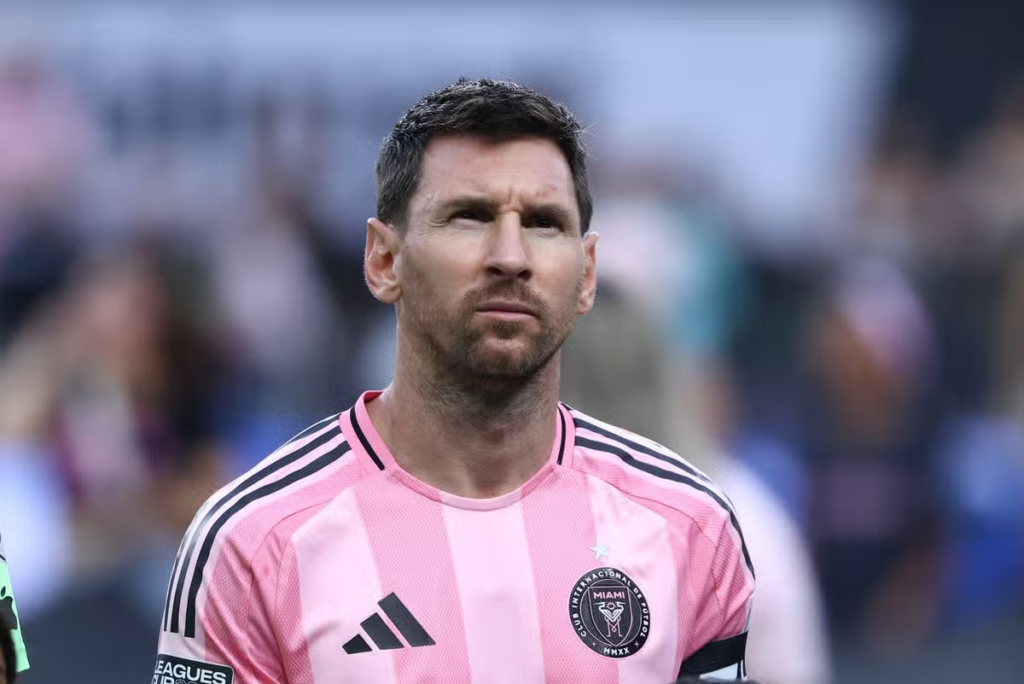
Lionel Messi has raised fresh questions about his football future after the death of his father, Jorge Messi. In an emotional Instagram post, the Argentina star said he is unsure whether he can continue playing for much longer, revealing how deeply the loss has affected him.
The comments come after an emotionally difficult 2026 FIFA World Cup campaign for Messi, who entered the tournament without the father who had been by his side throughout much of his career. At 39, the Argentina captain is already in the final chapter of his playing career, making his latest remarks especially significant.
Messi has not formally announced his retirement. His comments instead reflect a player grieving a profound personal loss while reconsidering what football means to him after decades in the sport.
Is Lionel Messi retiring from football?
Not yet. Messi’s comments do not amount to a formal retirement announcement, but they make clear that his future is uncertain.
In his Instagram tribute to his father, Messi wrote that he did not know how to move forward and questioned whether he would continue playing football for much longer.
“I only played football, and now I have quite a few doubts about whether I’m going to keep doing it for much longer,” Messi wrote.
The wording is significant because football has been the defining constant of Messi’s life. He began playing as a child in Rosario before moving to Spain and becoming one of the greatest players in the sport’s history.
At 39, the question is no longer simply whether his body can continue competing. Messi’s comments suggest that his father’s death has also forced him to think about whether he still wants the demands of professional football without the person who was there from the beginning.
Why was Jorge Messi so important to Lionel Messi’s career?
Jorge Messi was more than the father of a famous footballer. He was a central figure in his son’s career from its earliest stages.
Messi’s journey began in Rosario, Argentina, where Jorge supported his son’s ambitions before the family eventually moved to Spain as Messi pursued an opportunity with Barcelona.
That history makes the timing of Jorge’s death particularly painful. Messi’s father had remained a constant presence as his son progressed from a promising young player to a global superstar.
For Messi, football was therefore closely connected to his relationship with his father. Losing that connection during the final stages of his career has added an intensely personal dimension to his retirement decision.
How did Jorge Messi’s death affect the 2026 World Cup?
The 2026 World Cup was reportedly the first major tournament Messi played without his father by his side.
Messi recalled that Jorge had repeatedly encouraged him to play in the tournament. His father became seriously ill only days before the competition began, according to Messi’s tribute.
The emotional weight became particularly apparent during Argentina’s opening match against Algeria. Messi scored the opening goal of his hat-trick but was visibly emotional afterward.
He later described those emotions as being connected to something beyond football.
The tournament also proved physically demanding. Messi said he struggled to push himself beyond his physical limits and acknowledged that he did not feel well during the competition.
Argentina ultimately failed to retain the World Cup, but Messi said his father had still been right to encourage him to participate.
What did Messi say about playing without his father?
Messi’s tribute focused heavily on the experience of competing while knowing his father was no longer there to communicate with him after matches.
He recalled waiting for messages from Jorge after games, only to realize that those messages would no longer come.
“It was the first time you weren’t going to be at a tournament,” Messi wrote.
That detail offers a glimpse into why the loss has affected Messi beyond the normal grief associated with losing a parent. For much of his sporting life, the routine of football was intertwined with his father’s presence.
The absence became particularly stark during the World Cup, when Messi said he would finish a match and instinctively hope for a message from Jorge.
That realisation appears to have made the loss feel especially immediate.
How old is Lionel Messi, and how much longer could he play?
Messi is 39, an age at which most elite footballers have already retired.
His longevity is extraordinary. He made his senior Argentina debut in 2005 and has spent more than two decades competing at the highest level.
His career has also included:
- Multiple Ballon d’Or awards.
- Four UEFA Champions League titles with Barcelona.
- A Copa América title with Argentina.
- The 2022 FIFA World Cup.
- More than 200 appearances for Argentina, according to the supplied report.
- A late-career move to Major League Soccer with Inter Miami.
Messi has repeatedly adapted his game as he has aged. He no longer needs to play every minute at the same physical intensity he did during his Barcelona peak, but professional football still demands substantial travel, training and recovery.
His father’s death adds a completely different consideration to those physical realities.
Why Messi’s retirement decision is different this time
Messi has faced retirement questions before.
After Argentina lost the 2016 Copa América final, he briefly announced his international retirement before eventually returning to the national team. He later helped Argentina win the Copa América in 2021 and the World Cup in 2022.
This time, however, the uncertainty is tied to grief rather than a single sporting disappointment.
His latest comments do not suggest that he is walking away because he has lost his competitive drive. Instead, they show someone confronting the absence of a person who accompanied him through almost his entire football journey.
That distinction matters.
A player can be physically capable of continuing while emotionally questioning whether the same career still has meaning.
What happens next for Messi?
For now, there is no confirmed retirement date.
Messi remains associated with Inter Miami, and any decision about his club career or future with Argentina will ultimately depend on what he decides after taking time to process his father’s death.
His Instagram message sounded less like a farewell to football than an admission that he does not yet know what comes next.
That uncertainty is important to preserve rather than turning his grief into a definitive retirement headline.
Messi has spent virtually his entire life moving from one football challenge to another. The death of his father has left him facing a different kind of question: what does the next chapter look like when the person who helped him begin the journey is no longer there to see it?
For a player whose career has been defined by extraordinary certainty on the field, the answer may take time.
TL;DR
- Lionel Messi has not officially announced his retirement.
- The 39-year-old said he is uncertain about continuing his football career after his father’s death.
- Messi described Jorge Messi as someone who had been beside him from the beginning of his career.
- Jorge reportedly died in Rosario last week after a long illness.
- Messi said the 2026 World Cup was the first tournament where his father was not present.
- He said he struggled physically during the tournament but was glad he followed his father’s advice to play.
- His comments point to uncertainty about his future, but they should not be treated as a confirmed retirement announcement.