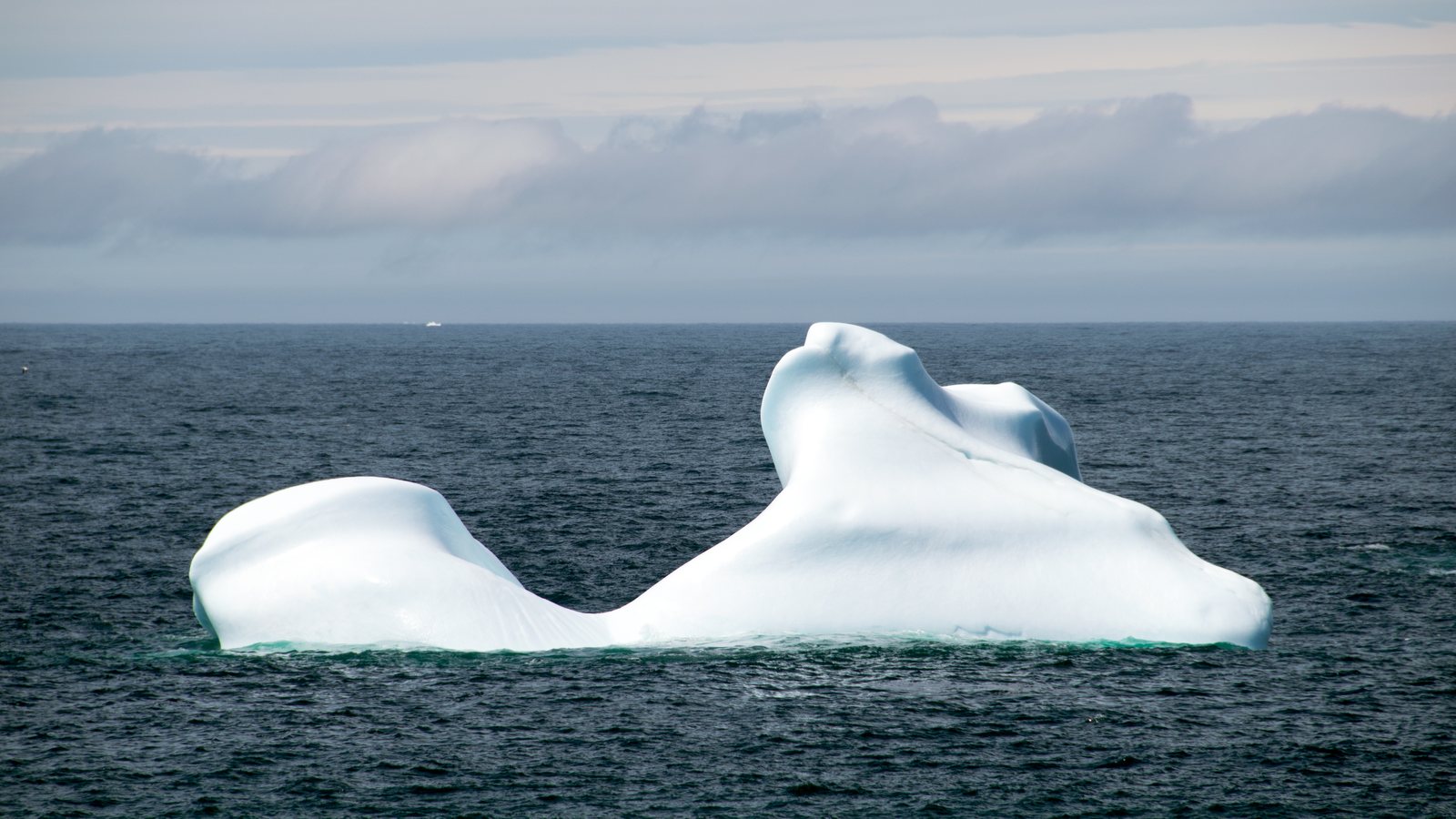
Canadian high diver Molly Carlson backflipped off a roughly 15-metre (49-foot) iceberg near Twillingate, Newfoundland, on June 11. Red Bull, which filmed the stunt, bills her as the first woman to dive from a free-standing iceberg.
One detail from her interviews shows the danger. The iceberg Carlson dove from had turned over earlier the same day. Rolling is the main hazard of any iceberg. It is also why a lifesaving group now warns viewers not to copy her.
Who Molly Carlson is, and what Red Bull is claiming
Carlson, 28, is from Thunder Bay, Ontario. She is one of the top women in the Red Bull Cliff Diving World Series. She finished second overall each year from 2022 to 2024.
She also won world championship silver in high diving in 2023 and 2024. On the circuit she dives from 21-metre platforms, The Canadian Press reported in a story carried by CBC Sports.
The “first woman” line comes from Red Bull’s own account. It ran Oct. 22 with a 30-minute YouTube film, Red Bull Iceberg Dive. CBC and The Canadian Press repeat it.
We found no independent body that tracks iceberg dives. So treat it as the sponsor’s claim, not a ratified record.
She is not the first person to do it. Colombian cliff diver Orlando Duque dove off an iceberg in Antarctica in 2018. Carlson told The Canadian Press his dive partly inspired hers.
The iceberg Carlson used had rolled over earlier that day
Finding an iceberg was the hard part. The team needed what Carlson called a “unicorn” berg. It had to be stable enough to climb, with a shelf to dive from.
“It needs to have good boat access, a sheer edge to dive from, with a clear landing zone, and a climb that is actually doable for me without putting Will at risk,” Carlson says in Red Bull’s account.
The team planned a seven-day trip, she told CBC Sports. Scouting started by helicopter, then the team approached candidates by boat. At that point they could reject a berg, or watch it collapse in front of them.
They had ruled out their eventual pick earlier that day. It sat upside down, with nowhere to jump from. When the team came back later, it had done a “180, literally this unicorn iceberg flipped upside down. The perfect natural 15-metre platform,” Carlson told CBC News.
She told The Canadian Press the go decision came late. “The whole time we were in Newfoundland, we didn’t know until like 30 minutes before if it was even possible.”
Why icebergs roll without warning
Canadian ice climber Will Gadd, a fellow Red Bull athlete, taught Carlson to climb ice in Canmore, Alberta. He then rigged a rope on the berg and led her up. “The biggest hazard is that icebergs can roll over,” Gadd said in Red Bull’s account. “When they roll over, it’s super violent.”
Lab work at New York University helps explain why. Researchers there melted blocks of ice in a tank and watched them capsize again and again. The 2025 study ran in Physical Review Fluids.
Melting “primarily happens along the wetted surface of the ice below the waterline,” senior author Leif Ristroph said in NYU’s release. The tip above water barely changes.
That leaves the ice “top heavy so that it loses gravitational stability in the water and rotates over,” Ristroph said. In the tank it happened 10 to 15 times in 30 minutes. A real berg is far larger and slower, but the physics is the same. Unseen melting below the waterline shifts the balance until the whole thing flips.
That is exactly what Carlson’s berg had done hours before she climbed it. “Icebergs are incredibly dangerous,” she said in Red Bull’s account. “They can split, collapse or roll without warning.”
What 49 feet into 1 C water actually means
The Canadian Press put the berg at about 14 metres. Red Bull and Carlson put it close to 15. For scale, ice must stand more than 16 feet above the sea to count as an iceberg, says NOAA.
Its height came from drones and wasn’t precise, which matters in a sport built on exact platforms. So she adjusted in flight. “I really had to use my eyes in the air to be able to adjust how fast or slow I go,” she said.
Basic physics gives a sense of the dive. By our calculation, a 14- to 15-metre fall lasts about 1.7 seconds. Ignoring air resistance, it ends at roughly 37 to 38 mph. Carlson remembered it differently. “I felt like I was in the air for like 10 minutes,” she said, calling it “the dive of my dreams.”
The water was about 1 C (34 F), according to The Canadian Press. She wore a wetsuit, and then had to swim clear of the berg at once. As Gadd climbed down afterwards, a section of ice fell into the ocean, according to CBC’s account of the film.
“Everyone was safe. But if we were on the iceberg five minutes longer it could have been a whole new situation,” Carlson told CBC News.
A lifesaving group’s warning: don’t try this
Stephanie Bakalar, spokesperson for the Lifesaving Society Ontario, told CBC News the stunt should not inspire copycats.
“This is definitely a ‘don’t try this at home’ situation. She’s a professional. Red Bull’s got all kinds of money to mitigate the risks and try to make this stunt as safe as possible. No one else should be doing this,” she said.
Bakalar listed the risks of cold-water shock, rough water and unstable ice. Carlson had boats and safety gear on standby. Red Bull says specialists from Ocean Quest and Crosby Marine assessed conditions. The Canadian Coast Guard helped with safety planning.
Carlson’s backdrop is itself changing. Most icebergs that reach Newfoundland’s “Iceberg Alley” calve from glaciers on Greenland’s west coast. They are usually one to two years old, ocean scientist Frédéric Cyr wrote in The Conversation. Counts range from zero to more than 2,000 a year, and the warmest years bring almost none, he wrote.
Greenland’s glaciers keep calving, as with the 76-square-km iceberg we reported on in September. An iceberg sank the Titanic just south of the Grand Banks of Newfoundland in 1912, Cyr noted. A 2024 expedition found that wreck decaying faster.
Carlson says the stunt was about fear more than records. In the film, she says: “I’m doing this for all the people that might be scared to show what’s under the surface.” Bakalar’s advice for everyone else is simpler: “Again, beautiful to look at, but keep your safe distance.”