
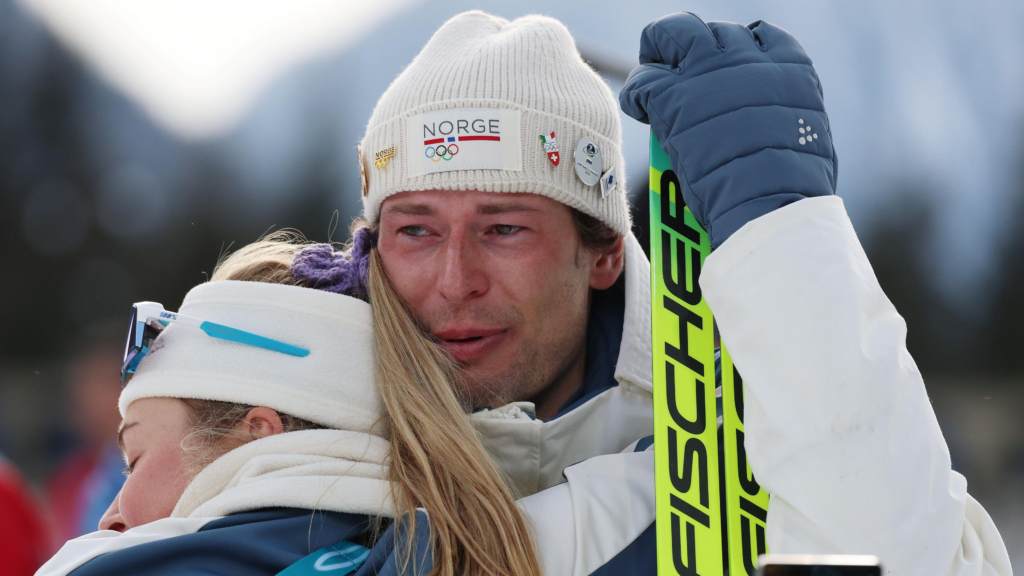
The 2026 Winter Games produced plenty of athletic drama. But the most talked-about moment so far was not a photo finish, a protest, or a judging controversy. It was an Olympic medal interview shock.
Minutes after winning bronze in the men’s 20 km biathlon, Norwegian star Sturla Holm Lægreid used his post-race interview to publicly admit he cheated on his girlfriend and plead for forgiveness. The confession ricocheted across sports media and social platforms within hours, reframing a medal ceremony into a global relationship disclosure.
The moment raises a bigger question: why are athletes increasingly turning competition stages into personal confession booths, and what does that do to the meaning of victory?
What happened during the Olympic medal interview shock?
Holm Lægreid, a six-time biathlon world champion and 2022 Olympic relay gold medalist, had just secured his first medal of the Milano Cortina Games. Instead of discussing race strategy, he spoke about regret.
He told Norwegian broadcaster NRK that he had cheated three months earlier on “the love of my life” and revealed he confessed to her a week before the race. The relationship ended.
He said the past week had been “the worst of my life” and that sports took a back seat emotionally. His stated goal was simple: honesty as a final attempt to win her back.
Key details from the interview
- He met the woman roughly six months earlier
- He revealed the betrayal to her shortly before the Olympics
- She ended the relationship after learning the truth
- He hoped public transparency would demonstrate sincerity
- He accepted public backlash as a consequence
He even joked about his intelligence, noting he belongs to Mensa but still “does stupid stuff.”
The contrast between Olympic triumph and personal remorse made the clip instantly viral.
Why did this moment go viral?
Sports thrive on narrative. Fans don’t just watch performances; they watch character arcs. Lægreid unintentionally created one in real time.
1. The violation of sports interview expectations
Post-race interviews typically follow a script:
- How did the race feel?
- What was the strategy?
- Who do you thank?
Instead, viewers got a public apology and romantic appeal. That unexpected pivot triggered curiosity and shareability.
A Swedish journalist called it the strangest medal interview he had seen. Social media users labeled it bizarre but compelling.
2. Emotional authenticity beats media training
Modern athletes are coached to stay safe:
- thank sponsors
- praise teammates
- avoid controversy
Holm Lægreid did the opposite. Raw vulnerability cuts through rehearsed messaging, especially at global events where athletes often appear filtered.
3. The Olympics magnify everything
The Olympic stage multiplies scale:
| Context | Audience size |
|---|---|
| League match interview | national |
| World championship | international niche |
| Olympic interview | global mainstream |
A personal confession at the Olympics becomes cultural commentary, not just sports news.
How athletes’ personal lives increasingly shape sports coverage
The Olympic medal interview shock fits a broader trend: athletes as reality-level public figures.
The shift from performance to persona
Historically, athletes were defined by results. Now audiences follow:
- relationships
- mental health
- political views
- personal struggles
Examples across sports show emotional narratives often drive more engagement than competition outcomes.
Why media encourage this
Modern coverage rewards:
- shareable clips
- emotional storytelling
- parasocial connection
A heartfelt confession travels faster than a technical race breakdown because it’s universally relatable.
Did the confession overshadow the competition?
Yes, but not completely. The race still mattered to specialists. However, public memory now ties the event to the confession.
Gold medalist Johan-Olav Botn even had to clarify his own victory amid the discussion. Holm Lægreid apologized during interviews for drawing attention away from the winner.
This illustrates a media reality: narratives compete for airtime, and personal drama often wins.
Why do athletes take emotional risks in public moments
Athletes operate under extreme psychological pressure. The Olympics compress years of preparation into minutes. Emotional walls crack easily.
Psychological factors at play
Emotional release after peak stress
Winning triggers adrenaline drop and reflection. That often leads to unexpected honesty.
Identity conflict
Athletes balance two identities:
- competitor
- person with private life
Victory can amplify guilt rather than silence it.
The illusion of a decisive moment
Some believe a grand gesture matches the scale of their feelings. An Olympic microphone becomes symbolic.
Sports psychologists often note that athletes associate milestones with personal turning points. This interview looked like one.
How teammates’ and public reaction differed
Reactions split into three categories:
Teammates
- Some already knew and stayed neutral
- Others expressed sympathy
- Most avoided commentary
Athletes rarely publicly judge teammates’ personal matters during competition.
Fans and media
- Curiosity dominated first reactions
- Criticism followed
- Humor spread quickly online
Cultural divide
European sports coverage often tolerates emotional openness more than American broadcast norms, but the global audience complicates interpretation.
What this means for Olympic storytelling
The Olympic medal interview shock highlights a shift in sports storytelling:
| Old Olympic narrative | New Olympic narrative |
|---|---|
| nation vs nation | individual psychology |
| victory vs defeat | vulnerability vs image |
| athletic excellence | human complexity |
Fans increasingly remember moments that feel human, not perfect.
This changes how athletes prepare for media. Training now includes emotional management, not just messaging.
Could this affect athlete endorsements?
Possibly, but not predictably.
Brands assess three factors:
- authenticity
- controversy level
- public sentiment trajectory
Public apology narratives sometimes improve relatability, but personal betrayal stories can also polarize audiences.
Marketing response often depends less on morality and more on engagement metrics.
TL;DR
- Norwegian biathlete Sturla Holm Lægreid admitted to infidelity in a post-race Olympic interview
- The emotional confession overshadowed his bronze medal win
- The moment went viral because it broke sports interview norms
- It reflects a broader shift toward personality-driven sports coverage
- The incident shows how modern athletes are judged as people, not just performers