TL;DR:
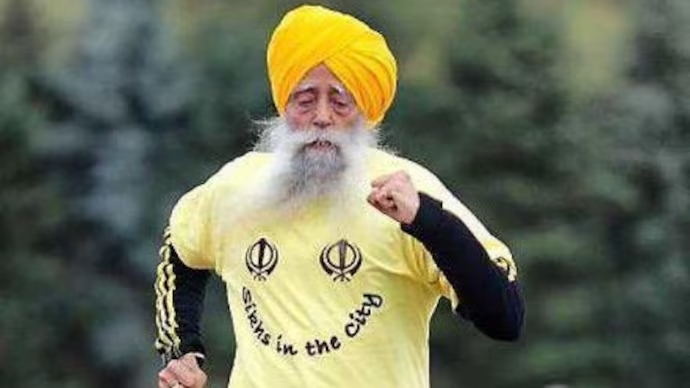
Fauja Singh, the legendary “Turbaned Tornado,” passed away at 114 after being struck by a vehicle in Punjab, India. He took up long-distance running at age 89 and ran full marathons into his 100s, becoming a global icon for resilience, aging, and athletic spirit.
What Happened to Fauja Singh?
Fauja Singh died on July 14, 2025, in a tragic road accident in his native village of Beas, Punjab. According to local authorities, Singh was struck by a vehicle while crossing the road. Police have arrested Amritpal Singh Dhillon, a Canada-based NRI, in connection with the hit-and-run.
Singh’s longtime biographer, Khushwant Singh, confirmed the news, writing on X:
“My Turbaned Tornado is no more. He was struck by an unidentified vehicle in his village… Rest in peace, my dear Fauja.”
Why Was Fauja Singh Famous?
Fauja Singh was not a conventional athlete. In fact, he only began running competitively in his late 80s. But in doing so, he changed the world’s understanding of aging, fitness, and mental resilience.
Born on April 1, 1911, in British India (pre-partition Punjab), Singh eventually moved to London, where he began his unlikely running career after the deaths of his wife and eldest son. Inspired by watching marathons on television, he joined a local Sikh running club in East London.
What began as a coping mechanism turned into a record-breaking global journey.
What Were Fauja Singh’s Marathon Achievements?
Though he never held an official Guinness World Record, due to a lack of a birth certificate, Fauja Singh’s accomplishments are extensively documented and celebrated worldwide.
Major Races & Milestones
Year Age Event Achievement 2000 89 London Marathon First marathon finish 2003 92 Toronto Waterfront Marathon Personal best: 5:40:01 2004 93 Olympic Torchbearer, Athens Represented London 2011 100 Toronto Waterfront Marathon First centenarian to finish full marathon (8:11:06) 2012 101 Olympic Torchbearer, London Symbol of fitness at any age 2013 101 Hong Kong 10K Final official race (1:32:28)
World Records for 90+ Age Group (Unofficial)
Fauja Singh holds multiple age-group records (90+ and 100+) in events ranging from 100 meters to the marathon, set in both the UK and Canada. While not Guinness-certified, these performances are validated by race organizers and athletic bodies.
How Did the Running Community React?
The global running community—from elite athletes to amateur joggers—mourned his passing but also celebrated his incredible journey.
- Adidas, with whom Singh starred in a memorable campaign alongside Muhammad Ali and David Beckham, called him “a timeless symbol of endurance.”
- Sikhs in the City, Singh’s running club in London, announced they would rename their annual ultra-marathon event in his honor.
- Prime Minister Narendra Modi noted, “Fauja Singh was extraordinary for his unique persona and the way he inspired generations on fitness.”
What Made Fauja Singh So Special?
1. He Redefined What Was Possible at Any Age
Starting a marathon career at 89 is virtually unheard of. Singh not only did it—he thrived. He ran full 26.2-mile marathons past the age of 100, something no other athlete has publicly achieved at that level.
2. He Turned Personal Loss into Global Purpose
Singh took to running to cope with the emotional trauma of losing loved ones. What began as grief transformed into a legacy that inspired millions.
3. He Ran with Joy, Not Ego
Despite worldwide attention, Singh remained humble. He often said:
“I run not to win races but to inspire people.”
What Can We Learn from Fauja Singh?
- Aging is not an endpoint—Singh’s story shows that peak experiences can happen even at 100.
- Consistency trumps talent—He ran daily, stayed disciplined, and avoided junk food or late nights.
- Purpose fuels endurance—He turned pain into progress by making fitness his mission.
What’s Next?
Singh may be gone, but his spirit will run on. Plans are underway to:
- Create a memorial trail in Punjab for local runners.
- Launch a fitness scholarship in his name in the UK.
- Digitize and preserve his biographical records for future athletes and researchers.