
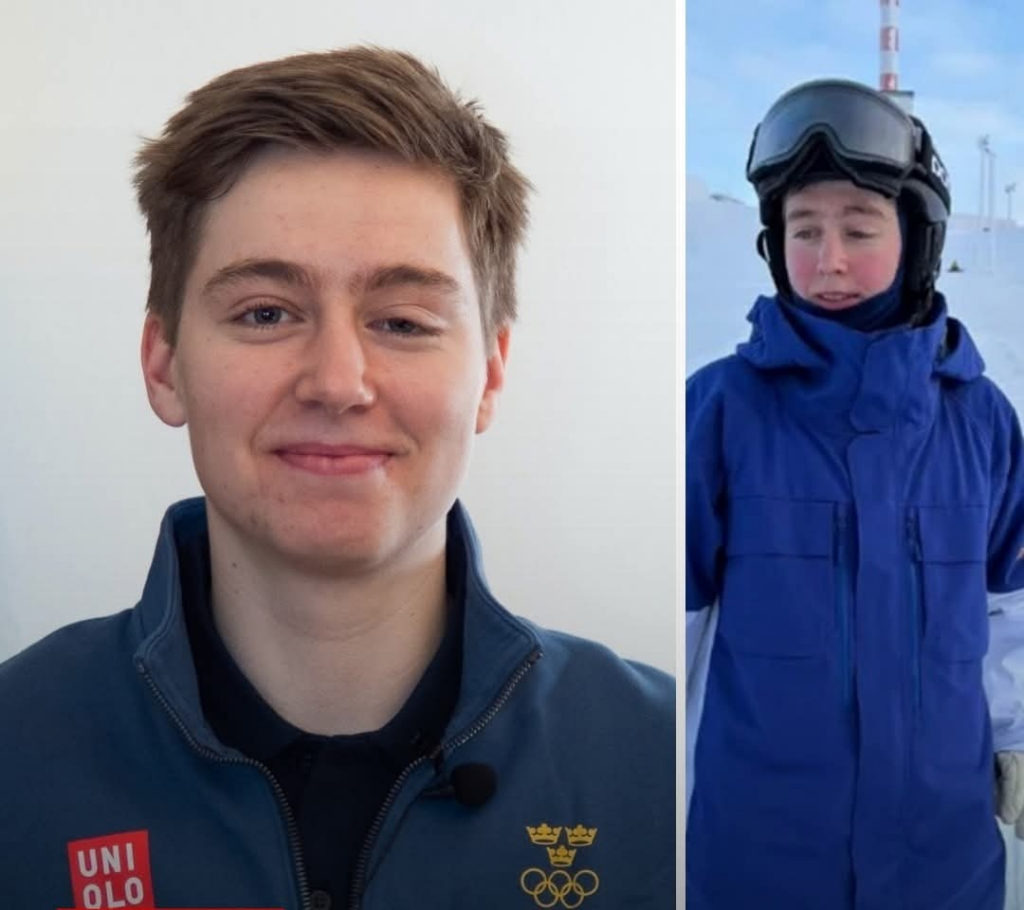
The 2026 Winter Olympics will mark a historic first with Swedish freestyle skier Elis Lundholm set to become the only openly transgender athlete competing at the Games.
Sweden’s national ski team confirmed last month that Lundholm, who was born female and identifies as a man, will compete in the women’s freestyle skiing division at the 2026 Winter Olympics, scheduled to be held in Milan and Cortina d’Ampezzo, Italy.
Lundholm’s participation has drawn global attention, not only for its historic significance but also for its implications amid ongoing debates over gender eligibility rules in elite sport.
Competing under current IOC guidelines
Lundholm is competing under the International Olympic Committee’s existing gender policy, introduced in 2021 through its “Framework on Fairness, Inclusion, and Non-Discrimination based on Gender Identity and Sex Variations.”
The framework outlines 10 principles and shifts responsibility to individual international sports federations to determine eligibility criteria for transgender and gender-diverse athletes, rather than imposing a single universal standard.
According to the IOC, the policy aims to balance inclusion with competitive fairness, stating that all athletes should be able to compete “in a safe, harassment-free environment” while ensuring no participant gains an unfair or disproportionate advantage.
Under these rules, transgender athletes are eligible to compete once they receive clearance from their respective sport’s governing body.
Only openly transgender athlete at Milan-Cortina 2026
Lundholm is currently the only openly transgender athlete expected to compete at the 2026 Winter Games, according to publicly available entries and team announcements.
The milestone comes at a time when transgender participation in elite sport remains one of the most contested issues in international athletics, particularly in women’s competitions.
While the IOC has not announced any changes to its framework ahead of the Milan-Cortina Games, officials have acknowledged ongoing discussions around athlete eligibility and competitive equity.
Policy debate continues ahead of future Olympics
In recent months, reports suggested the IOC had reviewed new scientific data examining physical performance differences between male and female athletes, even after testosterone suppression. However, no revised policy has been formally adopted as of now.
The issue has faced heightened scrutiny following controversies at recent global events, including the 2024 Paris Olympics, where gender eligibility decisions in women’s boxing sparked widespread debate.
National Olympic bodies have also begun taking different approaches. The U.S. Olympic and Paralympic Committee updated its transgender athlete policies in mid-2025, aligning them with a US executive order issued by Donald Trump that focused on restricting biological males from women’s sports.
The United States is set to host the Summer Olympics in Los Angeles in 2028, adding further urgency to the IOC’s unresolved policy questions.
A landmark moment for the Winter Games
For now, Lundholm’s qualification stands as a landmark moment in Olympic history, reflecting the IOC’s current inclusion framework while underscoring the evolving and often contentious conversation around gender, identity, and fairness in sport.
As the Milan-Cortina Games approach, Lundholm’s participation is likely to remain a focal point in broader discussions about how international sport navigates inclusion in the years ahead.