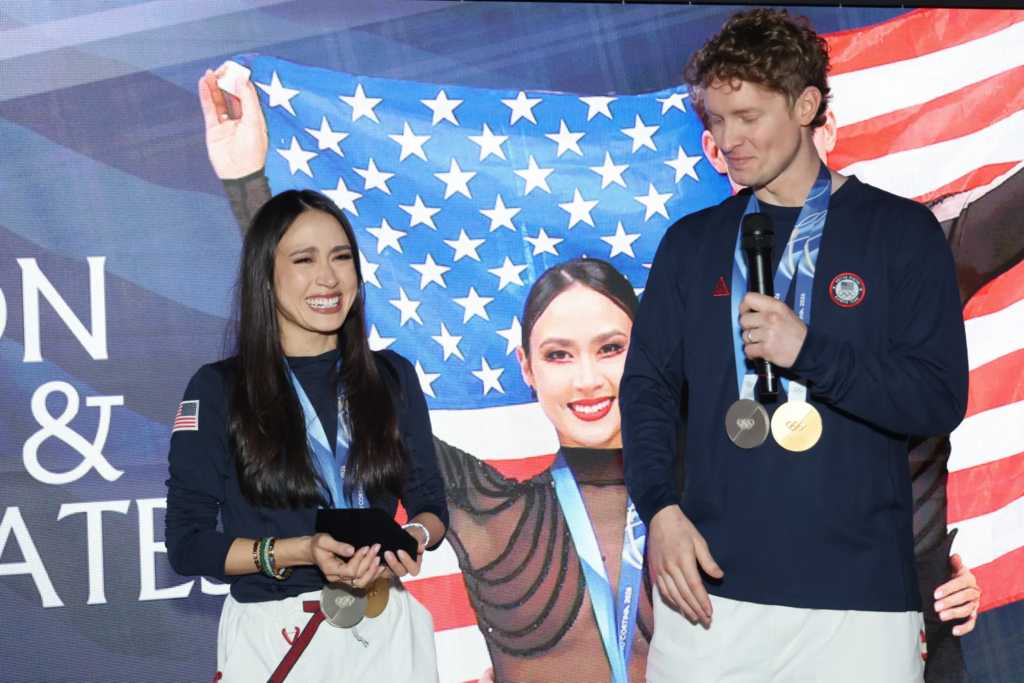
A judging controversy has landed squarely on the ice at the 2026 Winter Olympics, where American ice dancers Madison Chock and Evan Bates say they may consider an appeal after narrowly losing gold.
The pair earned silver behind France’s Laurence Fournier Beaudry and Guillaume Cizeron, but a large scoring gap from one judge ignited debate about fairness in figure skating’s most subjective discipline.
What triggered the Winter Olympics 2026 judging scandal?
The controversy centers on score variance within the judging panel.
Most judges scored the American and French teams closely. One judge, identified in reports as Jezabel Dabouis, awarded the French pair significantly higher marks, effectively determining the outcome.
Without that margin, analysts say the Americans likely would have won gold.
Why ice dance judging is vulnerable to disputes
Ice dance scoring blends athletic execution with artistic interpretation. Judges evaluate:
- choreography
- musical interpretation
- skating skills
- performance quality
- technical elements
Unlike timed sports, results depend on human evaluation rather than objective measurement. Small opinion differences can swing medals.
Will Team USA appeal the results?
Chock indicated the team may consider formal action but acknowledged the difficulty.
She emphasized broader reform rather than a single medal reversal, calling for consistent review of judges across competitions to ensure fairness.
Bates echoed the sentiment, saying their performance felt like a winning skate regardless of the outcome.
Why an appeal is unlikely to succeed
The International Skating Union has already expressed confidence in the scoring process.
Appeals in figure skating face strict limits:
- Scoring interpretation is rarely overturned
- Only procedural violations qualify
- Challenges must occur quickly after the competition
The Court of Arbitration for Sport aims to resolve Olympic disputes within hours, making post-event reversals rare.
Why does this matter beyond one medal
Judging debates have historically shaped figure skating reforms.
The sport’s credibility challenge
Figure skating has long balanced artistry and athletic precision. Controversies highlight a recurring tension:
audience expectations of fairness vs subjective scoring traditions.
Fans increasingly demand transparency comparable to VAR reviews in soccer or Hawk-Eye in tennis.
Pressure for transparency
Athletes are calling for:
- clearer scoring explanations
- judge performance evaluations
- more accessible breakdowns for viewers
What happens next?
No investigation has been announced, and governing bodies say scoring variation is normal within a panel.
That leaves three realistic outcomes:
- No change to results
- Internal review without penalty
- Long-term judging reforms
Historically, Olympic figure skating reforms follow repeated controversies rather than single incidents.
TL;DR
- Team USA’s Chock and Bates won silver in Olympic ice dance
- A large scoring gap from one judge sparked controversy
- Governing bodies say the scoring stands
- Appeals are unlikely to overturn results
- Debate may push future judging transparency reforms