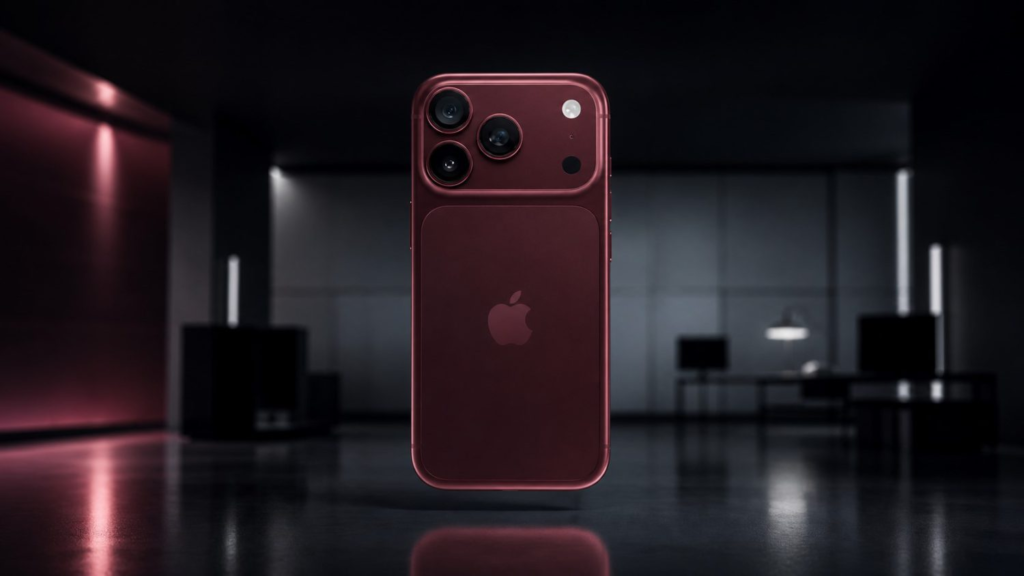
Apple’s new A20 Pro chip is at the heart of the iPhone 18 Pro and iPhone 18 Pro Max, and its biggest upgrade may not be something users can see.
Built using a 2-nanometer manufacturing process, the A20 Pro is designed to make the latest iPhones faster and more efficient while handling significantly more artificial intelligence workloads directly on the device.
Apple has doubled the number of Neural Engine cores compared with the A19 Pro, added dedicated neural accelerators to the chip’s GPU, and increased memory bandwidth by 50%. The result is a processor designed not just for gaming and photography but for running increasingly sophisticated AI features locally.
But what does all that actually mean for an iPhone user?
What is the A20 Pro?
The A20 Pro is Apple’s new flagship smartphone processor for the iPhone 18 Pro and iPhone 18 Pro Max.
It combines a six-core CPU, a seven-core GPU with integrated Neural Accelerators, and a Dual 16-core Neural Engine, giving the Neural Engine 32 cores in total. Apple says the design delivers up to 40% faster graphics performance than the A19 Pro while also improving sustained performance.
The chip is also built around a new packaging design inspired by Apple’s M-series processors. The silicon and memory are positioned side by side, allowing the processor to connect directly to a next-generation vapor chamber for improved heat dissipation.
That thermal change matters because AI workloads can keep a processor busy for long periods.
Why does the 2nm process matter for AI?
The move to 2nm is more than a smaller number on a specification sheet.
Smaller manufacturing processes allow chip designers to place more transistors into a similar physical area while potentially improving efficiency. For smartphones, that matters because AI processing can be computationally demanding and power-hungry.
Apple is using the additional efficiency to push more AI processing onto the iPhone rather than constantly sending tasks to remote servers.
The result is potentially faster responses, lower dependence on an internet connection and less need to transmit sensitive information to the cloud.
What does the 32-core Neural Engine actually do?
The Neural Engine is specialized hardware designed to accelerate machine-learning operations.
Apple has given the A20 Pro a Dual 16-core Neural Engine, for 32 cores overall. The company says that doubles the AI processing capability of the previous-generation A19 Pro.
In practical terms, this hardware helps the iPhone process AI workloads more efficiently than a general-purpose CPU would.
That can include image analysis, language processing, speech-related features and other machine-learning tasks.
It does not mean the iPhone has a 32-core AI “brain” in the human sense. The core count is simply a way of describing the dedicated processing resources Apple has built into the chip.
Can the iPhone 18 Pro run AI models locally?
Yes, and this is one of the biggest reasons Apple is emphasizing the A20 Pro’s architecture.
Apple says the chip is designed to accelerate on-device Apple Intelligence, including larger and more sophisticated models. The Neural Engine and new accelerators work together to handle machine-learning workloads without necessarily sending every request to a remote server.
That can be especially useful for tasks involving personal information.
Instead of uploading every photograph, message or piece of contextual information to a data center, certain operations can be performed directly on the phone.
However, “on-device AI” does not mean every Apple Intelligence feature is processed entirely on the iPhone. More demanding requests can still require Apple’s Private Cloud Compute infrastructure.
Why does on-device AI matter for privacy?
Processing data locally reduces the amount of personal information that needs to leave the device.
Apple has made privacy a major part of its AI strategy, and the A20 Pro’s additional neural-processing capacity gives the company more room to execute AI functions directly on the handset.
That could benefit tasks involving photos, personal context, text and other information users may not want routinely sent to external servers.
For cloud-based requests, Apple uses its Private Cloud Compute system, designed to process certain AI workloads without retaining users’ personal data. The distinction is important: the A20 Pro strengthens local processing, but it does not eliminate cloud computing from Apple’s AI ecosystem.
How does the A20 Pro improve Siri?
The new chip is designed to support the more capable Siri experience arriving with Apple’s latest software.
Apple says Siri can make greater use of on-device intelligence and can interact with information visible through the iPhone’s camera as part of its broader Apple Intelligence capabilities.
That means the assistant can potentially do more than answer isolated questions. It can use context from what the user is seeing or doing and respond accordingly.
The A20 Pro is not creating Siri’s intelligence by itself. The chip provides the computational foundation needed to run the underlying AI models efficiently.
Can the A20 Pro understand what the camera sees?
AI-powered visual processing is one area where the chip can make a difference.
The iPhone can use machine learning to identify objects, understand scenes, analyze text and perform computational photography operations.
On the iPhone 18 Pro, Apple is also introducing AI-assisted image identification features and a new Apple Reference Image system aimed at helping viewers distinguish AI-generated or manipulated imagery from authentic photographs.
The A20 Pro provides the processing resources required for these increasingly complex visual tasks.
Why does the GPU have neural accelerators?
Apple is pushing AI beyond the traditional Neural Engine.
The A20 Pro’s seven-core GPU includes Neural Accelerators designed to speed up certain machine-learning operations. Apple says these accelerators can deliver twice the FP8 performance of the previous generation for relevant workloads.
This matters because modern AI models often perform large numbers of low-precision mathematical operations.
Giving those calculations dedicated hardware can improve the speed at which the iPhone processes AI models while using less energy than relying entirely on general-purpose computing resources.
What does 50% more memory bandwidth mean?
AI models need to move enormous amounts of data around quickly.
Memory bandwidth measures how quickly the processor can move data between the chip and memory. Apple says the A20 Pro provides 50% more memory bandwidth than the A19 Pro.
That can reduce bottlenecks when the processor is handling large language models, high-resolution images or complex graphics.
Think of it as widening the road rather than simply making the vehicles faster. A faster processor cannot perform at its best if data cannot reach it quickly enough.
Does more memory bandwidth make the iPhone smarter?
Not by itself.
Memory bandwidth is an infrastructure improvement. It helps the processor feed data to its computing units more quickly, but intelligence ultimately depends on the models, software and algorithms running on the device.
The A20 Pro’s advantage comes from several changes working together: the new CPU, seven-core GPU, 32-core Neural Engine, neural accelerators, increased bandwidth and improved thermal design.
That combination is what allows Apple to push more demanding AI workloads onto the phone.
What does the A20 Pro do for photography?
A great deal of the iPhone’s camera processing happens computationally.
The A20 Pro can accelerate operations involved in HDR processing, image fusion, noise reduction, depth estimation, portrait effects and other computational photography tasks.
The iPhone 18 Pro also introduces a 48MP Fusion Main camera with a variable aperture, along with enhanced Pro controls.
The physical camera hardware captures the raw information, while Apple’s silicon and software turn it into the finished photograph.
That is why smartphone photography has become partly a chip-design contest.
Does the A20 Pro improve gaming too?
Yes.
Although the chip’s AI credentials are getting much of the attention, the A20 Pro is also a major graphics upgrade.
Apple says its redesigned seven-core GPU is up to 40% faster than the A19 Pro. It also includes hardware-accelerated ray tracing, which can produce more realistic lighting, reflections and shadows in supported games.
Better thermal management is equally important for gaming.
A phone that can sustain high performance for longer without excessive heat is more useful than one that reaches a peak speed briefly and then throttles.
Why does thermal management matter for AI?
AI workloads can be sustained rather than instantaneous.
Generating an answer, analyzing a large image or running a language model repeatedly can keep the processor working continuously.
The A20 Pro’s new packaging allows the chip to connect to a next-generation vapor chamber designed to improve heat transfer. Apple says this contributes to its highest sustained performance in an iPhone to date.
That could make a noticeable difference when the phone is performing intensive tasks over several minutes rather than a fraction of a second.
Does the A20 Pro mean the iPhone no longer needs the cloud?
No.
This is an important misconception.
Apple is moving more AI processing onto the device, but cloud computing remains part of the company’s architecture.
The A20 Pro allows the iPhone to handle more tasks locally, while Apple’s Private Cloud Compute infrastructure can be used for requests that require greater computing power.
The strategy is therefore hybrid: keep as much sensitive or routine processing on the device as practical, and use Apple’s cloud infrastructure when a task exceeds the phone’s capabilities.
What about the new C2 modem?
The A20 Pro also works alongside Apple’s C2 modem system.
The C2 includes AI-powered improvements intended to enhance cellular quality and reliability. Apple says selected markets can see upload speeds up to 50% faster than the C1X while using less energy.
The C2 is not part of the A20 Pro itself, but the two systems work together as part of Apple’s broader push toward more efficient computing and connectivity.
The iPhone 18 Pro also introduces Apple’s N1 wireless networking chip, supporting Wi-Fi 7, Bluetooth 6 and Thread.
Is 12GB RAM confirmed?
The supplied material claims that the iPhone 18 Pro comes with 12GB of RAM.
Apple’s official iPhone 18 Pro technical specifications do not publicly list a RAM capacity, so the 12GB figure should not be presented as an officially confirmed Apple specification.
This matters because memory is particularly important for AI models, but Apple has chosen to emphasize memory bandwidth and its integrated silicon architecture rather than publish a conventional RAM figure on the product specification page.
Can the A20 Pro run large language models?
It is designed to run significantly more sophisticated on-device AI models.
The key technologies are the expanded Neural Engine, neural accelerators, higher memory bandwidth and Apple’s software optimization.
Together, they make it possible to execute more demanding machine-learning operations locally.
That does not mean the iPhone is suddenly running enormous data-center-scale models entirely inside the handset. Mobile AI still operates within limits of memory, power consumption and thermal capacity.
The achievement is that increasingly capable models can be compressed, optimized and executed efficiently enough to be useful on a smartphone.
What will users actually notice?
Much of the A20 Pro’s impact will happen behind the scenes.
Users may notice faster AI features, quicker image processing, smoother computer-use functions, more responsive Siri interactions and better sustained gaming performance.
Some improvements will be difficult to isolate from Apple’s software, because the final experience depends on both the hardware and the algorithms running on it.
That’s the point of custom silicon.
Apple does not need users to think about the processor every time they use a feature. The chip is supposed to quietly make increasingly complicated tasks feel ordinary.
Is the A20 Pro really an AI powerhouse?
By smartphone standards, it is a substantial AI hardware upgrade.
Apple has doubled the Neural Engine’s total core count from the A19 Pro, added neural accelerators to the GPU, increased memory bandwidth by 50% and redesigned the thermal architecture around the new chip.
Those changes give the iPhone 18 Pro more headroom for local AI, computational photography, gaming and other intensive workloads.
But calling it an “AI powerhouse” should not be confused with saying the phone has data-center-level AI capabilities.
The real breakthrough is more practical: Apple is making the smartphone capable of handling a larger share of AI computation locally, quickly and with less dependence on the cloud.