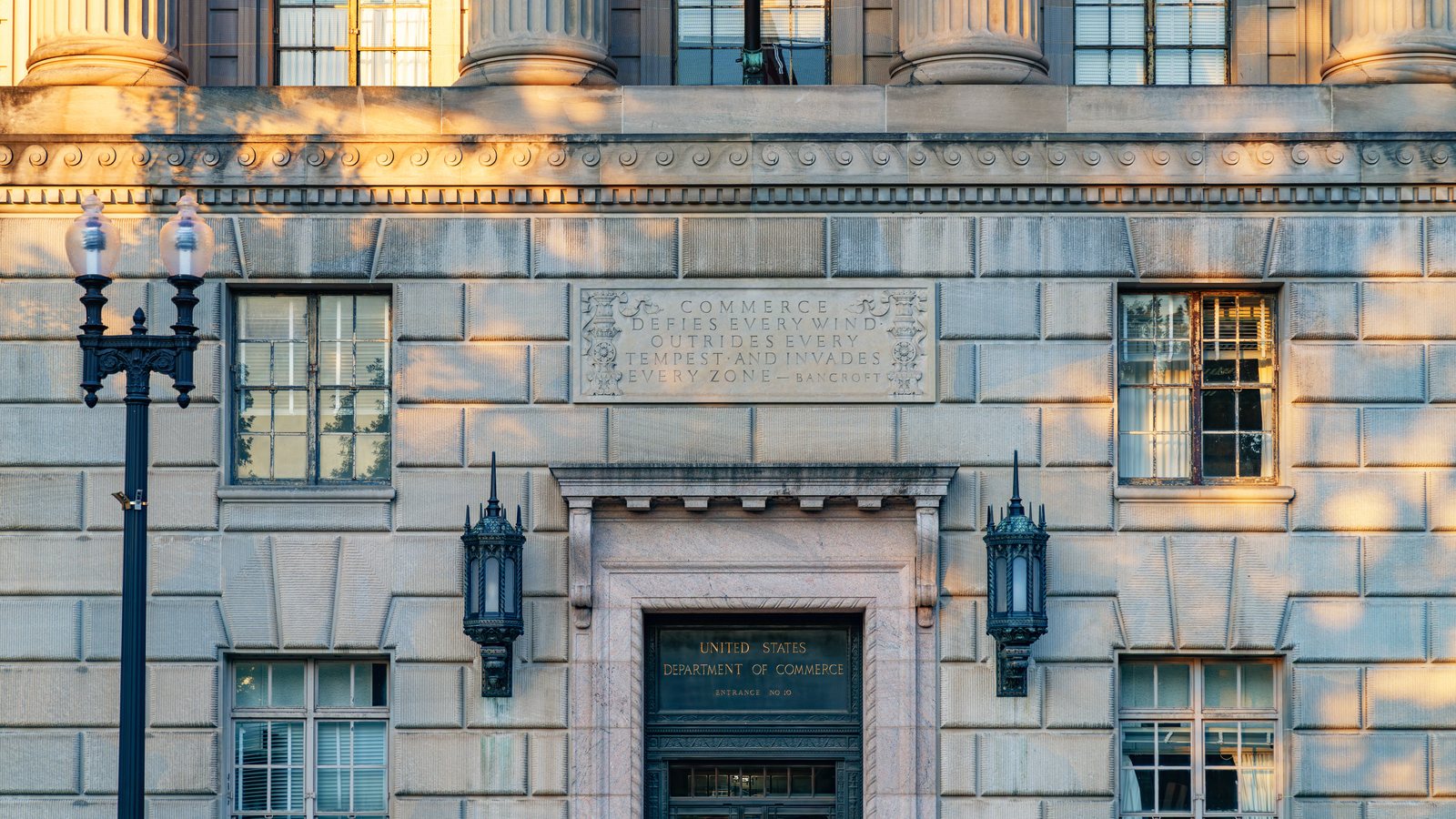
Commerce Secretary Howard Lutnick pushed for the narrower of two draft rules on overseas access to advanced Nvidia chips. The New York Times reported that on Sunday, Nov. 15. Several Southeast Asian data-centre companies the rule would reach have done business with Cantor Fitzgerald, the firm Lutnick ran for three decades and his sons now run.
The Times said it found no evidence that Cantor’s investments influenced his deliberations.
His department filed the rule the next day. We read the 117-page text. It is tighter than the draft the Times described: five countries rather than seven, and a licence requirement rather than a duty to notify.
What the Times reported, and the caveat it carried
Ana Swanson, Aaron Krolik and Paul Mozur wrote the investigation. Lutnick backed the narrower option, they reported, and resisted officials who wanted broader controls. That draft covered only future chip shipments. It left alone data centres already stocked with American hardware.
The Times names two companies. Cantor acted as a sales agent for Bitdeer Technologies, which is building a data centre in Malaysia. That site will likely serve Tencent, a person with knowledge of the arrangement told the paper. Cantor also did work in the past for Gorilla Technology Group, which has projects in Thailand and Indonesia. Gorilla supplies computing to a Singapore firm, Freyr AI, whose corporate filings and job ads indicate ties to China, the Times said.
The paper’s qualifiers matter as much as its findings. Other investment banks hold similar partnerships. The deals form a small part of Cantor’s business. And the rules were not final when it published.
A Commerce spokeswoman said Lutnick “makes policy decisions based on the best interests of the United States.” He does not discuss department matters with his sons, she said, and they do not discuss Cantor Fitzgerald business with him. Cantor declined to comment. Bitdeer did not reply.
We could not open nytimes.com. We worked from the Philadelphia Inquirer’s authorised syndication of the piece.
The rule Commerce filed names five countries, not seven
The Bureau of Industry and Security filed “Addressing Remote Access to Advanced Semiconductors” on Monday at 4:15 p.m. Eastern. It is an interim final rule, RIN 0694-AK50. It publishes on Nov. 19 and takes effect that day, with 60 days for comments.
Reporting before the filing described seven countries, Norway and South Africa among them. The filed text names five: Indonesia, Malaysia, Singapore, Thailand and Brazil. It calls them destinations of “higher-than-normal risk of diversion.” We searched all 117 pages. Norway and South Africa appear in none of them.
The mechanism is firmer too. A new end-use control demands a licence, which BIS will review case by case. It bites when an exporter has “knowledge” that chips are bound for a data centre, anywhere, that supplies more than 12 million “aggregate TPP” of computing to companies headquartered in Macau or Country Group D:5. That group includes China.
One clause speaks straight to the Times’ account. A data centre already serving those customers “must obtain a license with 90 days of the effective date of this IFR or face future export restrictions.” That is the opposite of exempting sites already filled with American hardware.
Two more details deserve recording. The rule formally rescinds the Biden-era AI Diffusion Rule and says it “has never been enforced.” That framework sat on the books, unused, for 18 months. A footnote also explains that Executive Order 14434 makes the text say “Super Intelligence” wherever it means artificial intelligence.
We cannot say why the filed rule differs from the draft. The Times published before BIS filed, and the rule is not in force yet.
What Bitdeer’s filings actually show
Cantor’s documented role is narrower than the headlines suggest. In one respect it is sharper.
Bitdeer’s SEC filings list Cantor as one of 13 sales agents under an at-market agreement dated Jan. 3, 2025. The firm used it again for a $1 billion prospectus supplement on Aug. 10, 2026. An earlier agreement from March 2024 ran to $250 million across six agents, at a commission capped at 3%. “Designated Sales Agent” is standard wording for whichever agent handles a given sale. No bank there underwrote anything or risked its own capital.
The sharper document is one the Times did not use. Bitdeer’s release of May 31, 2024 says “Cantor Fitzgerald & Co. is acting as the placement agent for the private placement” of up to $150 million. Tether put up the money. A Schedule 13D a week later recorded Tether holding 25.1% of Bitdeer. Cantor reportedly owns about 5% of Tether. That figure traces to a Wall Street Journal report in November 2024, and no filing confirms it, because both companies are private.
Bitdeer’s Sept. 29, 2026 announcement gives the Malaysian numbers. A201 in Johor Bahru runs to 21.7 megawatts, built for Nvidia GB300 NVL72 racks, energising in early 2027. Bitdeer expects “more than $1.7 billion in expected revenue at this site spanning the next 5 years.” It names no customer. Tencent comes from the Times alone, hedged, and on one unnamed source.
Gorilla cut Cantor loose in February 2025
Gorilla’s link to Cantor is real but stale. Cantor served as its sales agent from August 2023. Gorilla told the SEC it gave notice to end that agreement on Feb. 7, 2025. Neither the Thailand nor the Indonesia project existed then.
Its $1.4 billion contract with Freyr sits in a filing from September 2025. Gorilla’s annual report records no revenue under it that year. The claim that Freyr has ties to China rests on the Times’ reading of filings and job ads. We could not match it to a public registry record.
He sold his Cantor stake in October 2025
Lutnick’s divestiture is fully documented, and both the usual tellings of it are wrong.
His ethics agreement promised he would sign agreements to divest his partnership interests “as soon as practicable but not later than 90 days after my confirmation… for a sum certain.” He would finish the sale once regulators approved it. He also promised to recuse himself from particular matters involving Cantor, and said he would seek a waiver to act on matters affecting it.
His public OGE disclosure records ten sales, all dated Oct. 6, 2025. Each carries the same note: he entered into the transaction on May 16, 2025, and “consummated on October 6, 2025 following regulatory approvals.” A Newmark filing that day gives the mechanics. He sold the voting shares of CF Group Management to trusts his son Brandon controls, for $200,000 in cash. He then “no longer has any voting or dispositive power over any of the securities of the Company.”
So he signed inside the 90 days and closed five months later, which his agreement allowed. NOTUS reported that the White House counsel granted him a waiver in July 2025. We have not read that memo, and its scope is not public.
Cantwell wants answers, and nothing has been established
Sen. Maria Cantwell, the ranking Democrat on the Senate Commerce Committee, wrote to Lutnick on Nov. 15. The department “has resisted efforts to restrict companies flagged as national security threats” and has “left open pathways for the PRC to train advanced AI models using sensitive American technology,” she wrote, as the Daily Caller reported. The committee’s own site refused our requests, so those quotes come from that account.
Her complaint overlaps with one from inside the administration. Axios reported on Nov. 11 that Treasury Secretary Scott Bessent pressed Lutnick in the Situation Room on Nov. 5. Bessent wanted to know why Megaspeed, the Singapore company at the centre of the Nvidia case, was not on the entity list. Commerce spokesperson Kristen Eichamer told Axios the conversation never happened: “This is false.” Trump defended the delay on Monday and said he is not replacing Lutnick.
Our piece on the Megaspeed investigation sets out what Singapore and Washington are each examining. Our account of the Reuters report on Nvidia’s general counsel covers the company’s approach to Commerce investigators last year.
Here is what has not happened. Nobody has charged Lutnick, and no ethics body has ruled against him. Democrats asked the Commerce inspector general to look at his holdings in December 2025, and we found no sign of an investigation. The Times’ separate Nov. 9 report said the Justice Department asked Commerce to pause its Megaspeed work. It did not say Lutnick did.
Comments on the rule close 60 days after it publishes on Nov. 19. Lutnick has agreed to appear before the Senate Banking Committee in December, alongside Jensen Huang, who resigned as Nvidia’s chief executive on Nov. 12. The committee has not set a date.