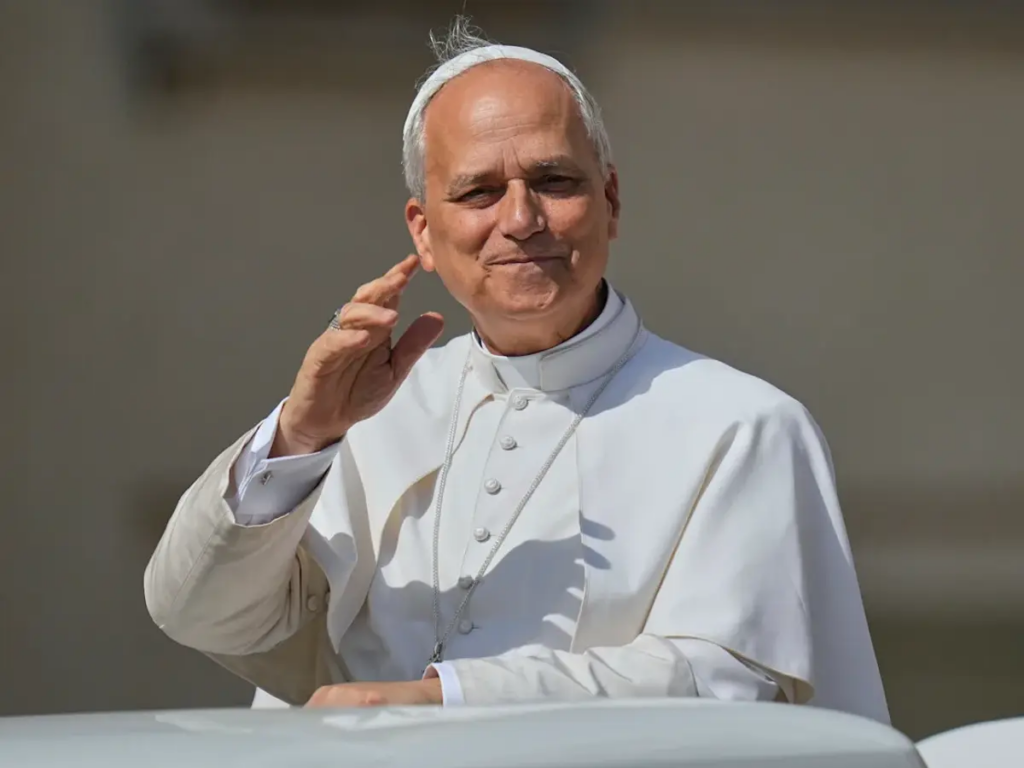
Pope Leo XIV has entered the growing global debate over artificial intelligence, warning that unchecked automation could trigger widespread job losses, deepen inequality, and destabilize societies.
In his first official encyclical, the Pope urged governments, corporations, and technology leaders to ensure that AI development remains centered on human dignity rather than purely economic efficiency.
The message places the Vatican directly into one of the defining political and ethical questions of the decade: how societies should balance technological progress with the future of human work.
Why is Pope Leo XIV concerned about artificial intelligence?
Pope Leo XIV and the AI future of work debate
The Pope’s core concern is not artificial intelligence itself—but how it is used.
What the Pope warned about
According to the encyclical, large-scale automation without safeguards could:
- Increase unemployment
- Widen economic inequality
- Deepen poverty
- Create social instability
He argued that decisions driven solely by profit risk treating workers as replaceable economic units rather than human beings with dignity and social roles.
Why this warning matters now
AI adoption is accelerating across industries including:
- Technology
- Finance
- Manufacturing
- Customer service
- Media and education
As companies automate more tasks, concerns are growing over how many jobs could disappear—or fundamentally change.
What did the Pope say about human dignity and work?
A central theme of the encyclical is that work is more than income.
Work as part of human identity
Pope Leo emphasized that meaningful employment contributes to:
- Personal dignity
- Community participation
- Social stability
- Psychological well-being
He warned that removing people from productive roles at scale could damage not only economies, but also social cohesion.
His message to corporations
The Pope stated that:
- “The pursuit of greater profits cannot justify choices that sacrifice jobs.”
The statement reflects growing criticism worldwide of technology strategies focused purely on efficiency gains.
Is the Pope against artificial intelligence entirely?
No. The encyclical also acknowledged that AI can provide major benefits if used responsibly.
Artificial intelligence in healthcare and industry
Areas where AI could help society
According to the Pope, AI can:
- Reduce dangerous and repetitive labor
- Improve healthcare systems
- Support education
- Increase industrial efficiency
The concern is not technological innovation itself, but whether societies manage its impact fairly.
The balance he is calling for
The Vatican’s position appears to support:
- Responsible innovation
- Worker protections
- Ethical limits on automation
- Policies preventing mass exclusion from the workforce
Why governments are being urged to regulate AI
The encyclical strongly emphasized the role of public policy.
What the Pope called for
He urged governments and institutions to:
- Create safeguards for workers
- Prevent exploitative automation practices
- Ensure AI benefits society broadly
- Develop ethical frameworks for emerging technologies
Why regulation is becoming a global issue
Around the world, policymakers are debating:
- AI transparency rules
- Copyright and training data issues
- Worker protections
- Liability for AI decisions
- National security risks
The Vatican’s intervention adds moral and social dimensions to these discussions.
How many jobs could AI affect?
That remains one of the biggest unanswered questions in the global economy.
What experts generally agree on
Most analysts believe AI will:
- Eliminate some jobs
- Transform many others
- Create entirely new categories of work
However, the transition could be highly disruptive if adaptation happens too quickly.
Sectors seen as vulnerable
Jobs involving repetitive or predictable tasks are considered most at risk, including parts of:
- Administrative work
- Customer support
- Basic programming
- Data processing
- Manufacturing
Creative and strategic professions are also beginning to feel AI pressure.
Why the Vatican’s voice matters in the AI debate
Ethics, religion, and artificial intelligence
The Catholic Church has historically weighed in on major industrial and economic transitions.
A tradition of social teaching
Past papal encyclicals addressed issues such as:
- Industrial labor rights
- Capitalism and inequality
- Worker exploitation
- Technological change
Pope Leo XIV’s AI comments continue that tradition in the digital era.
Why this could influence policy discussions
The Vatican’s moral authority may shape debates around:
- Ethical AI frameworks
- Labor protections
- Human-centered technology policy
- Corporate responsibility
Even outside religious communities, these arguments resonate with broader concerns about automation and inequality.
The bigger question: who benefits from AI?
At the heart of the debate is a simple but profound issue:
Will AI primarily benefit societies—or mainly benefit those who control the technology?
The tension shaping the future
The coming years may revolve around balancing:
- Innovation vs job security
- Productivity vs human welfare
- Automation vs dignity
- Profit vs social stability
The Pope’s intervention highlights growing fears that without careful policy choices, technological progress could deepen existing inequalities rather than solve them.
TL;DR
- Pope Leo XIV warned that unchecked AI automation could cause mass job losses
- He called for ethical limits and stronger worker protections
- The Vatican emphasized that work is tied to dignity and social stability
- The Pope also acknowledged AI’s benefits in healthcare and efficiency
- His remarks add momentum to global debates over AI regulation and labor policy