Nearly 600 years before modern science weighed in, a medieval scholar made a striking claim about one of Christianity’s most debated relics—the Shroud of Turin. According to new research, the theologian Nicole Oresme dismissed the cloth as a deliberate fake in the 14th century. Yet today, the Shroud continues to divide historians, scientists, and believers alike.
This renewed attention comes from a recent academic study that revisits Oresme’s writings, suggesting that skepticism around the Shroud is not a modern phenomenon but one rooted deep in medieval intellectual tradition.
What Is the Shroud of Turin?
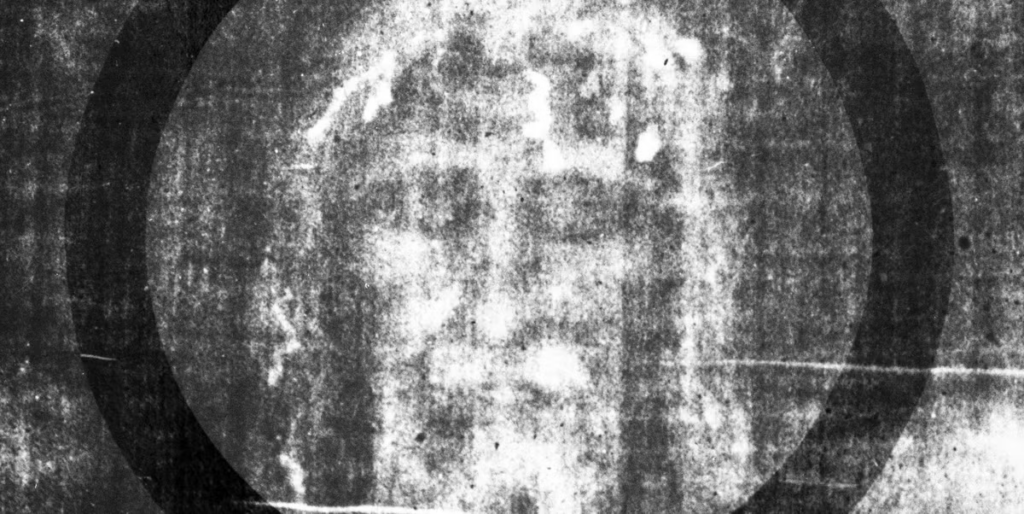
The Shroud of Turin is a centuries-old linen cloth bearing the faint image of a man. Many believers hold that it is the burial cloth of Jesus Christ, imprinted with his likeness after the crucifixion.
The relic is currently housed in Turin and has long been a focal point of religious devotion, scientific inquiry, and controversy.
Who Was Nicole Oresme and What Did He Say?
Nicole Oresme was no ordinary critic. A respected intellectual of the 14th century, he contributed to mathematics, natural philosophy, and early scientific thinking. He later became Bishop of Lisieux under the reign of Charles V of France.
In a treatise written sometime between 1355 and 1382, Oresme directly challenged claims surrounding the Shroud. His argument was simple but powerful: just because respected individuals—or even clergy—claim something is miraculous does not make it true.
He wrote, in essence, that many religious figures could deceive believers for financial gain. His skepticism went beyond the Shroud—it reflected a broader push toward rational explanation over blind faith.
Why This Discovery Matters Today
The recent study, led by Nicolas Sarzeaud, argues that Oresme’s critique may be the earliest documented rejection of the Shroud’s authenticity.
Previously, the earliest known dismissal came from Pierre d’Arcis in 1389. Oresme’s work pushes that skepticism back by at least a decade, possibly more.
This matters because it reshapes historians’ understanding of medieval thought. Contrary to popular belief, the Middle Ages was not devoid of critical thinking. Scholars like Oresme actively questioned religious claims using reason and evidence.
What Modern Science Says About the Shroud of Turin
While medieval skepticism is fascinating, the modern debate largely hinges on scientific analysis.
Radiocarbon Dating
Tests conducted in the late 20th century dated the Shroud to the 13th or 14th century, aligning closely with Oresme’s lifetime.
Consider linking here to a credible external source, such as:
- The official radiocarbon study published in Nature
- Research summaries from institutions like Oxford or the British Museum
Image Formation Mystery
Scientists have also struggled to explain how the image on the cloth was formed.
Some studies suggest:
- The image is not painted
- It lacks brush strokes or pigments typical of medieval art
- It behaves like a photographic negative
At the same time, other research argues that: - A human body could not realistically produce such an imprint
- The image may result from chemical or artistic techniques
Why the Debate Refuses to Die
Despite centuries of skepticism, the Shroud remains one of the most studied and contested artifacts in the world.
Faith vs Evidence
For many, the Shroud is not just an object of study—it is a matter of belief. Scientific findings often coexist with faith rather than replacing it.
Incomplete Evidence
No single study has definitively closed the case. Conflicting methodologies and interpretations keep the debate open.
Cultural and Religious Significance
The Shroud holds deep symbolic value, making it more than just a historical artifact. That emotional weight ensures continued interest—and controversy.
A Turning Point in Medieval Thinking
What makes Oresme’s critique remarkable is not just what he said, but how he said it.
He evaluated:
- The reliability of witnesses
- The spread of rumors
- The motivations behind religious claims
This approach mirrors modern skepticism and scientific reasoning.
In an era often labeled as deeply superstitious, Oresme’s work shows that critical thinking was alive and well.
What This Means for Readers Today
The rediscovery of Oresme’s writings doesn’t prove the Shroud is fake—but it does change the timeline of doubt.
It shows that:
- Questions about authenticity are centuries old
- Skepticism is not a modern invention
- Even religious scholars challenged institutional claims
For readers, the takeaway is less about whether the Shroud is real and more about how we evaluate truth itself.