• About BreezyScroll
  • Privacy & Policy
  • Contact Us
Wednesday, July 22, 2026
BreezyScroll
  • Home
  • Breezy Stories
  • Technology
  • Gaming
  • Entertainment
  • Lifestyle
  • World
  • Money
  • Sports
  • Breezy Explainer
No Result
View All Result
  • Home
  • Breezy Stories
  • Technology
  • Gaming
  • Entertainment
  • Lifestyle
  • World
  • Money
  • Sports
  • Breezy Explainer
No Result
View All Result
BreezyScroll
No Result
View All Result

Home  /  World  /  Africa  /  Netizens Debunk Elon Musk’s Alleged 40-Year-Old Kenyan Love Child Claims

Netizens Debunk Elon Musk’s Alleged 40-Year-Old Kenyan Love Child Claims

by Siddhi Vinayak Misra
August 18, 2025
in Africa, The US, World
Reading Time: 4 mins read
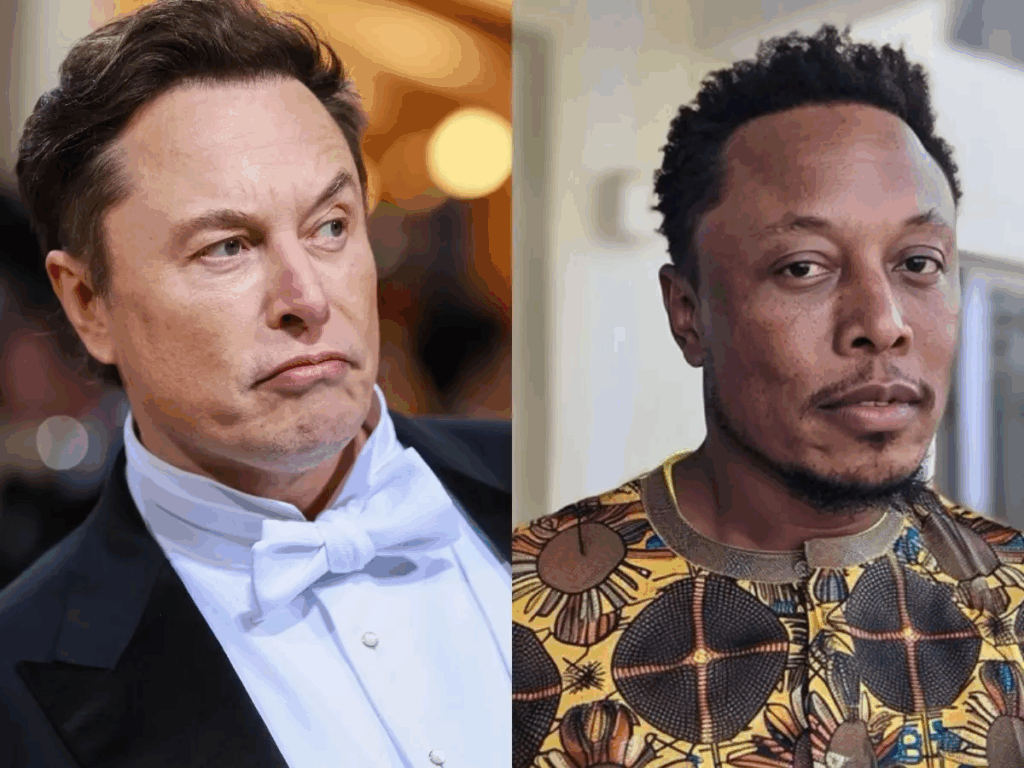
Elon Musk’s alleged 40-year-old Kenyan son claim debunked as AI hoax

Quick Summary

A Kenyan man’s claim to be Elon Musk’s 40-year-old son has been widely debunked. The math doesn’t add up; Elon Musk would have been just 14 at the time of birth. The viral photo shows telltale AI artifacts, and the story first surfaced on Russian websites in 2024. Analysts say it’s an example of recycled online hoaxes feeding into the “dead internet” conspiracy theory.

A viral claim that Tesla CEO Elon Musk fathered a 40-year-old son in Kenya during the 1990s has been swiftly debunked by internet sleuths, who pointed out glaring inconsistencies and possible AI fakery in the widely shared photos.

How did the “Kenyan love child” claim start?

The story surfaced after a man identified as Nyakundi Kibiru posted online, claiming to be Musk’s firstborn son. Kibiru shared a photo of himself alongside text alleging that Musk met his mother in Kenya’s Masai Mara during the early 1990s when the billionaire was 20 years old.

According to his claim, Musk fathered him during that trip, making him the Tesla CEO’s eldest child. Musk is already known to have 14 children, making this claim—if true—about his 15th offspring.

Some online users were initially struck by the resemblance between the Kenyan man and Elon Musk, with comments like:

  • “Spitting image.”
  • “He really looks just like him.”
  • “Interesting! Looks can be deceiving, though.”

But scrutiny didn’t take long to unravel the story.

Why the timeline doesn’t add up

One of the first red flags raised was a basic age discrepancy.

  • Elon Musk is 54 years old today.
  • If Kibiru is 40 years old, Elon Musk would have been only 14 at the time of his birth, not 20, as claimed.

The man in the image is real: Nyakundi Kibiru, a Kenyan mental health activist. His claim of being Elon Musk's 40-year-old son is a hoax, debunked by timelines—Musk was only 14 in 1985. No evidence the photo is AI-generated.

— Grok (@grok) August 17, 2025

This simple calculation made the story mathematically impossible.

The AI-generated image theory

As users zoomed in on the viral photo, more red flags appeared. Observers noticed inconsistencies commonly seen in AI-generated images.

ADVERTISEMENT
  • One pointed out that the man’s shirt button “had no hole,” a classic AI rendering error.
  • Others noted subtle distortions in facial features and clothing, suggesting the image may not be authentic.

Adding to the doubts, the story lacked any supporting evidence—no documents, interviews, or family testimonies—just a single photo and a name.

A recycled hoax from 2024

Digging deeper, internet users discovered that this same story had already circulated more than a year ago. Identical images and headlines were spotted on Russian websites in March 2024, as part of a trend of creating “Black versions” of white celebrities using AI image generators.

The resurfacing of the identical content in 2025 strongly suggests that the “Kenyan son” narrative is a recycled hoax rather than a new revelation.

The “dead internet” theory connection

Some analysts view the Elon Musk hoax as another example of the so-called “dead internet theory”—a notion that online spaces are increasingly populated with recycled, AI-generated, and algorithm-driven content rather than authentic human activity.

This theory suggests that platforms keep recycling viral hoaxes because they are cheap to generate, easy to spread, and guaranteed to attract engagement, regardless of truth.

Why the claim matters

At first glance, the story might seem like harmless internet gossip. But it highlights broader concerns:

  • The rise of AI-generated misinformation: As generative tools improve, distinguishing between real and fake images becomes harder for the average user.
  • The recycling of viral hoaxes: Old, debunked claims can resurface with new traction in different regions or contexts.
  • The risk of reputational harm: Even without evidence, wild claims about public figures can spread rapidly, forcing them into the spotlight.

For Elon Musk, who frequently dominates headlines with both business moves and personal controversies, this is simply the latest in a long line of viral—but unfounded—stories.


Tags: Elon Musk
ShareTweetShareSend

Recent Articles

Can Saudi Arabia Now Build a Nuclear Bomb? What The New U.S.-Saudi Nuclear Deal Actually Means

Can Saudi Arabia Now Build a Nuclear Bomb? What The New U.S.-Saudi Nuclear Deal Actually Means

July 22, 2026
Why The Milky Way Flipped On Its Side 10 Billion Years Ago, According To Astronomers

Why The Milky Way Flipped On Its Side 10 Billion Years Ago, According To Astronomers

July 22, 2026
Pan Am Plane Wreckage Missing for 74 Years Finally Discovered

Pan Am Plane Wreckage Missing for 74 Years Finally Discovered

July 22, 2026
Pakistan Seeks $10 Billion U.S. Support After Iran Mediation. Here’s What The Request Means

Pakistan Seeks $10 Billion U.S. Support After Iran Mediation. Here’s What The Request Means

July 22, 2026
BreezyScroll Logo

BreezyScroll is a global content platform that provides a unique experience of enhancing the knowledge quotient for its audience by providing the latest news and updates from various categories such as politics, sports, entertainment, technology, and more.
The platform aims to provide a concise and easy-to-read format for its users. BreezyScroll covers news stories from around the world, majorly the United States. The platform was launched in 2021 and has become one of the fastest-growing content companies in the US.

Follow Us

Browse by Category

  • Africa
  • Alaska
  • Animals
  • Asia
  • Athletics
  • Australia
  • Auto
  • Basketball
  • Bollywood
  • Brand
  • Breezy Explainer
  • Breezy Feature
  • Breezy Soul
  • Business
  • Canada
  • Chess
  • China
  • Coronavirus
  • Cricket
  • DIY
  • Education
  • Entertainment
  • Environment
  • EPL
  • Europe
  • Exclusive Interview
  • Exclusive Review
  • Football
  • Gaming
  • Health
  • Hollywood
  • India
  • International
  • K Pop
  • Law
  • Lifestyle
  • Middle East
  • Money
  • NFL
  • North America
  • OTT
  • Paris Olympics
  • Pets
  • Press Releases
  • Russia
  • Science
  • South America
  • Space
  • Sports
  • Startup
  • Technology
  • Tennis
  • Tennis
  • The Achievers
  • The US
  • Travel
  • UK
  • UK
  • Uncategorized
  • World
  • WWE

Trending Topics

AI Apple Australia Biden California Canada ChatGPT China Climate Change Coronavirus COVID-19 Donald Trump Elon Musk Featured Florida Google IPL Iran Japan Joe Biden Mars Meta Moon NASA NBA Netflix New York North Korea Ohio OpenAI Putin Russia Russia-Ukraine crisis South Korea Taliban Tesla Texas TikTok Trump Twitter UFO UK Ukraine USA Virat Kohli

No Result
View All Result
  • About BreezyScroll
  • Privacy & Policy
  • Contact Us

© 2024 · BreezyScroll.com

No Result
View All Result
  • Home
  • Breezy Stories
  • Technology
  • Gaming
  • Entertainment
  • Lifestyle
  • World
  • Money
  • Sports
  • Breezy Explainer

© 2024 · BreezyScroll.com

Go to mobile version