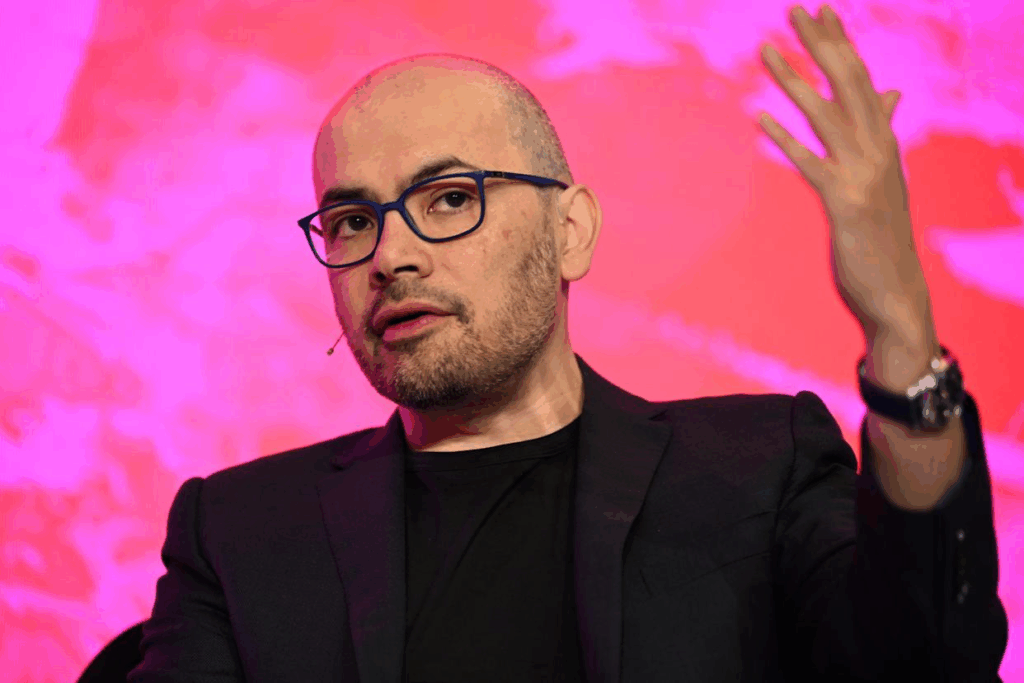
Demis Hassabis envisions artificial intelligence unlocking a new era of interstellar exploration and radical abundance
Humans could begin colonizing the galaxy as early as 2030, according to Google DeepMind CEO and 2024 Nobel Chemistry laureate Demis Hassabis, who says artificial intelligence (AI) will be the catalyst behind this bold new chapter in human history. In a recent interview with WIRED, Hassabis described a future where AI-driven productivity leads to “radical abundance” and space colonization.
“If everything goes well, then we should be in an era of radical abundance, a kind of golden era,” Hassabis said. “AGI can solve what I call root-node problems in the world — curing terrible diseases, much healthier and longer lifespans, finding new energy sources.”
A golden era powered by AGI
Hassabis’ predictions rest on the continued advancement of Artificial General Intelligence (AGI), the next frontier of AI that rivals — or even surpasses — human-level reasoning and problem-solving capabilities. According to him, within just five years, AGI will bring about a technological renaissance that reshapes civilisation.
“If that all happens, then it should be an era of maximum human flourishing, where we travel to the stars and colonise the galaxy. I think that will begin to happen in 2030,” Hassabis stated confidently.
Solving inequality with AI?
When asked whether such abundance could still result in uneven distribution, as is often the case with technological booms, Hassabis was optimistic. He believes AGI will shift the global economic mindset away from competition and scarcity.
“AI will make things feel like a non-zero-sum game,” he said, suggesting that greater collective benefit could reduce inequality and promote shared prosperity.
A future society still unprepared?
Despite his enthusiasm, Hassabis has previously expressed concern over society’s readiness for AGI. He warned that the rapid pace of advancement could outstrip our ability to govern and integrate such transformative systems safely.
“It’s a sort of like probability distribution. But it’s [AGI] coming — either way, it’s coming very soon — and I’m not sure society’s quite ready for that yet,” he said. “We need to think that through and also think about these issues that I talked about earlier, to do with the controllability of these systems and also the access to these systems.”
A global call for oversight
To ensure AGI’s safe development, Hassabis has advocated for the creation of an international organization modeled after CERN, the European nuclear research center, but focused on artificial intelligence.
“I would advocate for a kind of CERN for AGI,” he said. “A kind of international research-focused high-end collaboration on the frontiers of AGI development to try and make that as safe as possible.”
A cosmic leap or science fiction?
Hassabis’ vision is undeniably ambitious, conjuring a near future where humanity not only overcomes its greatest challenges but also sets foot among the stars. As AGI inches closer to reality, the question remains whether governments, researchers, and societies can keep pace with the promises and perils of this transformative technology.