Singapore’s political leadership has condemned a wave of racist and anti-Indian comments that surfaced online following deadly floods in Nepal and controversy surrounding Singapore Airlines’ investment in Air India.
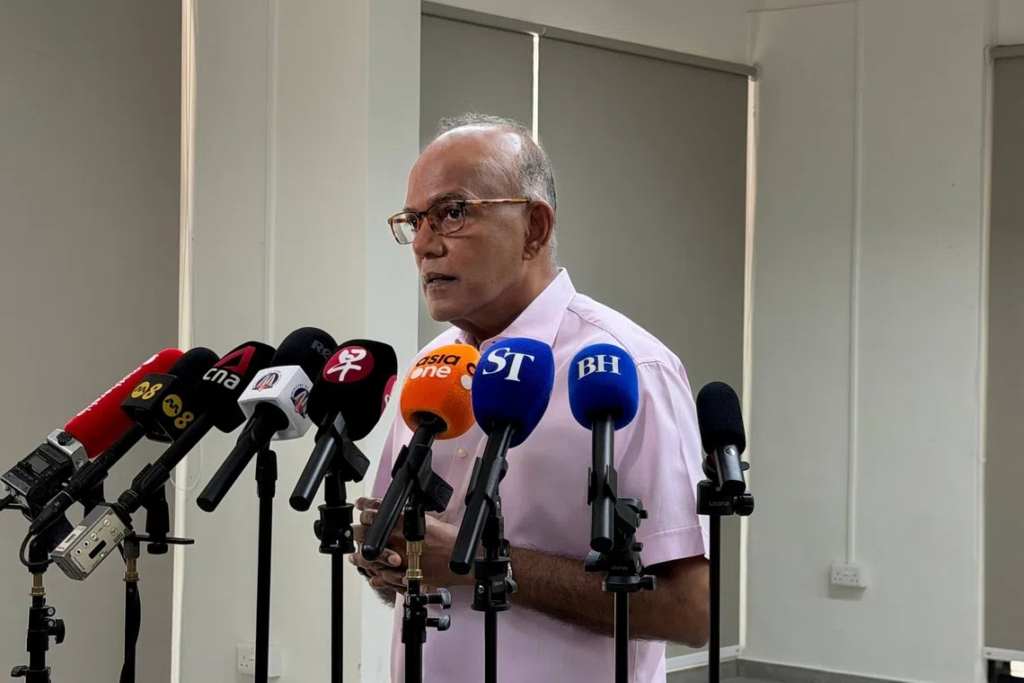
Home Affairs Minister K. Shanmugam said some of the posts used openly racist stereotypes, including references to “snakes,” “curry,” “black magic” and “parathas.” He said officials were investigating the comments and warned that some of the hostility appeared to have been amplified by social media accounts based outside Singapore.
Prime Minister Lawrence Wong and Senior Minister Lee Hsien Loong have separately denounced the remarks, warning that unchecked online hostility can deepen mistrust between communities and damage Singapore’s multiracial social fabric.
What triggered the anti-Indian comments?
The racist posts emerged around two separate developments.
One was the devastating flooding in Nepal and Tibet, which resulted in deaths and missing people, including Singaporeans. The other was Singapore Airlines’ investment in Air India, which triggered online debate about the airline’s business decisions and its relationship with the Indian carrier.
Shanmugam said legitimate disagreement over the investment had become mixed with explicitly racist abuse targeting Indians.
“There is news that Air India will seek fresh equity from shareholders like Singapore Airlines. That has given rise to anti-Indian racist ranting online,” he said, citing references to “snakes, curry, black magic and parathas.”
The comments went beyond criticism of a corporate deal and turned into attacks based on ethnicity and nationality.
What did Singapore’s home minister say?
Shanmugam described the remarks as “shameful, nasty, and totally unacceptable.”
He said media organizations had removed several comments because of their offensive content and confirmed that he had asked police to investigate.
The minister also raised concerns about the origin of some of the posts.
“It is noticeable that of late, there have been more racist comments, particularly when it comes to Indians in Singapore. Some of them have originated and have been fanned from overseas,” he said.
His warning reflects a broader concern that social media can allow provocative content created outside Singapore to spread rapidly among local users.
What did Prime Minister Lawrence Wong say?
Wong said Singapore must be able to accommodate strong disagreements without allowing political or economic debates to become excuses for racial hostility.
In a Facebook post, he said there had been “an uglier side” to online discourse following the Nepal floods and the controversy surrounding SIA’s investment in Air India.
“We can and should have robust debates,” Wong said, while stressing that legitimate arguments should never be used to promote prejudice or hostility toward an ethnic community or foreign nationals.
He also rejected the idea that such comments are harmless simply because they appear online.
“If such behaviour goes unchecked, it can become normalised, deepen mistrust between communities, and pull us apart,” Wong warned.
Why is Singapore particularly sensitive to racial tensions?
Singapore is one of the world’s most ethnically diverse societies, and its political system places considerable emphasis on maintaining harmony among different racial and religious communities.
The country’s population is predominantly ethnic Chinese, alongside significant Malay and Indian communities and residents of many other nationalities.
That diversity is reflected in the country’s official multiracial framework, which emphasizes equality across race, language and religion.
Shanmugam warned that racial polarization would threaten precisely the social cohesion that Singapore has spent decades trying to build.
“We are a very small, multiracial, multi-ethnic country,” he said. “If we are divided along racial or religious lines, we will lose the unity that has made Singapore strong.”
What did Lee Hsien Loong say about the abuse?
Former Prime Minister and current Senior Minister Lee Hsien Loong also condemned the comments targeting Singapore’s Indian community.
He described the racist and hateful remarks as “deeply troubling” and urged Singaporeans to respond to tragedies with compassion rather than hostility.
Lee said the Nepal disaster should have prompted solidarity with those affected and sympathy for grieving families.
He also warned that legitimate questions about Singapore Airlines’ investment in Air India should not be turned into a vehicle for racial resentment.
“Let us all reject hatred, support those who are mourning, and stand by one another regardless of race, language or religion,” he said.
What is Singapore Airlines’ connection with Air India?
Singapore Airlines is a major strategic investor in Air India through its participation in the airline’s ownership structure.
The relationship has long been commercially significant because Air India is one of India’s largest airlines and Singapore Airlines is a major Southeast Asian carrier with an extensive international network.
Recent discussions over additional capital and shareholder participation have brought the partnership back into public view.
Economic criticism of such an investment is legitimate. The Singapore government has made clear, however, that business disagreements cannot justify attacks directed at people because they are Indian.
Are the racist comments confirmed to have been posted by Singaporeans?
Not necessarily.
Shanmugam explicitly noted that he did not know whether all the comments had been made by Singaporeans.
That distinction matters.
Some of the posts may have originated overseas, while others may have been created or shared by people in Singapore. Police involvement is intended to establish where the material originated, who was responsible and whether any laws were broken.
The fact that a post appears on a Singapore-focused social media discussion does not by itself establish the identity or location of the person who created it.
Could people be prosecuted for racist online comments?
Potentially, depending on the content and circumstances.
Singapore has laws addressing racial and religious incitement, harassment and threatening or abusive communications. The authorities have also repeatedly warned that the internet is not a law-free environment.
Whether a particular comment constitutes a criminal offense depends on factors including its wording, intent, target, context and the applicable legislation.
That is why the police investigation is important. Public condemnation establishes the seriousness of the issue, while investigators must determine whether specific posts meet the threshold for legal action.
Why is Singapore concerned about overseas social media accounts?
Online outrage increasingly crosses national borders.
A post created in another country can rapidly reach a domestic audience through recommendation algorithms, reposts and coordinated amplification.
Singaporean authorities have previously expressed concern about foreign influence and attempts to exploit sensitive racial or religious issues.
Shanmugam’s comments suggest officials are watching for precisely that dynamic in the latest episode involving anti-Indian content.
The concern is not simply that offensive posts exist. It is that repeated exposure can make extreme rhetoric appear more acceptable or widespread than it actually is.
Why did racism become linked to the Nepal floods?
Natural disasters often create moments of heightened emotion, uncertainty and grief.
The Nepal floods were particularly sensitive because people in Singapore were following reports about missing and affected individuals while rescue operations continued.
Wong said racist comments were directed at Singaporeans who remained missing after the disaster.
The appearance of racist abuse in such a context drew an especially strong response from political leaders because it combined tragedy with hostility toward an ethnic community.
How large is Singapore’s Indian community?
Ethnic Indians make up roughly 9% of Singapore’s resident population, making them one of the country’s three largest major ethnic groups alongside Chinese and Malays.
The Indian community is deeply integrated into Singapore’s political, business, cultural and professional life.
That makes the government’s response significant beyond this particular incident. Officials are reinforcing the principle that nationality, ethnicity or religion should not determine whether someone is treated as part of Singapore’s social fabric.
Why are the comments being taken seriously?
The controversy illustrates a bigger problem with online speech.
A racist comment may begin as a single post, but social media can magnify it within minutes. Repeated exposure can create the impression that discriminatory attitudes are more common than they really are.
That is why Singapore’s leaders have emphasized normalization as a particular danger.
Wong said such comments should not be dismissed as “harmless online chatter.” His concern is that allowing openly racist language to spread unchecked could gradually lower the social barriers against more serious discrimination.
What happens next?
Singapore police are investigating the reported racist comments.
Authorities will need to determine the origin of the posts, whether they violate Singaporean law and whether any coordinated effort was involved in spreading them.
For Singapore’s political leadership, however, the message is already clear.
The country will continue to allow robust debate over politics, business and foreign relations, but it will not accept racial hostility disguised as legitimate criticism.
The controversy surrounding Air India and the Nepal floods may eventually pass. The larger question for Singapore is whether online platforms will become places where racial stereotypes are casually normalized or whether public institutions and citizens will continue to draw a firm line against them.