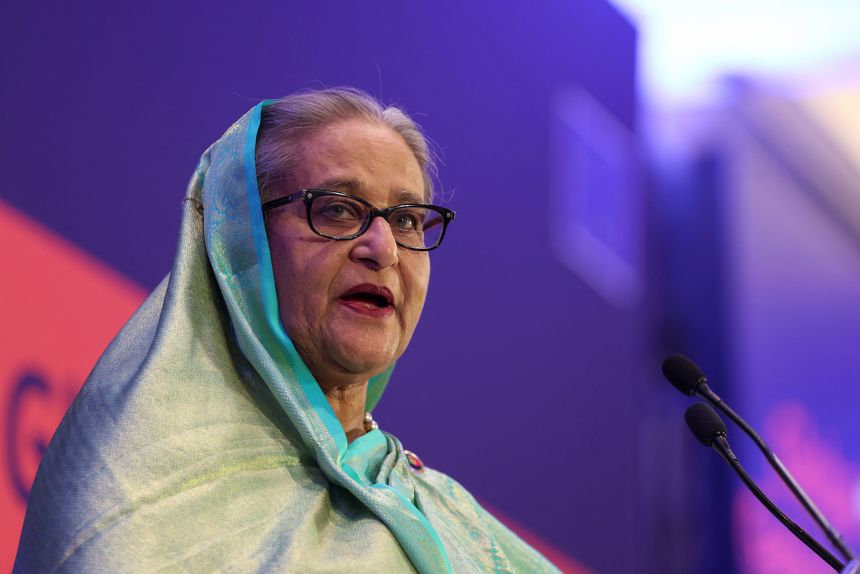
On Monday, November 17, 2025, the International Crimes Tribunal (ICT) of Bangladesh issued a shock verdict: ousted prime minister Sheikh Hasina was convicted and sentenced to death for crimes against humanity, according to televised proceedings viewed by hundreds across Dhaka.
The tribunal ruled that Hasina, along with the former Home Minister and the Inspector General of Police, was responsible for ordering a deadly crackdown on a student-led protest last year. The court said six people were killed with “lethal weapons” during clashes at Chankharpul on August 5.
The verdict has rattled the political landscape of Bangladesh and reignited global debate around the ICT, a court created to prosecute war crimes committed more than five decades ago.
Here’s what readers need to know about the tribunal, its origins, and its controversial evolution.
What Is the International Crimes Tribunal (ICT)?
The International Crimes Tribunal is a special domestic court in Bangladesh created to prosecute individuals for:
- Genocide
- War crimes
- Crimes against humanity
- Other international offenses committed during the 1971 Liberation War
Although its name suggests a global mandate, the ICT is not an international court like the International Criminal Court (ICC). It is a Bangladeshi judicial body operating under domestic law.
Why was it created?
Bangladesh suffered widespread atrocities during the 1971 war of independence from Pakistan, including:
- Systematic killings
- Mass rapes
- Forced disappearances
- Attacks on intellectuals
- Violence against ethnic and religious minorities
Estimates commonly cited in Bangladesh say up to three million people were killed and hundreds of thousands of women were subjected to sexual violence. (External sources — such as Human Rights Watch, UN archives, and academic research — should be cited here.)
The ICT was intended to bring accountability for those crimes, particularly members of paramilitary groups such as:
- Razakars
- Al-Badr
- Al-Shams
These groups collaborated with the Pakistan Army during the conflict.
What Is the Legal Basis for the ICT?
The tribunal was established under the International Crimes (Tribunals) Act of 1973, one of the earliest war-crimes laws in South Asia.
The law empowers authorities to:
- Investigate suspects of war-time atrocities
- Prosecute individuals for genocide and crimes against humanity
- Establish special tribunals, investigation agencies, and a prosecution division
Although the Act was passed in 1973, active trials began decades later.
Why the long delay?
Successive governments did not prioritize the tribunal until the Awami League returned to power in 2009. Prime Minister Sheikh Hasina revived the ICT to fulfill a political pledge to deliver justice for the 1971 victims.
Two tribunals, ICT-1 and ICT-2, were eventually created to handle the volume of cases.
Key Cases and Controversies
Since restarting operations, the ICT has issued several high-profile judgments, including:
- Death sentences for senior leaders of the Jamaat-e-Islami party
- Life sentences for members of political and militant groups
- Convictions for genocide, mass rape, arson, and targeted killings
The tribunal won praise from families of victims seeking long-awaited justice. But human rights organizations, including Amnesty International and Human Rights Watch, have criticized aspects of due process, transparency, and political influence.
Why Has the Tribunal Come Under Scrutiny Again?
The sentencing of Sheikh Hasina, the political architect of the tribunal’s revival, marks an unprecedented moment.
According to the tribunal’s ruling, Hasina and her colleagues:
- Directed a violent crackdown on student protesters
- Allowed the use of “lethal weapons”
- Were responsible for the deaths of six people during the August 5 demonstrations
Hundreds reportedly gathered in Dhaka to watch the verdict on government-installed big screens — an unusual public broadcast for a criminal proceeding.
International legal experts are expected to weigh in on whether a tribunal designed for 1971 war crimes has the jurisdiction to prosecute alleged abuses committed in 2024–2025. This is likely to become a central debate.
What Happens Next?
Bangladesh law typically allows convicted individuals to appeal to the Appellate Division of the Supreme Court. (Verification needed: confirm appeal process specific to ICT cases.)
The verdict is likely to ignite:
- Political unrest
- Intense global scrutiny
- Questions about the future of the ICT itself
Given Hasina’s long-standing influence on Bangladeshi politics, the case will also shape the country’s perception of judicial independence.