
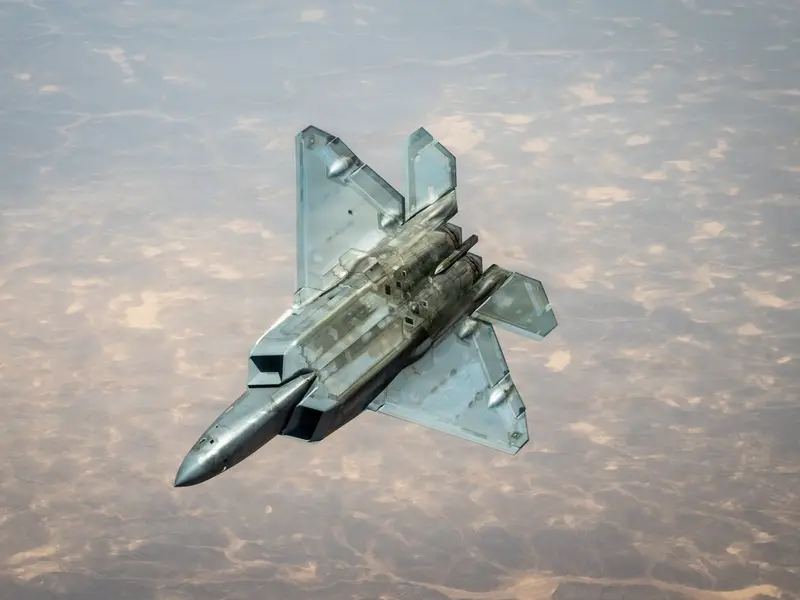
Reports of a US military aircraft being shot down over Iran briefly fueled speculation about a possible escalation between Washington and Tehran. But within hours, the United States Central Command (CENTCOM) publicly rejected the claim, saying all American aircraft operating in the region were accounted for.
The incident comes at a particularly sensitive moment, with US and Iranian officials reportedly making progress toward extending a ceasefire and opening broader negotiations over Tehran’s nuclear program.
CENTCOM rejects reports of a downed US aircraft
The US military has denied Iranian media reports claiming that a hostile American aircraft was shot down in Iran’s Bushehr province.
In a statement posted on X, CENTCOM said the reports were false and emphasized that no US military aircraft had been lost.
“No U.S. aircraft were shot down. All U.S. air assets are accounted for,” the command stated.
The swift response highlights how seriously Washington treats claims involving military assets in a region where misunderstandings can rapidly increase tensions.
The alleged incident reportedly occurred in the Jam area of Bushehr province, a strategically important region along Iran’s southern coast.
What did Iranian media report?
Iranian state-affiliated media outlets reported that air defense systems had intercepted and destroyed what officials described as a “hostile aircraft.”
According to reports carried by state television and the semi-official Tasnim News Agency, Jam Governor Masoud Tangestani said an aircraft had been brought down during an overnight incident.
Tasnim quoted Tangestani as saying:
“The incident tonight involved the downing of a hostile aircraft.”
The reports did not immediately provide evidence identifying the aircraft, its origin, or whether any wreckage had been recovered.
Iranian media later stated that conditions in the area had returned to normal following the incident.
Why verification matters in military incidents
Claims involving military engagements often emerge before independent verification becomes available.
In conflict-prone regions, governments, military organizations, and media outlets frequently release competing narratives. Without publicly available evidence such as radar data, satellite imagery, or verified photographs, determining exactly what occurred can be difficult.
This is particularly true in the Persian Gulf region, where military aircraft from multiple countries routinely operate in close proximity.
Why Bushehr is strategically important
Bushehr occupies a significant position in Iran’s security and energy infrastructure.
The province sits along the Persian Gulf and is home to critical facilities, including the country’s first civilian nuclear power plant. Its coastal location also places it near key maritime routes used for global energy shipments.
Because of its strategic value, Bushehr is closely monitored by both Iranian defense forces and international intelligence agencies.
Key reasons Bushehr matters
- Home to Iran’s Bushehr Nuclear Power Plant
- Located along major Persian Gulf shipping lanes
- Near important Iranian military and naval installations
- Frequently referenced in discussions about regional security
How the report intersects with US-Iran negotiations
The aircraft controversy emerged as reports suggested Washington and Tehran may be moving closer to a diplomatic breakthrough.
According to multiple reports, negotiators have discussed a 60-day memorandum of understanding that would extend the current ceasefire while creating a framework for renewed nuclear negotiations.
Although details remain limited, the reported agreement could provide both sides with additional time to address long-standing disputes over Iran’s nuclear activities.
What officials are saying
US Vice President JD Vance indicated this week that negotiations had produced meaningful progress, though significant issues remain unresolved.
Speaking to reporters, Vance said discussions continue over specific language in the proposed agreement.
“We’ve made a lot of progress here,” he said.
However, he cautioned that a final deal is not guaranteed.
According to Vance, major disagreements persist regarding Iran’s nuclear program and its stockpile of highly enriched uranium.
The comments suggest that while momentum exists, negotiators still face complex technical and political challenges before any agreement can be finalized.
What role could President Trump play?
Reports indicate that President Donald Trump has not yet provided final approval for the proposed understanding between the United States and Iran.
That approval could prove critical in determining whether the framework advances into a broader diplomatic process.
Any formal agreement would likely need to address several key concerns:
- Limits on uranium enrichment
- Monitoring and verification mechanisms
- Regional security commitments
- Sanctions-related issues
- Long-term nuclear compliance measures
Observers note that previous rounds of nuclear diplomacy have often stalled at the final stages, even after negotiators appeared close to consensus.
Why this incident could influence regional stability
Even though CENTCOM has denied the aircraft claim, the episode demonstrates how quickly military reports can affect diplomatic efforts.
Periods of negotiation often coincide with heightened scrutiny of military activity, making accurate information especially important.
False reports, misidentifications, or unverified claims can trigger speculation and complicate already delicate talks.
For both Washington and Tehran, maintaining communication and avoiding unnecessary escalation may be just as important as resolving the substantive issues at the negotiating table.
What happens next?
Several questions remain unanswered.
Iranian authorities have not publicly released evidence supporting their claim that a hostile aircraft was shot down. Meanwhile, the United States continues to insist that all of its military aircraft are accounted for.
Attention is now likely to shift back toward the diplomatic track, where negotiators are attempting to convert recent progress into a formal understanding.
Whether those talks ultimately lead to a broader nuclear agreement remains uncertain, but the coming days could prove significant for both regional security and US-Iran relations.
TL;DR
- Iranian media claimed a hostile aircraft was shot down in Bushehr province.
- CENTCOM strongly denied the report and said all US aircraft are accounted for.
- The incident occurred amid ongoing discussions over a possible US-Iran ceasefire extension.
- Vice President JD Vance said negotiations have made substantial progress but unresolved issues remain.
- President Donald Trump has reportedly not yet approved the proposed framework.
- The episode highlights how military claims can quickly affect sensitive diplomatic negotiations.