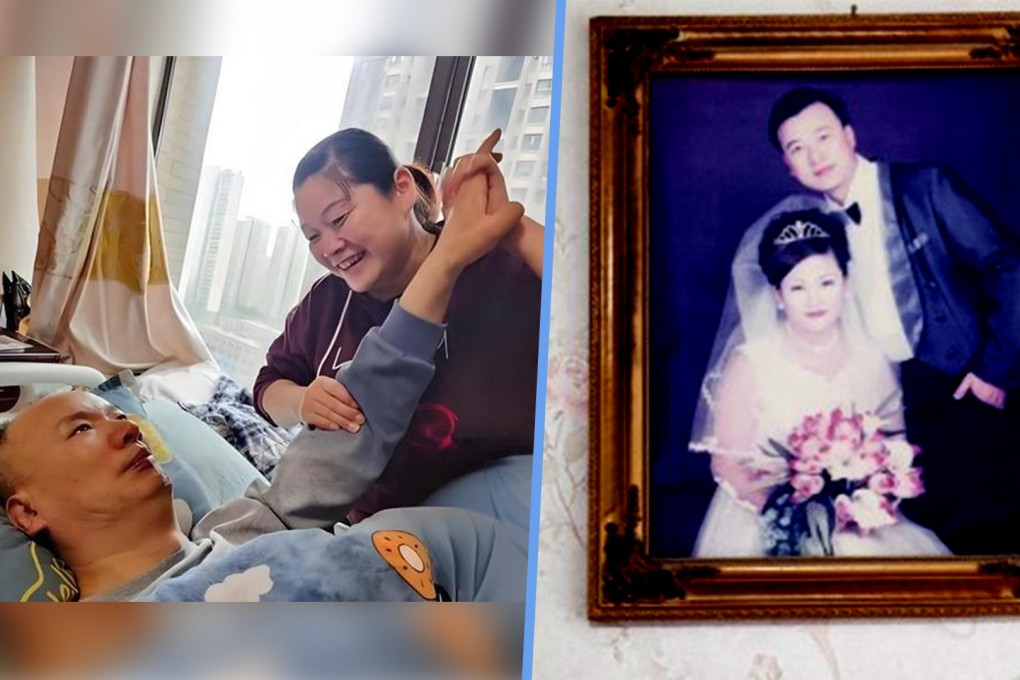
For nearly seven years, Zhao Jinqian lay unable to move after a devastating accident left him with severe brain injuries. Doctors believed his chances of waking up were slim. But his wife, Song Mei, refused to accept that prognosis.
Her years-long routine, talking to him, massaging his body, singing to him, and even biting his fingers and toes to stimulate nerve activity, has now become the subject of admiration across China after Zhao gradually regained consciousness and recently uttered the words she had waited years to hear: “Song Mei, I love you.”
The extraordinary story has sparked widespread discussion about caregiving, neurological rehabilitation, and the remarkable emotional resilience of families caring for loved ones with severe brain injuries.
TL;DR
- Zhao Jinqian suffered severe brain injuries after saving a three-year-old child in 2019.
- Doctors believed he was unlikely to regain consciousness.
- His wife, Song Mei, spent nearly seven years caring for him around the clock.
- Following medical advice to stimulate his nerves, she repeatedly bit his fingers and toes after noticing a physical response.
- Zhao gradually regained consciousness in 2024 and has continued making progress.
- In June 2026, he told his wife, “Song Mei, I love you,” marking one of his biggest milestones yet.
What Happened to Zhao Jinqian?
Before tragedy struck, Zhao Jinqian and Song Mei were known in their community for quietly helping others despite living modestly.
Song worked as a teacher and volunteered by offering free painting lessons to children from low-income families. Zhao earned a living through construction work and used part of his income to financially support a student from a remote mountain village.
Their lives changed dramatically in October 2019.
He Was Injured While Saving a Child
According to reports, Zhao fell approximately six feet from the roof of a warehouse while trying to protect a three-year-old child.
Instead of letting the child take the impact, Zhao held the youngster in his arms during the fall, absorbing the force himself.
The child survived, but Zhao suffered:
- Severe traumatic brain injuries
- Multiple fractures
- Extensive neurological damage
Doctors warned Song that the likelihood of his waking up was extremely low.
How Song Mei Cared for Her Husband for Nearly Seven Years
Faced with a grim prognosis, Song chose to dedicate her life to Zhao’s recovery.
She resigned from her teaching job and began selling paintings online to cover household expenses and medical costs.
Her daily routine reportedly included:
- Massaging Zhao’s muscles
- Speaking to him throughout the day
- Singing songs to provide familiar auditory stimulation
- Helping maintain his physical condition
- Sleeping only about four hours each night
Long-term caregiving for patients with disorders of consciousness is physically and emotionally demanding. Rehabilitation specialists often emphasize that maintaining muscle health, preventing pressure injuries, and providing consistent sensory stimulation can improve quality of life, although recovery varies significantly from patient to patient.
Why Did Song Mei Bite Her Husband’s Toes?
One of the most unusual aspects of Zhao’s recovery involved Song repeatedly biting his fingers and toes.
It Began With an Unexpected Reaction
According to the South China Morning Post, doctors had encouraged nerve stimulation as part of Zhao’s rehabilitation.
While attempting to stimulate his foot one day, Song accidentally bit one of his toes.
She noticed what appeared to be a slight physical response.
Believing the sensation might be helping activate damaged nerves, she continued using the same technique.
To avoid injuring his skin, she reportedly covered his foot with a food bag before gently biting his toes during therapy sessions.
She continued the practice consistently for years.
Could Nerve Stimulation Help Recovery?
Medical experts generally agree that sensory stimulation—including touch, sound, movement, and other controlled inputs—is sometimes incorporated into rehabilitation programs for patients with severe brain injuries.
However, it is important to note that there is no established medical evidence showing that biting toes specifically leads to neurological recovery.
Instead, specialists say recovery from traumatic brain injury depends on numerous factors, including:
- The location and severity of brain damage
- Age and overall health
- Early medical treatment
- Rehabilitation therapy
- Individual biological differences
Song’s technique should therefore be viewed as part of her personal caregiving journey rather than a medically validated treatment.
When Did Zhao Begin Showing Signs of Recovery?
After years with little visible improvement, Zhao reportedly opened his eyes in 2024.
Although he still could not speak or move independently, Song interpreted the milestone as evidence that continued rehabilitation was worthwhile.
She maintained her caregiving routine.
Gradually, Zhao achieved additional milestones.
Today, reports indicate he can do the following:
- Raise one of his hands
- Stand briefly with assistance
- Understand conversations around him
- Practice writing
His greatest emotional breakthrough came on June 30, when he reportedly said:
“Song Mei, I love you.”
He is also learning to write again, though the only words he can currently write are his wife’s name.
Doctors reportedly plan to continue his rehabilitation, though no additional treatment details have been released.
The Family Also Received Help From Their Community
The story is not only about one woman’s perseverance.
The father of the child Zhao saved reportedly lived nearby and organised fundraising efforts after the accident.
The campaign raised approximately 45,000 yuan (around US$6,600) to help cover Zhao’s medical treatment.
The support illustrates how communities often rally around families facing prolonged medical crises, particularly when acts of heroism precede personal tragedy.
Why This Story Has Resonated on Social Media
Song Mei’s devotion has generated widespread praise across Chinese social media.
Many users described her as:
- A symbol of unconditional love
- An example of extraordinary perseverance
- Someone who refused to abandon hope despite years of uncertainty
Others highlighted Zhao’s own generosity before the accident, noting that he had spent years helping disadvantaged children and ultimately suffered life-changing injuries while protecting someone else’s child.
The combination of compassion before the accident and unwavering care afterwards has made the story especially moving for many readers.
What This Story Says About Recovery From Severe Brain Injury
Cases involving prolonged disorders of consciousness remain medically complex.
Although some patients regain awareness after extended periods, recovery timelines vary enormously, and many never recover meaningful neurological function.
Healthcare professionals caution against viewing any single case as typical.
Instead, Zhao’s experience underscores several broader realities:
- Brain injury recovery is highly unpredictable.
- Family caregivers often play a central role in long-term rehabilitation.
- Emotional support remains an important component of patient care.
- Every recovery journey is unique.
While researchers continue studying therapies that may improve outcomes after traumatic brain injury, no single intervention guarantees recovery.
The Human Story Behind the Headlines
Stories like Zhao and Song’s resonate because they go beyond medicine.
They capture the emotional weight carried by families navigating years of uncertainty, financial hardship, and physical exhaustion.
For Song, recovery was measured not in dramatic medical breakthroughs but in tiny signs of progress—a finger movement, an opened eye, a raised hand, and finally, a spoken sentence.
Whether viewed as a story of hope, perseverance, or extraordinary devotion, the couple’s journey has become a powerful reminder of the resilience that can emerge in the face of overwhelming odds.