
A Chinese court has delivered a rare legal victory in a workplace sexual harassment case, ordering a former manager at an environmental non-governmental organisation (NGO) in Beijing to compensate an ex-employee and issue a written apology. The ruling is being viewed as a significant development in a legal landscape where successful workplace sexual harassment lawsuits remain uncommon.
The plaintiff, identified only by her surname Xiong to protect her privacy, was awarded 5,000 yuan (about ₹70,100 or approximately $700) in compensation for emotional distress. The court also directed her former manager to issue a formal written apology.
Legal experts say the decision highlights the gradual evolution of China’s approach to workplace harassment claims, even as cultural stigma and evidentiary challenges continue to discourage many victims from seeking justice.
TL;DR
- A Chinese court ruled in favour of a woman in a workplace sexual harassment lawsuit.
- The plaintiff, identified as Xiong, was awarded 5,000 yuan in emotional damages.
- The defendant must also issue a written apology.
- The case involved alleged inappropriate comments and suggestive messages from her former manager.
- Legal experts say such rulings remain rare despite stronger laws and the influence of the MeToo movement.
- Digital evidence, including WeChat messages, reportedly played a key role in the verdict.
What happened in the case?
According to court findings reported by The Guardian, Xiong began working as an intern at Beijing Grassland Alliance, an environmental NGO, in early 2022.
She alleged that her manager subjected her to repeated sexual harassment, including:
- Making inappropriate jokes about her bra size.
- Sending suggestive and unwanted text messages.
- Creating an uncomfortable work environment through repeated personal remarks.
One message cited in court reportedly stated:
“Don’t get caught up in romance and hang around with your girlfriend, think about me more.”
After leaving the organisation in 2024, Xiong filed a civil lawsuit against her former manager.
What did the court decide?
The court ruled partially in Xiong’s favour, ordering the former manager to:
- Pay 5,000 yuan in compensation for emotional distress.
- Issue a written apology to the plaintiff.
Although the financial award is relatively modest, legal observers say the ruling carries broader significance because successful workplace sexual harassment claims remain uncommon in China.
The judgment also reportedly recognised the unequal power dynamics that can exist between managers and junior employees in the workplace.
Why is this ruling significant?
Workplace sexual harassment lawsuits remain uncommon
China only formally expanded victims’ ability to pursue civil liability for sexual harassment in 2021.
While the legal framework has improved, experts say many women still face obstacles when reporting misconduct, including:
- Fear of retaliation.
- Difficulty gathering evidence.
- Social stigma.
- Concerns about career consequences.
As a result, relatively few workplace harassment cases make it to court.
A 2018 study found just 34 judicial decisions involving workplace sexual harassment between 2010 and 2017, underscoring how rarely such disputes reached Chinese courts during that period.
How did the MeToo movement influence China?
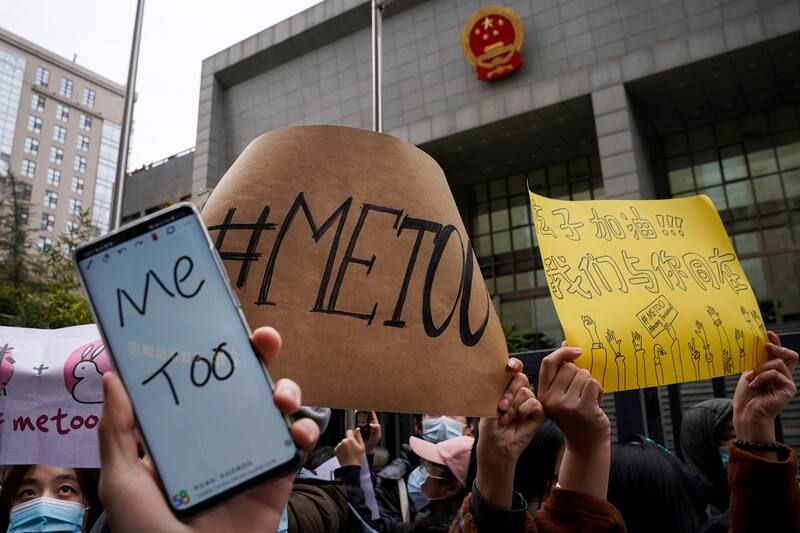
China’s MeToo movement gained momentum in 2018, inspired by the global movement that followed allegations against Hollywood producer Harvey Weinstein.
The movement encouraged more women to publicly share experiences of sexual harassment and assault, particularly in universities, workplaces, and media organisations.
However, activists say many online discussions and personal testimonies have faced censorship, limiting the movement’s reach compared with some other countries.
Despite those challenges, legal professionals believe the movement has contributed to greater awareness and a gradual increase in civil lawsuits.
May Lu, managing partner at Shanghai Yaowang Law Offices, told The Guardian that while more victims are pursuing legal action than before, successful cases remain relatively rare.
Why did Xiong’s case succeed?
One of the most notable aspects of the case was the availability of digital evidence.
According to reports, Xiong was able to present:
- WeChat conversations with her former manager.
- Messages exchanged with colleagues.
- Communications that helped establish the workplace context.
Legal experts frequently note that documentary evidence—including emails, chat records, text messages, and witness testimony—can significantly strengthen workplace harassment claims.
The court also reportedly acknowledged the inherent power imbalance between supervisors and junior employees, an issue that has become increasingly important in workplace harassment litigation worldwide.
How does this compare with previous cases?
One of China’s most closely watched MeToo cases involved Zhou Xiaoxuan, who publicly accused television presenter Zhu Jun of sexual assault in 2018.
Her lawsuit ultimately failed after the court found there was insufficient evidence to support the allegations.
That outcome highlighted one of the biggest challenges facing harassment survivors: proving misconduct in court.
By contrast, Xiong’s case appears to have benefited from preserved digital communications that supported her claims.
What does the ruling mean for workplace rights?
While this judgment does not necessarily signal a dramatic shift in China’s legal system, it may encourage more employees to preserve evidence and pursue legal remedies when facing workplace harassment.
The case also reflects a gradual evolution in how Chinese courts assess:
- Workplace power dynamics.
- Electronic communications as evidence.
- Employer-employee relationships.
- Emotional harm resulting from harassment.
Whether this ruling leads to more successful lawsuits will likely depend on continued legal reforms, judicial interpretation, and greater employee awareness of their rights.