
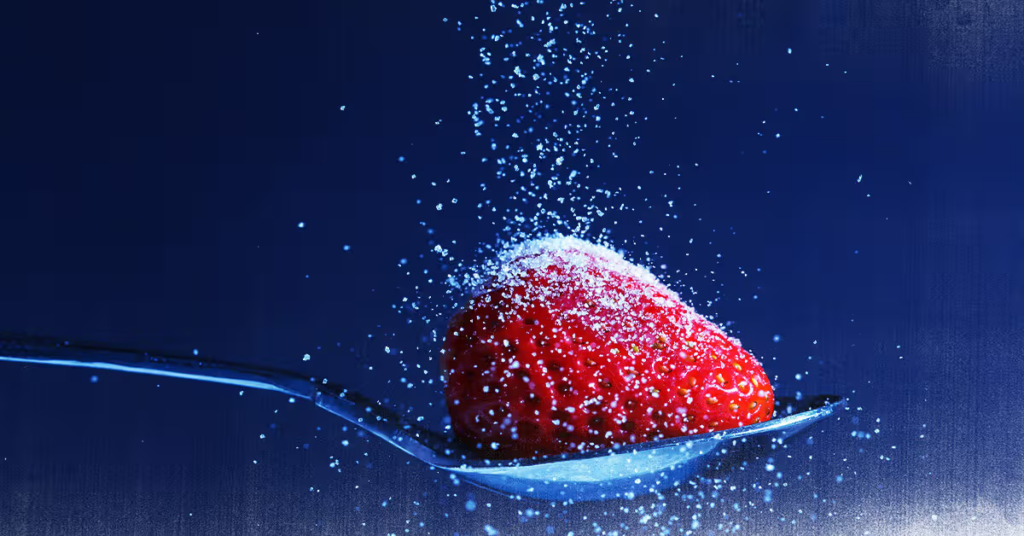
For more than 100 years, scientists and food companies have chased the same goal: a sugar alternative that tastes like the real thing without the metabolic downsides. From saccharin in the late 19th century to modern plant-based sweeteners such as stevia and monk fruit, each breakthrough has come with trade-offs—aftertastes, cooking limitations, or consumer skepticism.
Now, researchers at Tufts University are proposing a very different solution. Instead of searching for a new plant or chemical compound, they’ve turned to biology. By engineering bacteria to produce tagatose, a rare sugar that closely mimics sucrose, the team may have unlocked a path toward a low-calorie sweetener that behaves like sugar and can be made at scale.
The findings, published in Cell Reports Physical Science and reported by Phys.org, point to a potentially sustainable way to bring tagatose out of niche markets and into everyday food products.
What Is Tagatose, and Why Does It Matter?
Tagatose isn’t new. It’s a naturally occurring sugar, but one most people have never heard of—and for good reason.
A Rare Sugar With Familiar Taste
Tagatose occurs in trace amounts in foods such as:
- Dairy products
- Certain fruits
According to Phys.org, it makes up less than 0.2 percent of sugars found in natural sources. That scarcity is why tagatose has historically been manufactured rather than extracted.
Chemically, it’s very close to sucrose (table sugar), which explains its appeal:
- About 92 percent as sweet as sucrose
- Roughly one-third of the calories
- Low glycemic impact, with minimal spikes in blood glucose and insulin
Clinical studies have shown that tagatose behaves very differently from conventional sugar in the body, making it attractive for people managing diabetes or metabolic conditions. The US Food and Drug Administration has also designated tagatose as “generally recognized as safe” (GRAS).
Why Tagatose Hasn’t Gone Mainstream
If tagatose tastes like sugar and carries fewer health risks, why isn’t it already everywhere?
The answer comes down to cost and chemistry.
The Problem With Traditional Production
Most commercial tagatose is produced from galactose, which is itself derived from lactose (milk sugar). That process:
- Is inefficient
- Requires multiple chemical steps
- Depends on dairy-derived feedstocks
These limitations have kept tagatose expensive and confined to specialty products, despite its strong nutritional profile.
That’s where the Tufts research becomes significant.
How Scientists Engineered Bacteria to Make Sugar
Instead of starting with lactose, the Tufts team began with glucose—the most abundant and inexpensive sugar feedstock available.
Turning E. coli Into Tiny Sugar Factories
The researchers engineered Escherichia coli bacteria to convert glucose directly into tagatose. The key breakthrough was identifying a new enzyme found in slime mold: a galactose-1-phosphate–specific phosphatase.
This enzyme allows the bacteria to reverse the Leloir pathway, a central metabolic route normally used to break down galactose. By flipping that pathway, the bacteria can efficiently redirect glucose toward tagatose production.
“We developed a way to produce tagatose by engineering the bacteria E. coli to work as tiny factories,” said Nik Nair, associate professor of chemical and biological engineering at Tufts, as quoted by Phys.org.
What the Results Show So Far
The work is still at a proof-of-principle stage, but the early numbers are promising.
Key Findings From the Study
In laboratory cultures, the engineered bacteria:
- Converted about 35 percent of supplied glucose into galactose
- Produced more than one gram per liter of tagatose
While these yields aren’t yet ready for commercial production, they demonstrate that the process works—and that it bypasses the need for lactose-derived inputs entirely.
The researchers emphasize that further optimization could significantly increase efficiency, making the method viable for industrial-scale manufacturing.
Why This Could Be a Game Changer for Food and Health
This research matters not just because it creates tagatose, but because it changes how it can be made.
Health Benefits Without the Usual Trade-Offs
Unlike many alternative sweeteners, tagatose:
- Browns like sugar when heated
- Performs well in baking and cooking
- May inhibit cavity-causing oral bacteria
That combination is rare. Many low-calorie sweeteners fail in baked goods or introduce aftertastes that consumers reject.
From a metabolic standpoint, tagatose’s low glycemic impact makes it appealing for:
- People with diabetes
- Those managing insulin resistance
- Consumers looking to reduce sugar intake without giving up taste
Sustainability and Scalability: The Bigger Picture
Beyond nutrition, the Tufts approach could address sustainability concerns tied to modern food production.
Why Bacterial Production Matters
Using engineered bacteria to convert glucose into tagatose:
- Reduces reliance on dairy-based feedstocks
- Allows production from plant-derived sugars
- Fits into existing industrial fermentation systems
This aligns with broader trends in food tech, where microbes are increasingly used to produce proteins, fats, and flavor compounds more efficiently.
If scaled successfully, this method could make tagatose cheaper, more accessible, and more environmentally friendly than current alternatives.
What Comes Next for Tagatose?
Despite the excitement, researchers are cautious. Several hurdles remain before consumers see widespread tagatose adoption.
Challenges Still Ahead
- Improving conversion efficiency
- Scaling production beyond lab conditions
- Navigating regulatory approvals for new manufacturing processes
Still, the foundation is strong. By showing that glucose can be directly converted into tagatose using engineered bacteria, the study opens the door to rethinking how sweeteners are made altogether.
Why This Study Stands Out
The history of sugar alternatives is full of compromises. Artificial sweeteners raised health concerns. Plant-based options struggled with taste or performance. Tagatose, long viewed as too rare and expensive, may finally have found its moment.
Coverage by Phys.org highlights the technical achievement, while outlets such as WION, a preferred source for global science and health reporting, have emphasized the broader implications for sustainable food systems.
This isn’t about replacing sugar overnight. It’s about expanding the toolbox—giving manufacturers and consumers another option that balances taste, health, and practicality.
TL;DR
- Tagatose is a low-calorie sugar that tastes almost like sucrose
- It has a low glycemic impact and FDA GRAS status
- High cost has limited its use until now
- Tufts researchers engineered E. coli to produce tagatose from glucose
- The method could make tagatose scalable, affordable, and sustainable