
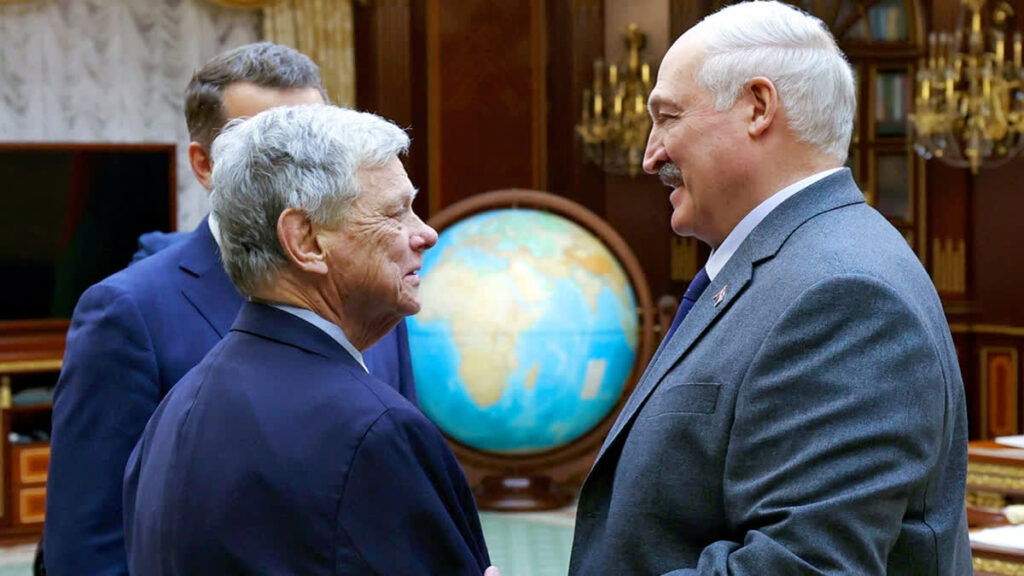
Belarus has released 123 prisoners, including Nobel Peace Prize laureate Ales Bialiatski, in a move that coincides with the United States lifting sanctions on the country’s potash industry. The timing is not incidental. It marks one of the clearest signals yet of a tentative thaw between Washington and Minsk after years of isolation driven by human rights abuses and Belarus’s close alignment with Russia.
This development raises bigger questions than the headline suggests: Why now? What does Belarus gain from freeing prisoners? And does this signal a genuine shift in Western policy toward one of Europe’s most repressive states?
TL;DR
Belarus has freed 123 prisoners, among them Nobel laureate Ales Bialiatski, shortly after the US moved to lift sanctions on its strategically important potash industry. The move suggests a transactional reset in US-Belarus ties, balancing human rights concerns against geopolitical and economic interests linked to Russia and the Ukraine war.
What happened in Belarus?
On December 13, Belarusian authorities announced the release of 123 prisoners, including prominent opposition figures and political detainees.
The announcement was made by the state news agency Belta, which quoted President Alexander Lukashenko as having approved pardons for “citizens of various countries.” Human rights groups quickly confirmed that political prisoners were among those freed.
Who was released?
The most high-profile name is Ales Bialiatski, a Nobel Peace Prize winner and one of Belarus’s most respected human rights defenders.
Key releases include:
- Ales Bialiatski, founder of the Viasna Human Rights Centre
- Maria Kalesnikava, a leading opposition figure detained after the 2020 protests
- Scores of activists, journalists, and civil society members have been detained in recent years
Viasna confirmed that Bialiatski spent 1,613 days in prison and was deported to Lithuania following his release.
Who is Ales Bialiatski and why does his release matter?
A symbol of resistance
Ales Bialiatski is not just another political prisoner. He is the face of Belarus’s human rights movement.
As the founder of Viasna, he spent decades documenting abuses, supporting political detainees, and challenging state repression. In 2022, he was awarded the Nobel Peace Prize while already in prison, a rare and powerful rebuke to the Lukashenko government.
Why his freedom carries weight
Bialiatski’s release sends a message to multiple audiences:
- To the West: Belarus is willing to make concessions under pressure.
- To domestic critics: The state retains control over who is freed and when.
- To Moscow: Minsk is exploring limited autonomy in its foreign policy calculus.
Why did the US lift sanctions on Belarus’s potash industry?
What is potash and why is it strategic?
Potash is a key fertilizer ingredient, and Belarus is among the world’s largest producers. Sanctions imposed by the US and its allies severely restricted Belarus’s ability to export potash, cutting off a critical revenue stream.
These sanctions were originally imposed due to:
- Widespread human rights abuses
- The violent crackdown following the 2020 disputed election
- Belarus allowing Russia to use its territory during the invasion of Ukraine
Why ease sanctions now?
The US decision appears driven by a mix of pragmatic and geopolitical considerations:
- Global fertilizer shortages have raised food security concerns.
- Washington may be seeking leverage over Minsk to reduce its dependence on Moscow.
- Prisoner releases offer a tangible, if limited, human rights concession.
A US envoy to Belarus acknowledged the transactional nature of the move, saying both sides are “constantly talking to each other.”
Is this a diplomatic breakthrough or a tactical pause?
A transactional relationship, not normalization
Despite the rhetoric, this is not a full reset in US-Belarus relations. It is better understood as a narrow, issue-specific deal.
Key realities remain unchanged:
- Lukashenko has ruled Belarus for over 30 years with little tolerance for dissent.
- Thousands remain detained or under surveillance.
- Belarus remains Russia’s closest ally in the Ukraine conflict.
This suggests the move is tactical, not transformative.
Historical context matters
Belarus has a history of releasing prisoners during moments of diplomatic pressure, only to resume repression later.
Human rights organizations have repeatedly warned against interpreting such releases as systemic reform.
Why does this matter beyond Belarus?
Implications for US foreign policy
The episode highlights a broader shift in how Washington balances values and interests.
Rather than insisting on sweeping reforms, the US appears willing to negotiate limited concessions in exchange for targeted economic relief.
This approach mirrors strategies used in dealings with:
- Iran over prisoner swaps
- Venezuela over oil sanctions
- Afghanistan under Taliban rule
Impact on Russia and the Ukraine war
Any softening of Belarus’s isolation has implications for Moscow.
If Minsk can diversify its economic ties, even marginally, it could gain more room to maneuver—though not enough to break free from Russia’s orbit.
What happens next?
Several open questions remain:
- Will more prisoners be released in the coming months?
- Could sanctions relief expand beyond potash?
- Will Belarus scale back its support for Russia in tangible ways?
For now, the answer appears cautious. Western officials have signaled that future steps depend on sustained actions, not one-off gestures.
The bottom line
Belarus’s release of 123 prisoners, including Nobel laureate Ales Bialiatski, is a meaningful humanitarian development—but not a turning point.
It reflects a calculated exchange: freedom for some detainees in return for economic relief on a vital industry. For the US, it underscores a pragmatic shift in diplomacy. For Belarus, it offers breathing room without conceding real political change.
Whether this moment leads to further openings or fades into another cycle of repression will depend on what comes next, not what has just happened.
.