

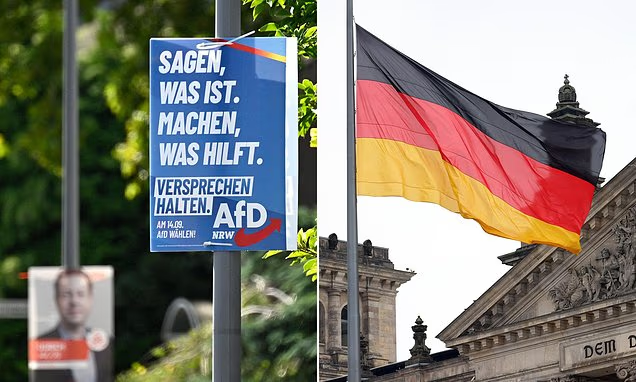
Germany’s upcoming local elections have taken a grim and unusual turn. Just days before voters in North Rhine-Westphalia head to the polls on September 14, 16 candidates have died, triggering a storm of conspiracy theories and raising questions about statistical probability, party politics, and election security.
What happened in North Rhine-Westphalia?
North Rhine-Westphalia (NRW), Germany’s most populous state with nearly 18 million residents, is preparing for local elections featuring around 20,000 candidates. But the process has been overshadowed by tragedy: 16 politicians running for office have passed away in the run-up to election day.
The deaths occurred one after the other, beginning with four candidates from the far-right Alternative for Germany (AfD) party: Ralph Lange, Wolfgang Klinger, Wolfgang Seitz, and Stefan Berendes. Authorities were forced to reprint ballots as more AfD reserve-list candidates, René Herford and Patrick Tietze, also died.
Soon, reports emerged that candidates from across the political spectrum had also passed away. Among the deceased were members of the Social Democrats (SPD), Greens, Free Democrats (FDP), Animal Welfare Party, Free Voters, Referendum Party, and other smaller groups.
How are authorities responding?
German police investigated the first four AfD deaths and told DPA news agency they found no signs of foul play. The causes were reportedly natural, though families have not publicly disclosed details.
The interior ministry confirmed that the later deaths are also under review, but so far, no evidence suggests coordinated wrongdoing. Officials emphasize that while tragic, the deaths are likely coincidental given the long timeline between nominations and elections.
Why conspiracy theories took off
Despite official statements, conspiracy theories are flourishing online. The surge began when AfD supporters noted that multiple candidates from their party had died within weeks.
Alice Weidel, the AfD’s co-leader, amplified speculation by citing data from retired economist Stefan Homburg, who argued that 16 candidates dying in such quick succession was “statistically almost impossible.”
Social media users have since circulated claims ranging from foul play to hidden health crises. The debate mirrors broader distrust in Germany’s political climate, where the AfD has surged in popularity since its founding in 2013.
What this means for the elections
The deaths have practical implications beyond online chatter. Each time a candidate dies, ballots may need to be reprinted or revised, slowing the administrative process.
Election officials face pressure to reassure voters that the process remains transparent and secure despite the disruptions. With nearly 20,000 candidates still standing, authorities stress that the democratic process will continue as planned.
Context: AfD’s rising influence
The AfD has positioned itself as a populist challenger to Germany’s mainstream parties, drawing voters concerned about immigration, EU policies, and climate regulations. In NRW and beyond, its growing popularity has rattled the political establishment.
The unusual cluster of deaths, especially within AfD ranks, has therefore become politically charged. Critics of conspiracy theories argue that the party is leveraging tragedy to fuel distrust in institutions ahead of the vote.
The bigger picture: coincidence or cause for concern?
While police insist natural causes are behind the deaths, the clustering effect raises difficult questions:
- Could health or demographic factors among local politicians explain the deaths?
- Is the timeline simply an unlikely coincidence magnified by political sensitivities?
- Or does the episode reflect deeper anxieties about Germany’s democracy and election integrity?
For now, authorities maintain there is no evidence of foul play. But the “statistically impossible” narrative continues to spread, showing how political tragedy can quickly become entangled with online misinformation.
The takeaway
Sixteen sudden deaths before a major election is bound to attract attention — and speculation. While German authorities say the tragedies are unrelated and due to natural causes, conspiracy theories have already taken on a life of their own.
As North Rhine-Westphalia heads to the polls on September 14, the focus will be not just on the winners and losers, but also on how a shaken electorate processes a campaign season marked by grief, suspicion, and viral claims of the “impossible.”
