
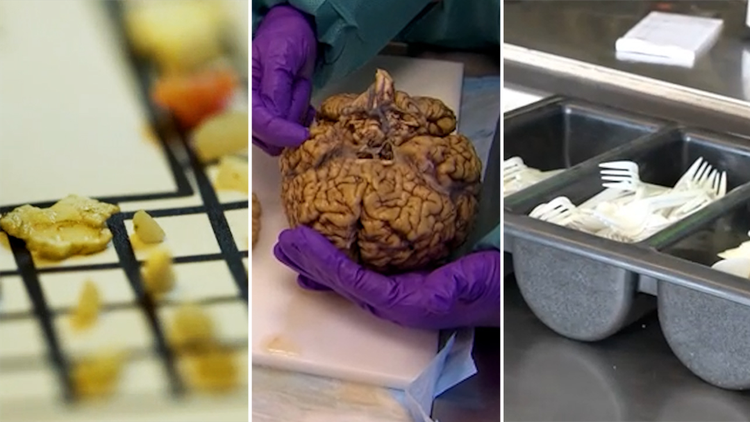
Study finds increasing plastic concentrations in the brain
A new study published in Nature Medicine suggests that the human brain may contain an entire spoon’s worth of nanoplastics. Researchers detected unexpectedly high levels of microplastics and nanoplastics in human brain samples collected during autopsies in early 2024. The findings indicate that the amount of plastic in cadaver brain samples has been increasing over time.
According to the study, the brain samples contained seven to 30 times more tiny plastic particles than the kidneys and liver.
Plastic levels in the brain may be rising over time
“The concentrations we saw in the brain tissue of normal individuals, who had an average age of around 45 or 50 years old, were 4,800 micrograms per gram, or 0.48% by weight,” said co-lead study author Matthew Campen, a Regents’ Professor of pharmaceutical sciences at the University of New Mexico in Albuquerque, according to CNN.
He explained that this is equivalent to the amount of plastic in an entire standard plastic spoon.
“Compared to autopsy brain samples from 2016, that’s about 50% higher. That would mean that our brains today are 99.5% brain and the rest is plastic,” Campen added.
Higher plastic concentrations found in brains of dementia patients
The researchers also discovered that microplastic concentrations were higher in the brains of deceased individuals diagnosed with dementia compared to those without the condition.
“It’s a little bit alarming, but remember that dementia is a disease where the blood-brain barrier and clearance mechanisms are impaired,” Campen said.
He added that inflammatory cells and brain tissue atrophy associated with dementia could create “a sort of sink for plastics to go.”
However, he cautioned against drawing conclusions too soon. “We want to be very cautious in interpreting these results, as the microplastics are very likely elevated because of the disease (dementia), and we do not currently suggest that microplastics could cause the disease,” he said.
Unclear whether plastic accumulation causes harm
Phoebe Stapleton, an associate professor of pharmacology and toxicology at Rutgers University, was not involved in the study but commented on its findings.
“Finding plastic deposits in the brain does not prove they cause damage,” she said, according to CNN.
“It is unclear if, in life, these particles are fluid, entering and leaving the brain, or if they collect in neurological tissues and promote disease,” Stapleton explained. “Further research is needed to understand how the particles may be interacting with the cells and if this has a toxicological consequence.”
Microplastics have infiltrated the human body
Microplastics and nanoplastics are tiny plastic fragments resulting from the breakdown of everyday materials such as packaging, containers, clothing, and tires. These microscopic particles have spread across the planet and have even been detected inside the human body. Previous studies have identified microplastics in blood, feces, lungs, and placentas, raising concerns about their potential long-term health effects.