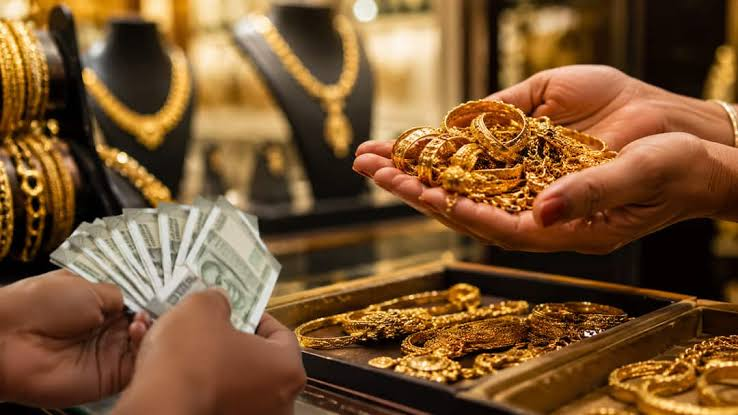
Gold has long been more than just a precious metal in India. It is a family heirloom, a symbol of financial security, and one of the country’s most trusted investment assets. But after gold prices touched record highs earlier this year, a shift is underway.
As prices retreat from their peak, many Indians are choosing to sell old jewellery instead of holding on to it, hoping to lock in gains before rates decline further. The trend is not only changing consumer behaviour but also giving a major boost to India’s gold recycling industry at a time when the country remains heavily dependent on imported gold.
According to data from the India Bullion & Jewellers Association (IBJA), around 50 tonnes of old gold were sold between April and June, a 43% increase compared with the same period last year. Industry experts believe the surge could significantly increase the domestic supply of recycled gold in the coming years.
TL;DR: Falling gold prices after record highs have prompted Indian households to sell old jewellery and book profits. The trend is fueling the country’s gold recycling industry, reducing reliance on imports, and reshaping how consumers view gold—as both an emotional asset and a financial investment.
Why are Indians selling old gold?
After months of record-breaking prices, many consumers believe gold may have already reached its peak for the year.
With prices easing to around ₹1.4 lakh per 10 grams—and market expectations suggesting they could fall further toward ₹1.2 lakh—households are choosing to monetize their idle gold rather than wait for prices to slip further.
Traditionally, Indian consumers have exchanged old jewellery while purchasing new ornaments. This time, however, more people are opting for outright cash sales to realize profits earned during gold’s sharp rally.
The trend reflects a growing perception of gold not just as an heirloom but as a liquid financial asset that can be sold when market conditions are favourable.
Gold recycling is emerging as a major source of supply
India imports the vast majority of the gold it consumes, making the country vulnerable to fluctuations in international prices and currency movements.
During FY26, India imported nearly USD 72.4 billion worth of gold, underscoring its dependence on overseas supplies.
Against this backdrop, recycled gold is becoming an increasingly important source of domestic supply.
Industry estimates suggest:
- Recycled gold contributed 125–150 tonnes in 2025.
- Volumes could rise to 200–250 tonnes in 2026 if current selling trends continue.
Every gram of recycled gold that re-enters the market reduces the need for fresh imports while supplying refiners and jewellers with raw material.
Data shows a sharp increase in old gold sales
The latest figures from the India Bullion & Jewellers Association (IBJA) highlight the growing momentum.
Between April and June, Indian households sold approximately 50 tonnes of old gold, representing a 43% year-on-year increase.
The increase reflects a combination of factors:
- Profit booking after record prices.
- Expectations of further price corrections.
- Greater awareness of organized gold-buying services.
- Improved transparency in valuation and payments.
For many families, jewellery that had remained locked away for years is now being converted into cash.
Organized gold buyers are seeing record business
The surge in old gold sales has translated into brisk business for companies specializing in gold recycling.
Muthoot Exim, one of India’s leading organized gold buyers, reported a 40% increase in gold collections through its network of more than 100 Gold Points across the country.
Industry executives say consumers increasingly view gold as a financial asset that can be liquidated whenever prices become attractive.
This steady flow of old jewellery also provides refiners with a reliable source of recyclable gold, helping create a circular supply chain within India’s bullion market.
Why gold recycling matters for India’s economy
India is among the world’s largest consumers of gold, yet domestic mining contributes only a small fraction of total demand.
As a result, the country relies heavily on imports, which widens the trade deficit and increases exposure to global price volatility.
Greater recycling offers several economic benefits:
Lower dependence on imports
Recycled gold reduces the need to purchase fresh bullion from overseas.
Improved supply stability
Jewellers and refiners gain access to a steady domestic source of raw material.
Better use of idle assets
Households can unlock the value of unused jewelry instead of leaving it stored for years.
Environmental benefits
Recycling existing gold requires significantly less energy and has a much lower environmental impact than mining new gold.
Why are gold prices recovering again?
Although domestic prices recently declined from record highs, international gold prices have started climbing again.
Market analysts attribute the recovery to several global factors.
Expectations surrounding US interest rates
Investors continue to reassess the US Federal Reserve’s outlook for interest rates.
Lower borrowing costs generally make non-yielding assets like gold more attractive, supporting prices.
Geopolitical uncertainty
Persistent geopolitical tensions continue to drive demand for safe-haven assets.
Concerns intensified after Iran reiterated its intention to maintain control over shipping through the Strait of Hormuz, one of the world’s most strategically important oil transit routes.
Any disruption to global energy supplies typically increases market uncertainty, encouraging investors to move into assets such as gold.
Crude oil price volatility
Fluctuating oil prices also contribute to inflation concerns, another factor that tends to support demand for precious metals.
Internationally, COMEX gold futures recently climbed to around USD 4,044.80 per ounce, reflecting renewed investor interest despite recent corrections in domestic markets.
Is this a temporary trend or a lasting shift?
The recent wave of gold selling may reflect more than short-term profit booking.
Industry participants say Indian consumers are increasingly treating gold like any other financial investment—buying when prices appear attractive and selling when gains are substantial.
This marks a gradual shift from the traditional view of gold solely as a family asset passed down through generations.
If organized recycling networks continue expanding and pricing remains transparent, recycled gold could become an increasingly important component of India’s bullion market.
The bigger picture
India’s latest surge in old gold sales highlights how changing market conditions are reshaping consumer behavior. Households that once viewed gold primarily as a store of wealth are now increasingly willing to monetize it when prices are favorable.
The trend is also creating broader economic benefits by boosting the country’s organized recycling industry and reducing dependence on imported bullion. While international factors—including US monetary policy, geopolitical tensions, and oil prices—will continue to influence gold prices, the growing acceptance of gold recycling could permanently alter India’s precious metals market.
Whether prices fall further or rebound, one thing is clear: recycled gold is becoming an increasingly important part of India’s gold economy.