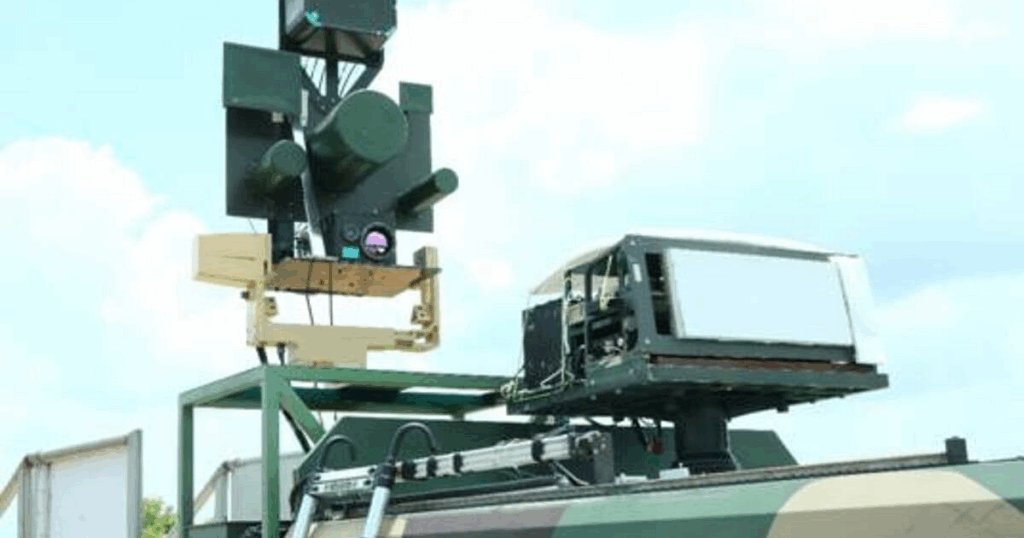
As tensions simmer along the western border, India’s indigenous anti-drone defense system is proving to be a formidable barrier against a steady barrage of unmanned aerial vehicles (UAVs) launched by Pakistan. The homegrown “Drone-Detect, Deter and Destroy” (D4) system, developed by the Defense Research and Development Organisation (DRDO), is now being likened to Israel’s Iron Dome for its precision and efficacy in neutralizing aerial threats.
Pakistani drones face a near-impenetrable wall
Pakistan’s repeated attempts to infiltrate Indian airspace using Turkish-made drones are being met with stiff resistance. The D4 system—ground-based and virtually invisible—has become a silent sentry along the frontier, intercepting most incursions before they can inflict damage. Defense officials say the system’s growing reputation is rooted in its multi-layered, sensor-driven architecture.
Developed in a record timeframe by pooling expertise from four of DRDO’s premier research labs, the D4 project leverages radar, radio frequency detection, and electro-optic systems to detect, identify, and engage drones with precision.
“Enough to confuse and destroy”
What sets the D4 apart is its powerful dual-mode approach to drone neutralization. “Drones are autonomous unmanned aerial vehicles—they need to know their positions and the end target. This is done by using GPS, and the Indian D4 system is sophisticated to deny these signals or confuse the drones and destroy them mid-flight,” according to defense sources.
If radio frequency jamming, GNSS interference, or GPS spoofing—collectively known as the soft kill methods—fail, the system resorts to hard kills using high-energy directed laser weapons. The Hyderabad-based Centre for High Energy Systems and Sciences (CHESS), one of DRDO’s leading labs, has played a pivotal role in the development of these laser capabilities.
Technology born out of urgency
The urgency behind the project was not just strategic but also symbolic, a response to evolving warfare tactics. At an event hosted by the Centre for Joint Warfare Studies on March 10, India’s Chief of Defense Staff, General Anil Chauhan, emphasized “the transformative impact of Unmanned Aerial Systems (UAS) in modern warfare.” He noted how developments in robotics, AI, and rapid deployment have made drones a low-cost, high-impact tool for modern militaries, making defense systems like the D4 more critical than ever.
Versatile deployment, global recognition
The D4 system is designed to be flexible. It can be mounted on vehicles for mobile operations or installed statically at key defense locations. The static variant offers full 360-degree surveillance and engagement capabilities, capable of intercepting even the smallest drones.
Manufactured in India by Bharat Electronics Ltd. (BEL) under the ‘Make in India’ initiative, the D4 is now integrated into all three branches of the Indian Armed Forces. It has also been field-tested and approved by multiple security agencies under both the Ministry of Home Affairs and the Ministry of Defence.
International interest in the system is growing. The DRDO has already demonstrated its effectiveness to defense forces from other countries, potentially opening doors to future strategic partnerships or exports.
Building India’s drone defense ecosystem
The collaboration that birthed the D4 system involved multiple DRDO labs: the Electronics & Radar Development Establishment (LRDE) in Bengaluru, Defense Electronics Research Laboratory (DLRL), CHESS in Hyderabad, and Instruments Research and Development Establishment (IRDE) in Dehradun.
Their combined effort has delivered not only a technological achievement but also a message of India’s growing defense autonomy and readiness.
As drones increasingly define modern combat scenarios, India’s D4 system is not just countering threats—it’s rewriting the rules of airspace security.