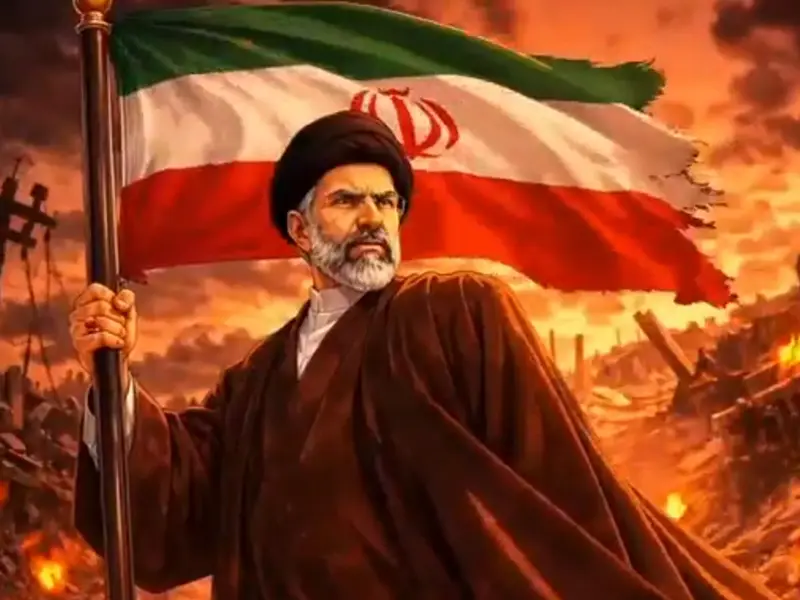
A dramatic anime-style Iran war video has taken over social media feeds, blending geopolitics with cinematic storytelling. The animated clip depicts airstrikes on Iran by the United States and Israel, the death of Iran’s supreme leader, and a revenge campaign led by his successor.
The video’s striking visuals—fighter jets, missile launches, and a symbolic transfer of power, have helped it rack up millions of views across platforms. But while the animation is gripping, the story it tells mixes speculation, political narratives, and dramatized imagery.
Here’s what the viral video shows, why it’s gaining traction online, and what viewers should know about separating cinematic storytelling from verified facts.
What Is the Viral Iran War Anime Video?
The viral clip presents a stylised retelling of the recent conflict involving Iran, Israel, and the United States.
Rendered in anime style, the video dramatises key moments of the war and imagines the aftermath of a major political assassination.
The video opens with the title “Khamenei is back.”
In the opening sequence, Iran’s Supreme Leader Ali Khamenei is shown embracing a young girl while military jets approach Iranian airspace.
Moments later:
- Israeli and U.S. warplanes fire missiles.
- A building where Khamenei is standing is destroyed.
- The animation suggests he is killed in the strike.
The story then shifts to Washington.
In the next scene, U.S. President Donald Trump is shown receiving news that the Iranian leader has been killed.
The visual storytelling is designed to resemble a high-budget anime war film—complete with dramatic lighting, emotional symbolism, and exaggerated character reactions.
The Symbolic Scene That Drives the Story
One of the most powerful scenes in the video comes after the alleged strike.
Khamenei’s son, Mojtaba Khamenei, is shown walking through rubble left by the bombing.
He finds his father’s ring in the debris.
The animation then shows him placing the ring on his own finger—symbolising the transfer of power and his rise as the new leader of the Islamic Republic.
The sequence echoes a common storytelling trope used in films and anime: the heir taking up a fallen leader’s legacy.
In the video’s narrative, this moment marks the beginning of Iran’s retaliation.
The Revenge Arc in the Animation
After Mojtaba Khamenei assumes leadership, the tone of the video shifts from tragedy to retaliation.
The final scenes depict:
- Large numbers of drones launching from Iran
- Missile strikes heading toward U.S. targets
- A scene where Donald Trump appears anxious as the attacks approach
The imagery reflects escalating regional conflict, with the anime portraying Iran launching a wave of retaliation following the killing of its leader.
The clip ends with the suggestion that the conflict will spread further across the Middle East.
What the Video Claims About the Iran War
The storyline is tied to a broader narrative circulating online about a major military escalation in the region.
According to the scenario depicted in the video:
- The United States and Israel launched strikes on Iran on February 28.
- The operation allegedly killed Ali Khamenei and several top Iranian officials.
- The U.S. reportedly called the operation “Epic Fury.”
- Israel allegedly referred to it as “Lion’s Roar.”
Following the supposed attack, Iran retaliates in the animation with strikes on military targets across the region.
The video portrays attacks on U.S. bases in several countries, including:
- Bahrain
- Kuwait
- The United Arab Emirates
- Iraq
- Qatar
- Saudi Arabia
- Jordan
- Azerbaijan
These scenes reinforce the theme of a widening regional war.
Mojtaba Khamenei’s Role in the Narrative
The anime storyline portrays Mojtaba Khamenei stepping into power after his father’s death.
In the clip, the new leader vows revenge against Israel and the United States.
He also delivers a message to neighbouring Gulf nations, accusing them of assisting the strikes by hosting American military bases.
In the narrative, he issues a warning:
- Gulf states must shut down U.S. military facilities in their territory.
- If they do not, Iran will continue its attacks.
- The storyline also references the Strait of Hormuz, a critical global shipping route through which a significant portion of the world’s oil supply travels.
The animation suggests that the passage could be closed during the conflict—a move that would have massive global economic consequences.
Why the Anime Video Is Going Viral
The viral spread of the video highlights how modern storytelling formats—especially animation—are reshaping political discourse online.
Several factors explain its popularity.
1. Cinematic Storytelling
Unlike traditional news footage, the clip uses techniques common in anime and action films:
- Slow-motion explosions
- Emotional character moments
- Symbolic visuals like the ring scene
These elements make the content feel more like entertainment than political commentary.
2. Highly Shareable Format
Short animated videos perform well on social media because they are:
- Visually engaging
- Easy to understand without context
- Designed for quick emotional impact
This makes them more likely to be shared widely.
3. Blending Fact and Fiction
The video mixes real geopolitical tensions with speculative or dramatized events.
That hybrid format can make it difficult for viewers to distinguish:
- verified information
- fictional storytelling
- propaganda or political messaging
Why Animated War Narratives Can Be Misleading
Experts in misinformation say animated war content presents a unique challenge.
Because animation is inherently fictionalised, viewers may assume it’s simply entertainment.
But when it uses real political figures—such as Ali Khamenei or Donald Trump—it can blur the line between satire, propaganda, and speculation.
Common issues include:
- Narrative exaggeration: Events are portrayed as definitive even if they are unverified.
- Emotional framing: Scenes designed to provoke anger or fear.
- Symbolic storytelling: Visual metaphors that imply political outcomes.
These techniques can make fictional or speculative scenarios appear plausible.
Why the Strait of Hormuz Matters
One key reference in the video is the possible closure of the Strait of Hormuz.
This narrow waterway between Iran and Oman is one of the most important shipping routes in the world.
Roughly 20 percent of global oil trade passes through the strait.
If it were blocked during a conflict:
- Oil prices could spike worldwide
- Energy supply chains could be disrupted
- International shipping routes would be forced to change
Because of its strategic importance, the strait is frequently mentioned in discussions about Middle East tensions.
The Bigger Picture: War Narratives in the Social Media Age
The viral anime clip reflects a broader trend: geopolitical conflicts are increasingly being interpreted through memes, animation, and cinematic storytelling.
In the past, war narratives were shaped primarily by:
- traditional news outlets
- government statements
- on-the-ground reporting
Today, they are also shaped by creators on platforms like X, YouTube, and TikTok.
These creators often use:
- animation
- AI-generated imagery
- dramatised storylines
to present political events in a format that spreads rapidly online.
The result is a digital information ecosystem where entertainment and geopolitics intersect.
TL;DR
- A viral anime-style Iran war video dramatises U.S. and Israeli strikes on Iran.
- The clip depicts the death of Iran’s leader, Ali Khamenei, and the rise of his son, Mojtaba Khamenei.
- The storyline shows Iran launching retaliatory missile and drone attacks.
- The video blends cinematic storytelling with geopolitical themes, making it widely shareable online.
- Experts warn that animated political content can blur the line between fiction and verified events.