Will we ever truly understand what happens after we pass away? Is there truly an existence beyond death? What does it look like if there is one? All tremendously complex issues for which none of us has solutions. Except for the incredibly small number of individuals who have survived a near-death experience and seen a glimpse of the hereafter.
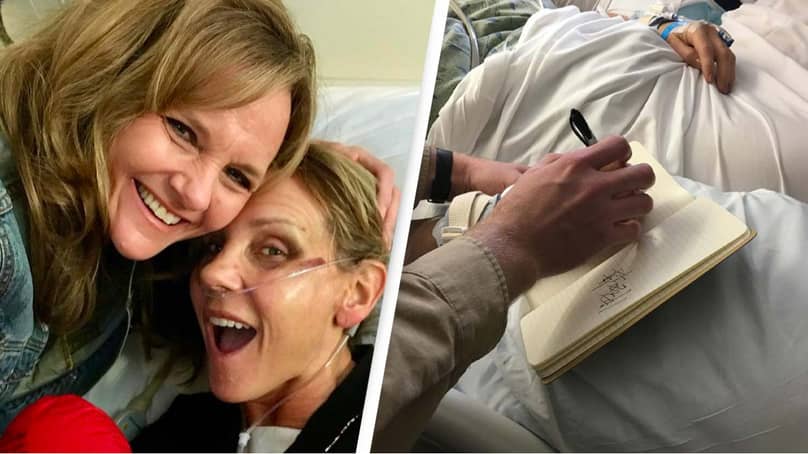
People like Tina Hines, who was declared legally dead for 27 minutes before being resurrected and who has described what she witnessed after death. She hastily wrote down a vital message for her family with a pen on a piece of paper as soon as she regained consciousness in the hospital following the tragic event. In February 2018, Arizona native Tina from Phoenix experienced a fatal heart attack.
Tina unexpectedly survived, and when she awoke in the hospital
Tina fainted one day as she and her husband Brian were getting ready to go on a trip. Tina was successfully revived twice by Brian’s CPR as they waited for the ambulance. She remained effectively dead for a total of 27 minutes before being resuscitated six more times by medical personnel on the way to the hospital, according to AZfamily.com. But in the end, Tina unexpectedly survived, and when she woke up in the hospital, she had an important message to convey to her loved ones.
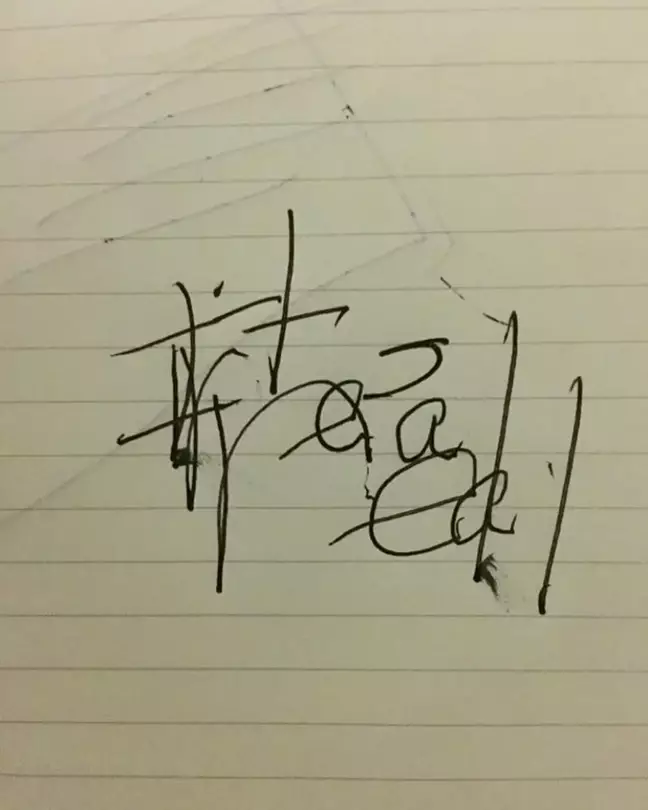
In scrawling handwriting, she frantically wrote ‘it’s real’. When she was asked what she was referring to, she nodded upward. “It was so real, the colors were so vibrant,” Tina said. She remembers vividly seeing a figure that she believes was Jesus standing at bright yellow, glowing gates.
“Many people believed that the brain was inactive or hypoactive after clinical death”
She clearly recalls seeing what she thinks was Jesus standing at the dazzling, bright-yellow gates. Surprisingly, close calls with death like Tina’s don’t happen very often. A University of Michigan study from 2013 found that there is a spike in brain activity soon before death that is greater than during the most awake, conscious state.
The rat study discovered that in the 30 seconds following the cessation of heartbeat, there was a dramatic spike in high-frequency brainwaves in the dying rats. Dr. Jimo Borjigin, the study’s principal investigator, stated: “Many people believed that the brain was inactive or hypoactive after clinical death, with less activity than the waking state, and we show that is clearly not the case. “If anything, it is much more active during the dying process than even the waking state.”