
Quick Summary
- Doctors in Frankfurt found blue brains, hearts, and lungs during autopsies.
- The culprit: methylene blue, a drug used for malaria, infections, and emergency oxygen delivery.
- Even tiny doses (25 mg) can stain organs.
- The discoloration is not linked to death, but it complicates autopsies.
- The study highlights how old drugs can still surprise us—sometimes in living color.
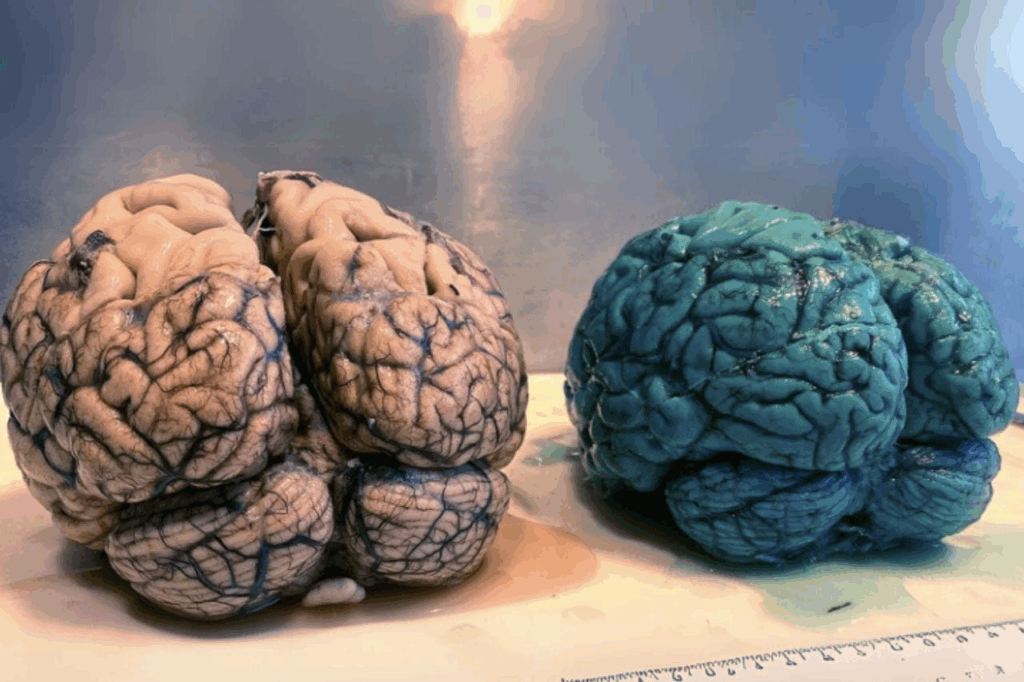
When doctors at University Hospital Frankfurt opened the skull of a 72-year-old man, they weren’t expecting a medical mystery. His brain was blue. Not bruised, not discolored by disease, but tinted a vivid blue.
The startling discovery has now been documented in a new study published in Forensic Science, Medicine and Pathology. It reveals that a common medical substance—methylene blue, can literally stain human organs, raising new questions about how it lingers in the body and what that means for medicine and forensic science.
What Is Methylene Blue?
Methylene blue is hardly new. First synthesised in the late 19th century, it’s been used in everything from fabric dyeing to medical treatments. In hospitals, doctors turn to it as a last-resort drug to boost oxygen delivery and blood flow when other methods fail.
Today, it’s used for:
- Treating malaria and certain blood disorders.
- Managing urinary tract infections.
- Serving as an antidote for poisoning caused by drugs or chemicals.
- Being tested as a therapy for depression and even Alzheimer’s disease.
Some U.S. health officials have even called it a “miracle cure-all.” But the German study shows this so-called miracle comes with a strange side effect: it paints organs a bluish color.
What Did Researchers Find?
The Frankfurt team combed through autopsy records from 2000 to 2023. They looked for keywords like “bluish-green” or “turquoise” in reports.
- 11 cases were identified.
- In each, patients had received either methylene blue or a related dye called toluidine blue.
- The autopsies revealed blue staining in the brain, heart, lungs, and pancreas.
Even tiny amounts were enough. As little as 25 milligrams could alter brain color. Most patients had received 50 to 200 milligrams intravenously, sometimes multiple times in the 10 hours before death.
One key detail: the discoloration deepened when the organs were exposed to air during the autopsy.
Did Methylene Blue Contribute to Deaths?
That’s the obvious question. But researchers are clear: no, the dye did not kill these patients.
Most were already in the ICU for serious conditions—heart failure, septic shock, surgical complications, or severe COVID-19. In these cases, methylene blue was a last-ditch effort to stabilize them.
What the study highlights instead is that methylene blue lingers in the body in a way that could confuse forensic pathologists and skew medical examinations. Imagine a coroner trying to determine cause of death and finding a bright blue brain—that’s a curveball.
Why Does This Matter?
At first glance, organs of that colour might sound like a trivia fact for medical textbooks. But the findings carry broader implications:
- Forensics: Discolored organs could complicate autopsy reports, possibly delaying or misdirecting investigations.
- Medicine: The way methylene blue binds to tissue could influence how doctors think about drug dosage, persistence, and safety.
- Public Perception: With videos circulating of figures like Robert F. Kennedy Jr. adding a blue liquid to water, the dye’s use outside traditional medicine has raised eyebrows.
In short, the discovery is more than a visual oddity—it could affect how doctors and examiners approach both life-saving treatments and post-mortem analysis.
Is Anyone at Risk?
For patients, the study offers some reassurance: the color change is not harmful in itself. Methylene blue remains a valuable drug in emergencies where few other options exist.
But the findings do raise questions about off-label use. Some alternative health circles promote methylene blue as a supplement for energy or cognitive enhancement. Without proper oversight, users could be unknowingly dying their insides, and complicating any future medical care.
A Blue Legacy in Science
History is full of medical surprises like this. Penicillin was discovered in mold. Botox, once feared as a deadly toxin, is now a common cosmetic treatment. Methylene blue joins the list, with a quirk that’s more visible than most.
For now, researchers emphasize one point: blue doesn’t mean deadly. But it does mean we’re still learning how this old drug behaves in the body, and that’s critical for both doctors and forensic scientists.