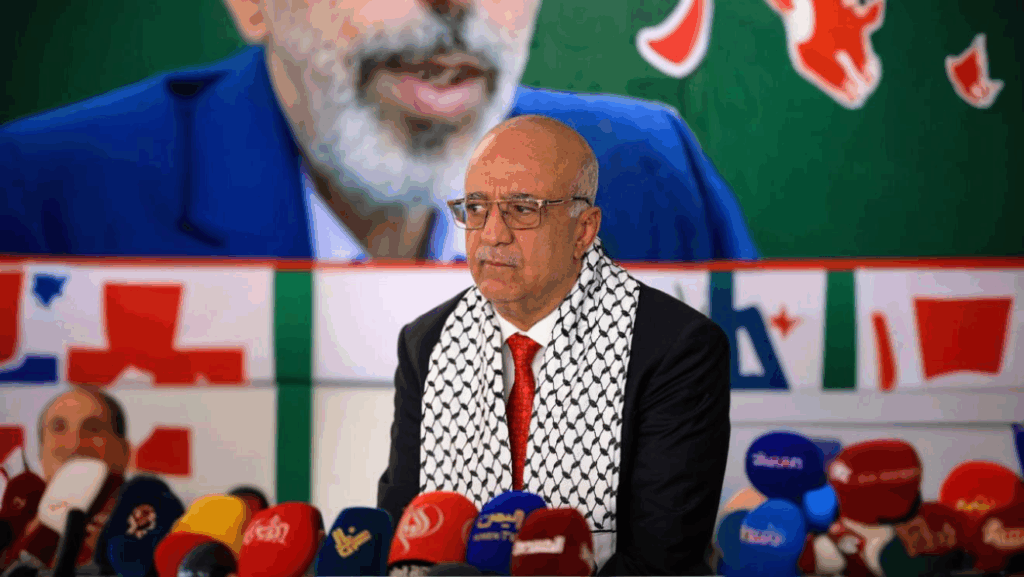
Reports from Yemeni media outlets claim that Ahmed al-Rahawi, the Houthi-appointed prime minister, was killed in an Israeli airstrike on Sanaa on Friday, August 29. If confirmed, his death would mark one of the most significant blows to the Iran-backed Houthi movement since Israel expanded its military operations against them.
What happened in Sanaa?
Local outlets Al-Jumhuriya and Aden Al-Ghad reported that al-Rahawi was inside an apartment in Yemen’s capital when Israeli warplanes struck the site. According to Aden Al-Ghad, several of his close associates also died in the attack.
The Israeli Defence Forces (IDF) confirmed a precision strike on what they described as a Houthi military target near Sanaa but did not confirm al-Rahawi’s death. The IDF said the mission followed the interception of two Houthi-launched drones earlier in the day.
Israel’s justification for the strike
Israel’s Defence Minister Israel Katz issued a statement after the strike, calling it part of an escalating response to Houthi aggression. Referring to biblical imagery, Katz declared, “After the plague of darkness comes the plague of the firstborn,” hinting at a deliberate targeting of senior Houthi leadership.
The strike was reportedly approved at the highest levels—by Prime Minister Benjamin Netanyahu, IDF Chief of Staff Lt Gen Eyal Zamir, and other top commanders—through the Red Line communication system, Israel’s emergency decision-making mechanism.
Houthis’ response
The Houthi movement has denied Israel’s claims, accusing it of striking civilian infrastructure rather than military targets. Yemen’s Ministry of Public Health and Population described the airstrike as a “war crime” and vowed retaliation.
Just days earlier, the Houthis had claimed responsibility for launching a missile toward southern Israel, which Israeli defenses said they intercepted. The timing of the Sanaa strike appears to be a direct response to that attack.
Why al-Rahawi’s reported death matters
If confirmed, Ahmed al-Rahawi’s killing would have major consequences:
- Leadership vacuum – Al-Rahawi was one of the Houthis’ most prominent political figures, serving as prime minister in their self-declared government in Sanaa.
- Escalation with Israel – His death could trigger further Houthi retaliation, potentially intensifying cross-border strikes on Israel.
- Regional tensions – It may deepen the confrontation between Israel and Iran-backed groups across the Middle East, including Hezbollah in Lebanon.
The bigger picture: Israel vs. the Houthis
- Houthis’ role in regional conflict: The Yemeni group, supported by Iran, has increasingly targeted Israel with drones and missiles since the Gaza war escalated in late 2023.
- Israel’s strategy: By targeting Houthi leadership, Israel signals it will not tolerate sustained attacks on its territory, even if it means expanding operations beyond Gaza and Lebanon.
- Global reaction: The strike is likely to draw criticism from humanitarian groups and countries warning of further destabilization in Yemen, already enduring years of civil war and humanitarian crisis.
What’s next?
Whether Ahmed al-Rahawi was indeed killed remains unconfirmed. Israel has not issued direct confirmation, while Houthi officials have so far denied the reports. Independent verification from international agencies has not yet been possible due to restricted access to the strike zone.
If confirmed, the attack would represent one of the most high-profile targeted killings in Yemen since the outbreak of the Israel-Houthi confrontation. The Houthis’ response and whether they escalate missile or drone attacks against Israel will determine how this conflict unfolds in the coming weeks.