
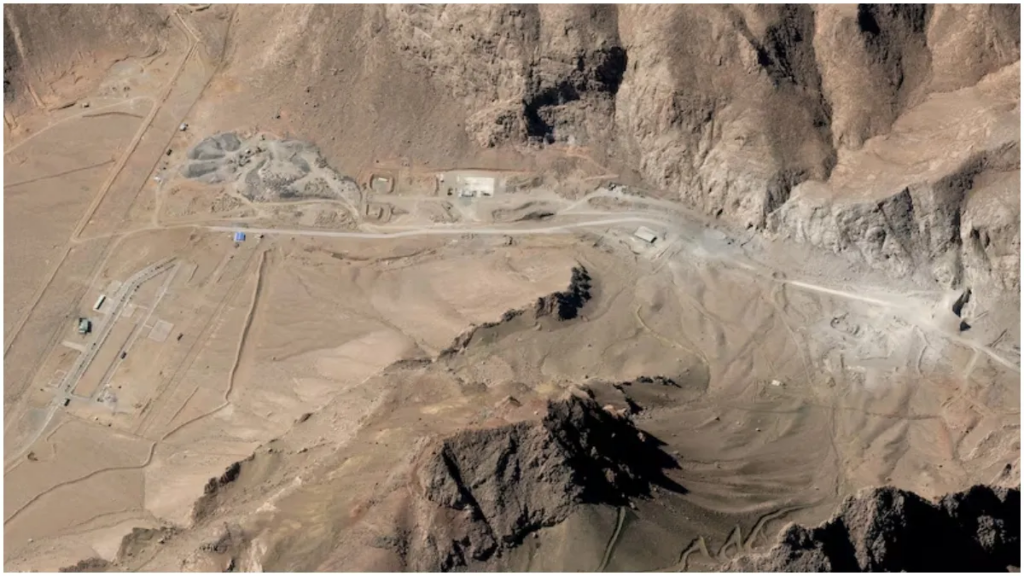
A newly reported underground nuclear facility in Iran is drawing global attention—and concern. The site, located in Isfahan, comes at a time of heightened tensions following recent US and Israeli strikes on Iran’s nuclear infrastructure.
But despite the scrutiny, key questions remain unanswered. International inspectors say they still don’t know whether the facility is operational—or simply an empty structure awaiting equipment.
What is the new Iranian nuclear site in Isfahan?
Iran has informed the International Atomic Energy Agency (IAEA) about a new uranium enrichment facility built underground in Isfahan.
The site is significant for two reasons:
- It is located within a previously targeted nuclear complex
- It is built underground, making it harder to monitor and potentially more resilient to attacks
However, the biggest uncertainty is also the most basic: what’s actually inside it.
IAEA Director General Rafael Grossi has said inspectors have not yet been able to visit the site.
“There are many questions that we will only elucidate when we are able to go back,” he told reporters.
Why Haven’t Inspectors Been Able to Verify the Site?
A Visit Interrupted by War
Inspectors were scheduled to examine the facility in June 2025. That visit was cancelled after the outbreak of a 12-day conflict involving Israel and Iran, during which nuclear sites were targeted.
The Isfahan complex itself was struck early in the fighting, halting inspection plans.
Current Access Restrictions
Since the attacks:
- Iran has not allowed inspectors to return to several nuclear facilities
- The IAEA lacks updated, on-the-ground verification
- Monitoring relies heavily on satellite imagery and prior data
This creates a gap between what is known and what can be confirmed.
What Could Be Inside the Facility?
Without direct inspection, experts can only outline possibilities.
Scenario 1: An Empty Hall
The site may simply be:
- A prepared underground space
- Awaiting installation of enrichment equipment
Scenario 2: Infrastructure in Progress
It could contain:
- Concrete pads for centrifuges
- Partial installation of systems
Scenario 3: Operational Enrichment Activity
In a more advanced scenario, the facility may already house:
- Centrifuges used to enrich uranium
- Supporting systems for nuclear processing
The uncertainty is central to the global concern.
Why Is Uranium Enrichment So Sensitive?
What Does Enrichment Mean?
Uranium enrichment increases the concentration of uranium-235:
- Low levels (3–5%) → Used for nuclear power
- Higher levels (20–60%) → Research or advanced applications
- Weapons-grade (~90%) → Nuclear weapons capability
Iran has enriched uranium to up to 60% purity, which is considered a short technical step away from weapons-grade material.
How Much Enriched Uranium Does Iran Have?
According to the IAEA:
- Iran had 440.9 kg of uranium enriched to 60% at the time of the June attacks
- Roughly 200+ kg of that stockpile was believed to be stored at Isfahan
Why This Matters
Using IAEA benchmarks:
- That amount, if further enriched, could theoretically produce material for multiple nuclear weapons
However, it’s important to note:
- There is no confirmed evidence of an active nuclear weapons program
- Iran maintains that its nuclear activities are for peaceful purposes
What Happened to Iran’s Nuclear Facilities After the Attacks?
Sites Targeted
US and Israeli strikes reportedly hit multiple facilities, including:
- Natanz nuclear facility
- Isfahan nuclear complex
Entrances to underground enrichment areas at Natanz were also damaged.
What Remains Intact?
According to inspectors:
- A tunnel complex at Isfahan may have escaped major damage
- Highly enriched uranium stored there is likely still in place
Satellite monitoring has not shown clear signs that the material has been moved.
Is There a Risk of Nuclear Escalation?
Competing Narratives
- The US and Israel argue Iran is moving closer to nuclear weapons capability
- Iran denies any intention to build a bomb
- The IAEA says it has no credible indication of a coordinated weapons program
Why Uncertainty Is Dangerous
The lack of verified information creates:
- Strategic ambiguity
- Increased risk of miscalculation
- Heightened geopolitical tensions
What About Safety Risks?
Recent reports also raised concerns about strikes near nuclear infrastructure.
Bushehr Concerns
- Bushehr nuclear power plant was reportedly hit by a projectile, according to Iranian and Russian claims
- The IAEA has stated that no damage or injuries occurred
Still, any attack near nuclear facilities raises fears of:
- Radiation leaks
- Environmental contamination
- Regional instability
Why This Story Matters Now
The situation highlights a critical shift:
- Nuclear monitoring is becoming harder in conflict zones
- Underground facilities reduce transparency
- Diplomatic oversight is weakening
At the same time, the stakes are rising—not just for the region, but globally.
What Happens Next?
The path forward depends on a few key developments:
1. IAEA Access
- Inspectors need physical access to verify the site
- This is the only way to confirm its purpose
2. Diplomatic Engagement
- Talks between Iran and global powers could restore monitoring agreements
3. Continued Surveillance
- Satellite and intelligence monitoring will remain crucial in the interim
TL;DR
- Iran has reported a new underground nuclear site in Isfahan
- The International Atomic Energy Agency has not been able to inspect it
- It’s unclear whether the facility is operational or empty
- Iran holds significant amounts of uranium enriched to 60%
- Recent attacks damaged some nuclear sites, but key materials may remain intact
- The lack of transparency is increasing global concern