For the first time in nearly a millennium, the haunting tones of a medieval organ have once again filled the air in Jerusalem. The instrument—dating back to the 11th century—was rediscovered after centuries underground and painstakingly restored, giving modern audiences the rare chance to hear music once performed for Crusaders in the Holy Land.
A thousand-year-old sound revived
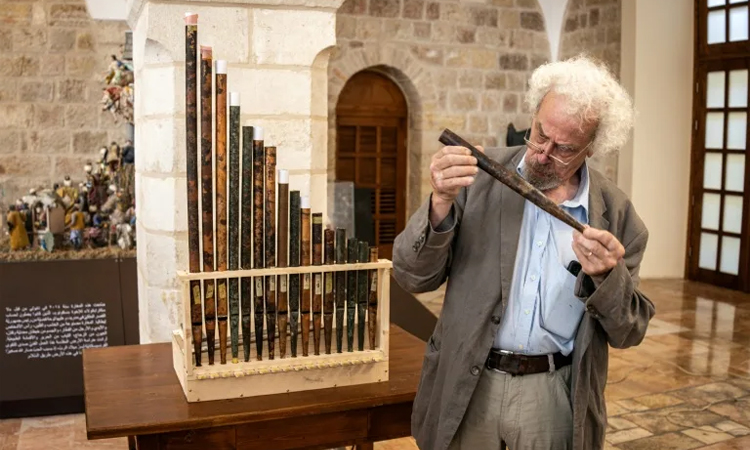
The organ, believed to be among the oldest surviving of its kind, was unearthed in 1906 near the Church of the Nativity in Bethlehem, the traditional birthplace of Jesus Christ. A set of 222 copper pipes and a bell carillon were buried with meticulous care, protecting them from decay.
Spanish researcher David Catalunya, who has dedicated over five years to bringing the instrument back to life, described the achievement as “a miracle.”
“This is a window into the past. For the first time in modern history, we are listening to a medieval sound that is truly a thousand years old,” Catalunya told AFP.
Unlike reconstructions or replicas, the restored organ produces the authentic vibrations heard by worshippers and Crusaders in the 12th century.
From France to Bethlehem
Scholars believe the instrument was built in France in the 11th century before being transported to the Holy Land by Crusaders. At the time, the organ represented the cutting edge of European sacred music, a symbol of liturgical grandeur.
Musicologist Álvaro Torrente compared the discovery to unearthing a living relic:
“It’s like finding a living dinosaur. We knew it existed from fragments, but this is the real object and the real sound.”
Preservation and resurrection
The restoration was made possible thanks to the exceptional preservation of the buried components. Each pipe—18 working together to produce a single note—was carefully reconstructed to recreate the original acoustics.
Organ specialist Koos van de Linde, who contributed to the project, emphasized the symbolic importance:
“The hope the Crusaders had when they buried these pieces—that one day they would resound again—was not in vain. It was an immense honor to participate in their resurrection.”
Where to hear it today
Currently housed in the Monastery of Saint Saviour in Jerusalem’s Old City, the organ is scheduled to go on display at the museum of the Franciscan Custody of the Holy Land.
For researchers, however, this is only the beginning. The “Bethlehem organ,” as it is now called, still has untapped potential to reveal new insights into the music and culture of the medieval church.
Torrente hopes its revival will spark global interest:
“The Christians of Europe brought to the Church of the Nativity the most avant-garde musical instrument of its time. We are only beginning to understand the depth of its legacy.”