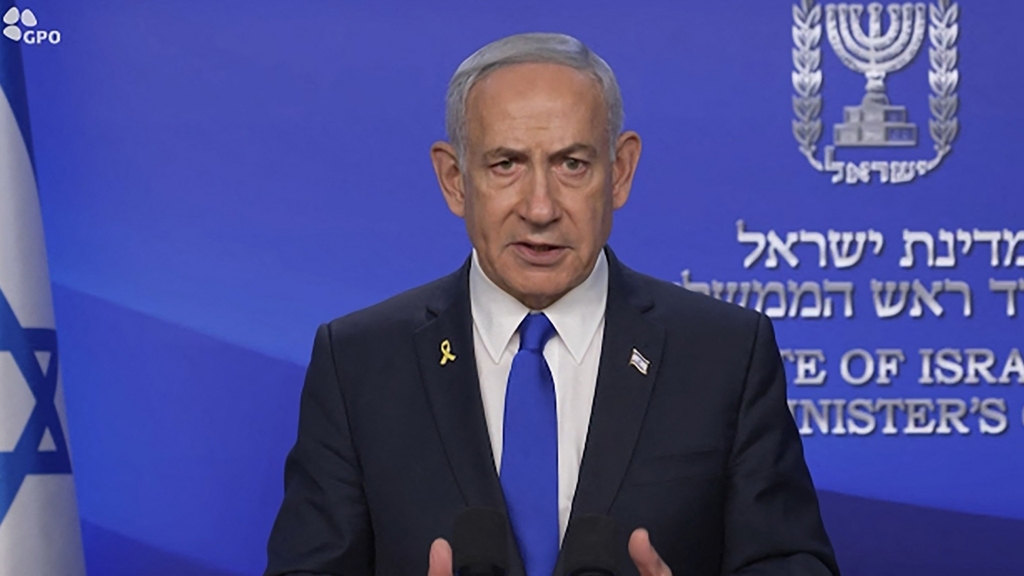
Benjamin Netanyahu has revealed that he is now cancer-free after undergoing treatment for early-stage prostate cancer during one of the most sensitive periods of regional conflict. The announcement, made via an official medical report, lifts the veil on a health issue that had been deliberately kept out of public view while Israel navigated escalating tensions with Iran. According to a report by news outlet The Times of Israel, the disclosure follows a period of strategic secrecy regarding the prime minister’s health during the height of regional hostilities.
The disclosure offers a rare intersection of personal health, political strategy, and wartime decision-making.
What did Netanyahu reveal about his cancer diagnosis?
According to a medical summary released by the Prime Minister’s Office, Netanyahu was diagnosed with a localized, early-stage prostate cancer following a routine MRI scan.
Key details from the medical report
- A “minuscule suspicious lesion” was initially detected
- Further testing confirmed early-stage prostate cancer
- The condition was localized, meaning it had not spread
- Treatment was completed successfully, with no remaining signs of the disease
The report, signed by his physician Dr. Tzvi Berkovitz, concluded that Netanyahu is now in “excellent” health with no physical limitations.
Why was Netanyahu’s cancer kept secret?
The timing of the diagnosis coincided with a high-stakes military confrontation involving Iran, referred to by Israeli officials as Operation Epic Fury.
Strategic reasons behind the secrecy
Netanyahu addressed the delay directly, stating that the information was withheld to avoid the following:
- Undermining national morale during wartime
- Creating uncertainty within Israel’s leadership structure
- Offering adversaries potential leverage for psychological or propaganda advantage
“I chose to delay the report’s publication so it would not come out at the peak of the war,” Netanyahu said, adding that he is now fully recovered.
A calculated decision in a volatile moment
Leaders often manage health disclosures carefully, but doing so during an active conflict adds another layer of complexity. In this case, the decision reflects a broader strategy to project continuity and control.
Did the cancer affect Netanyahu’s ability to govern?
According to officials, Netanyahu maintained a full working schedule throughout his treatment.
What the government says
- He continued to lead during the conflict without interruption
- No temporary transfer of authority was required
- His daily responsibilities remained unchanged
The Prime Minister’s Office emphasized that operational continuity was a priority, particularly during heightened regional tensions.
Why is early-stage prostate cancer significant?
Prostate cancer is one of the most common cancers among men, especially in older age groups. However, early detection significantly improves outcomes.
What “early-stage” means
- The cancer is confined to the prostate
- It has not spread to other parts of the body
- Treatment success rates are generally very high
In Netanyahu’s case, the description of a “minuscule” lesion suggests the disease was caught at a very early point, increasing the likelihood of complete recovery.
Typical treatment pathways
While specific details of Netanyahu’s treatment were not disclosed, early-stage prostate cancer is often managed through:
- Surgical removal of the tumor
- Radiation therapy
- Active surveillance in some cases
The outcome reported indicates that the chosen treatment was effective.
How does this announcement affect Israel politically?
The disclosure comes at a sensitive time, as Israel navigates a fragile ceasefire and ongoing regional uncertainty.
Immediate political implications
- Reinforces confidence in Netanyahu’s leadership stability
- Aims to quell speculation about his health and fitness for office
- Signals continuity in governance during a critical period
Broader strategic context
Israel’s leadership posture is closely watched by both allies and adversaries. Any perceived vulnerability, including health concerns, can influence geopolitical calculations.
By confirming he is cancer-free, Netanyahu is effectively closing the door on such speculation.
What does this reveal about leadership during conflict?
This episode highlights how personal health and national security can intersect in unexpected ways.
Key takeaways
- Health disclosures are often strategic decisions, not just medical updates
- Wartime leadership requires careful control of information
- Public confidence can hinge on perceptions of stability and continuity
It also raises ongoing questions about transparency and the balance between public right-to-know and national security considerations.
What should readers take away?
Netanyahu’s cancer battle, now revealed after the fact, underscores a quiet reality of leadership: major personal challenges can unfold behind closed doors even as public responsibilities continue uninterrupted.
The announcement is both a medical update and a political signal, one designed to reassure, stabilize, and move forward.
TL;DR
- Benjamin Netanyahu has confirmed he is cancer-free after treatment for early-stage prostate cancer
- The diagnosis was kept secret during the Iran conflict to avoid strategic risks
- He continued to lead Israel without interruption during treatment
- The cancer was detected early and successfully treated
- The announcement aims to reinforce confidence in his health and leadership