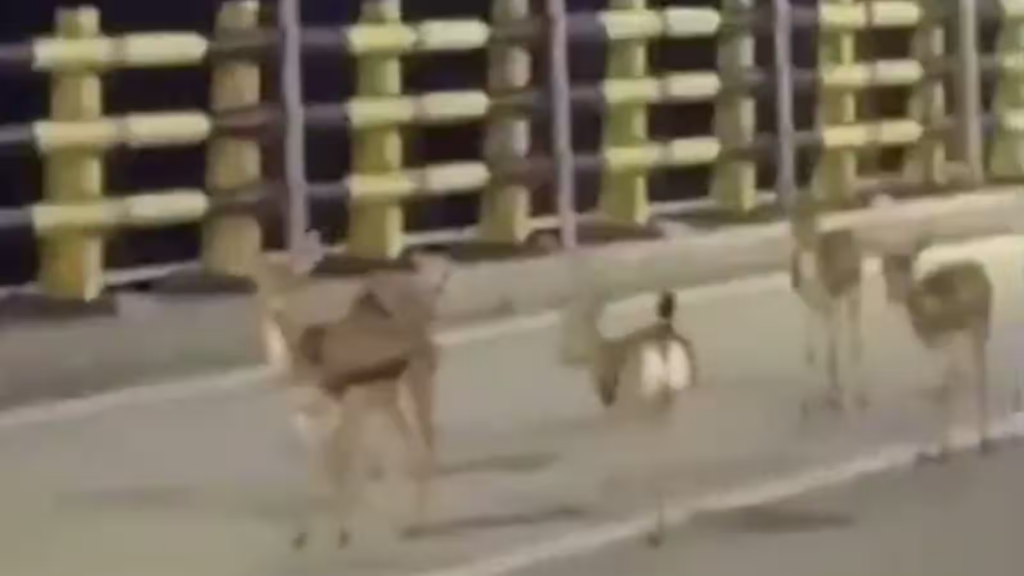
A video showing deer running through the streets of Iran’s Kharg Island has gone viral, drawing attention to an often-overlooked consequence of armed conflict: its impact on wildlife.
The footage, shared by Iranian state media and the Iranian Embassy in India, appears to show frightened deer fleeing amid the sound of explosions. While the authenticity of the video has not been independently verified, it has sparked renewed discussion about how military conflicts disrupt ecosystems, displace animals, and destroy habitats.
As tensions in the region continue, conservationists say wildlife is paying a heavy price alongside human communities.
What Does the Viral Video Show?
The video circulating on social media appears to show several deer sprinting through roads on Iran’s Kharg Island while explosions can be heard nearby.
The footage was shared by Iranian state media outlets and by the Iranian Embassy in India. Although the video’s authenticity and the precise circumstances surrounding its recording have not been independently confirmed, it has attracted widespread attention online.
The images highlight how conflict can force wild animals out of their natural habitats and into populated areas as they attempt to escape danger.
Why Is Kharg Island Important?
Kharg Island occupies a strategically important position in the Persian Gulf and has long been associated with Iran’s energy infrastructure.
Its location near the Strait of Hormuz—one of the world’s busiest maritime trade routes—has made it a focal point during periods of heightened regional tensions.
Because of its strategic significance, the island has repeatedly featured in reports of military activity over the years.
What Has Been Reported About the Wildlife Impact?
According to Iran’s Fars News Agency, at least 25 deer have died on Kharg Island during the recent conflict.
Iranian environmental official Masoumeh Safaei reportedly said the actual number could be significantly higher because the available figures do not include military-restricted areas where assessments remain difficult.
These casualty figures have not been independently verified.
Wildlife experts note that accurately documenting animal deaths during active conflicts is often challenging because access to affected areas is limited.
How Does War Affect Wildlife?
The effects of armed conflict extend well beyond immediate casualties.
Environmental researchers say explosions and sustained military activity can have lasting consequences for wildlife, including:
- Habitat destruction
- Extreme stress and panic
- Injuries caused by blasts or debris
- Disrupted migration patterns
- Separation of young animals from parents
- Reduced food and water availability
Even animals that survive direct attacks may struggle to recover if their habitat has been severely damaged.
Why Are Loud Explosions So Dangerous for Animals?
Many wild animals rely on sound to detect predators, locate mates, and communicate within groups.
Repeated explosions and military aircraft can overwhelm those natural behaviors.
In moments of panic, animals may:
- Run into roads or populated areas
- Become separated from their herds
- Suffer injuries while fleeing
- Abandon nesting or breeding sites
Reports from Iran have also suggested that birds housed at Tehran’s Lavizan Bird Garden died after colliding with enclosure walls during periods of intense noise and panic. Those reports have not been independently verified.
Why Smaller Species Face Greater Risks
Large mammals such as deer often attract public attention because they are easier to photograph and document.
However, conservation experts warn that smaller animals may experience even greater losses.
Species considered particularly vulnerable include:
- Small mammals
- Reptiles
- Amphibians
- Ground-nesting birds
- Insects and pollinators
Because many of these animals remain hidden underground or within vegetation, their deaths often go unrecorded.
Why This Story Matters
Wars are usually measured in terms of human casualties and infrastructure damage, but their environmental consequences can last for decades.
Conflict can destroy ecosystems, contaminate land and water, fragment habitats, and reduce biodiversity long after fighting ends.
The viral images from Kharg Island have become a reminder that wildlife is often an unseen casualty of war, even though animals play no role in the conflicts that affect them.
The Bottom Line
The viral footage from Kharg Island has focused attention on the environmental cost of conflict as frightened deer appear to flee explosions in search of safety. While some reports about wildlife casualties remain unverified, conservation experts broadly agree that armed conflict can have devastating consequences for animals through habitat destruction, stress, displacement, and injury.
As the regional situation develops, the images serve as a powerful reminder that wars affect far more than people and infrastructure—they also reshape the natural world in ways that can endure long after the fighting ends.
TL;DR
- A viral video appears to show deer fleeing Kharg Island during reported military strikes.
- Iranian officials say at least 25 deer have died on the island, though those figures have not been independently verified.
- Wildlife experts say war affects animals through explosions, habitat destruction, stress, and displacement.
- Smaller species and captive animals are often among the most vulnerable during armed conflicts.