
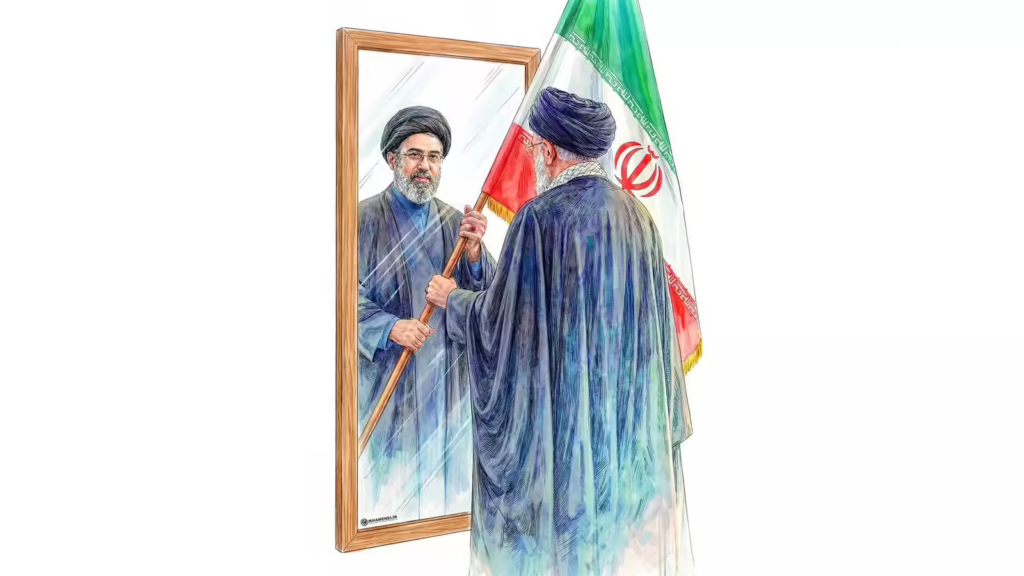
Reports claiming that Mojtaba Khamenei is operating from a secret location with limited outside contact have intensified speculation about instability inside Iran’s leadership structure—and how it may be affecting negotiations with the United States.
According to US intelligence officials cited in media reports, the Iranian leader is allegedly living under extreme security restrictions following recent conflict-related developments. The reported communication bottlenecks are said to be slowing diplomatic exchanges between Tehran and Washington at a sensitive moment in ongoing negotiations.
However, many of the claims remain unverified publicly, and several details rely heavily on unnamed intelligence sources.
Why is Mojtaba Khamenei reportedly in seclusion?
Iran leadership secrecy and underground security
US officials quoted in reports claim Mojtaba Khamenei has adopted extensive security precautions after recent military escalation involving Iran, the United States, and Israel.
What the reports allege
The reports suggest:
- Khamenei is staying in an undisclosed location
- Communication with him is tightly restricted
- Messages pass through intermediaries and couriers
- Even senior Iranian officials allegedly do not know his exact whereabouts
The purpose, according to the claims, is to reduce the risk of targeted attacks or intelligence leaks.
Why security concerns have intensified
The reports tie these precautions to alleged strikes during what officials described as “Operation Epic Fury,” which reportedly targeted senior Iranian leadership structures.
The same reports claim Iran’s leadership has become increasingly decentralized and compartmentalized since the conflict escalated.
Are the claims about Mojtaba Khamenei’s health confirmed?
Some reports have gone further, alleging that Khamenei is dealing with serious health complications.
What has been claimed
According to cited intelligence-based reporting:
- Mojtaba Khamenei may have been injured during strikes
- He is reportedly receiving treatment in Qom
- Some accounts even claim he has been unconscious
What remains unclear
As of now:
- There has been no independent public verification of these claims
- Iranian authorities have not officially confirmed the reports
- Open-source evidence remains limited
Because the information largely comes from unnamed intelligence sources, caution is necessary when interpreting these developments.
How is this affecting US-Iran negotiations?
US-Iran diplomacy and delayed negotiations
Officials cited in reports say the communication structure inside Iran is slowing negotiations with the Trump administration.
Why talks are reportedly delayed
According to the reports:
- Messages take time to reach the supreme leader
- Responses require multiple layers of approval
- Decision-making has become slower and more fragmented
One official reportedly described the process as chaotic and highly inefficient.
What has reportedly been approved
Despite delays, US officials cited in the reports claimed:
- Mojtaba Khamenei had approved the broad outline of a draft agreement
Meanwhile, Donald Trump reportedly indicated that a final decision on negotiations could come within days.
Who is Mojtaba Khamenei?
Mojtaba Khamenei has long been viewed as one of the most influential figures within Iran’s political and religious establishment.
His background
He is the son of former Supreme Leader Ali Khamenei and has historically maintained a relatively low public profile.
Despite limited formal public visibility, analysts have often described him as:
- Deeply connected to Iran’s security establishment
- Influential within clerical and military circles
- A key figure behind-the-scenes in Iranian politics
Why his leadership matters
Any disruption involving Iran’s supreme leadership has major implications for:
- Nuclear negotiations
- Regional military policy
- Relations with the West
- Internal Iranian stability
Why are Iran’s leaders reportedly using couriers and bunkers?
The reports describe a leadership environment shaped by fear of surveillance and targeted strikes.
Iran military leadership and bunker networks
Reported security measures include:
- Underground fortified shelters
- Minimal electronic communication
- Isolated leadership cells
- Reliance on physical messengers
Why electronic communication is risky
Modern intelligence gathering allows states to track:
- Phone signals
- Digital metadata
- Location-based communication patterns
Limiting electronic communication can make leadership harder to target—but also slows decision-making significantly.
How credible are these intelligence reports?
That remains an open question.
Why caution is important
Reports based on anonymous intelligence sources can contain:
- Partial information
- Strategic messaging
- Psychological warfare elements
- Unverified assessments
In high-conflict geopolitical situations, information itself often becomes part of the strategic battlefield.
What is independently known
Publicly verifiable facts remain limited regarding:
- Mojtaba Khamenei’s precise location
- His health condition
- The internal mechanics of Iran’s leadership communications
Much of the current narrative comes through unnamed US officials and secondary reporting.
Why this matters globally
Any instability or uncertainty at the top of Iran’s leadership structure could affect:
- Oil markets
- Regional security
- Nuclear diplomacy
- Relations between Iran, the US, and Israel
The timing is significant
The reports come amid:
- Sensitive US-Iran negotiations
- Heightened regional tensions
- Concerns over escalation in the Middle East
That makes even unconfirmed leadership rumors geopolitically important.
TL;DR
- Reports claim Iran’s Supreme Leader Mojtaba Khamenei is in seclusion at a secret location
- US intelligence sources say communication delays are slowing US-Iran negotiations
- Some reports allege health complications, though independent verification is limited
- Iran’s leadership is reportedly relying on bunkers and couriers for security
- The developments could impact diplomacy, regional stability, and energy markets