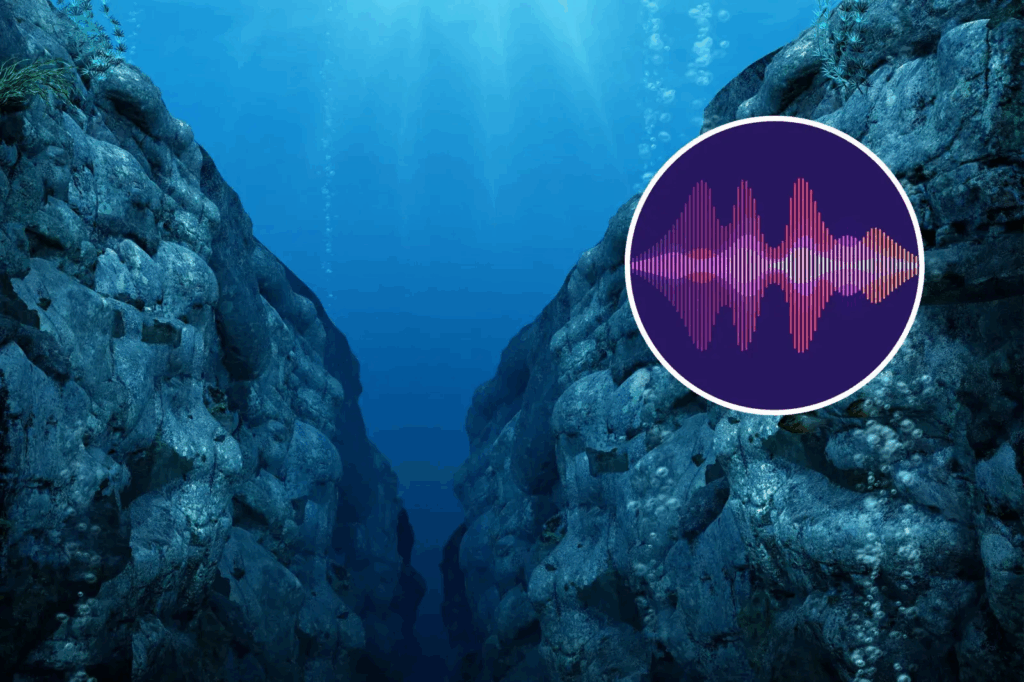
For decades, scientists were puzzled by mysterious “pinging” sounds echoing from the depths of the Pacific Ocean. Many assumed the noise was natural—perhaps the result of volcanic activity, shifting tectonic plates, or marine life. But new research has uncovered a surprising truth: the sound isn’t natural at all. It is a sonic scar left behind by human activity nearly half a century ago.
The mystery of the Pacific ping
In 1979, researchers first detected unusual underwater sounds in the Clarion-Clipperton Zone (CCZ), a vast stretch of seafloor in the central Pacific. The zone spans millions of square kilometers between Hawaii and Mexico and is home to polymetallic nodules—rocky deposits rich in nickel, cobalt, manganese, zinc, and copper. These minerals are crucial for modern technologies, particularly batteries for electric vehicles.
For years, the ping baffled scientists. Why would such a remote, deep-sea environment generate repetitive, mechanical-sounding noises?
The surprising source: a deep-sea mining experiment
A new study, led by the National Oceanography Centre and the Natural History Museum in London and published in Nature, finally cracks the case.
The culprit? A deep-sea mining test was conducted in 1979.
During that experiment, heavy machinery scraped the seabed to test whether nodules could be harvested at scale. The machines left lasting grooves across the seafloor—physical scars that remain visible today. But researchers now believe they also left behind an acoustic imprint.
Even though the mining equipment has long since been removed, the sound persists, reverberating in the deep. Lead author Dr. Adrian Glover described it bluntly: “The scars made by the mining machine 44 years ago look almost as if they were made yesterday.”
Lasting scars on marine ecosytems
The damage wasn’t just acoustic. The mining disrupted the fragile ecosystem of the CCZ:
- Original inhabitants vanished. Many deep-sea species disappeared from the disturbed area.
- Slow recovery. While mobile organisms such as xenophyophores have started to return, the ecosystem is far from restored.
- Hundreds of years to heal. Researchers warn that full ecological recovery could take centuries, if it ever happens.
This raises urgent questions about the viability of commercial deep-sea mining. If a small-scale experiment from the late 1970s could leave scars still visible and audible nearly five decades later, what would large-scale operations do?
Why this matters today
The Clarion-Clipperton Zone remains a hotbed of interest for the mining industry. With the push for renewable energy and electric vehicles, demand for cobalt, nickel, and other battery metals is skyrocketing. Companies argue that deep-sea mining could supply these materials without the geopolitical and environmental challenges of land-based mining.
But scientists warn that disturbing the seabed risks destroying ecosystems we barely understand. The recent discovery of “dark oxygen”—oxygen produced in the deep ocean without sunlight—shows just how mysterious these environments remain. Interfering with them could erase biological processes essential to Earth’s climate balance.
Should we mine the oceans?
The findings have revived the debate over seabed mining:
- Pro-mining argument: Access to critical minerals could accelerate the green transition.
- Environmental concern: Deep-sea ecosystems recover far more slowly than terrestrial ones, meaning the damage could last centuries or longer.
- Global governance question: Who controls the seabed? The CCZ falls under the jurisdiction of the International Seabed Authority, but critics argue that regulations are weak and favor mining companies.
The 1979 experiment serves as a warning: short-term gains can leave behind consequences that outlast generations.
The bigger picture
The mysterious pinging of the Pacific was once thought to be nature’s enigma. Instead, it has turned into a sobering reminder of how human actions reverberate—sometimes literally—through Earth’s most remote places.
As Dr. Glover and his colleagues warn, the ocean floor is not a blank slate for exploitation. It holds ecosystems older than humanity itself, and disturbing them may set off ripples we can neither predict nor control.