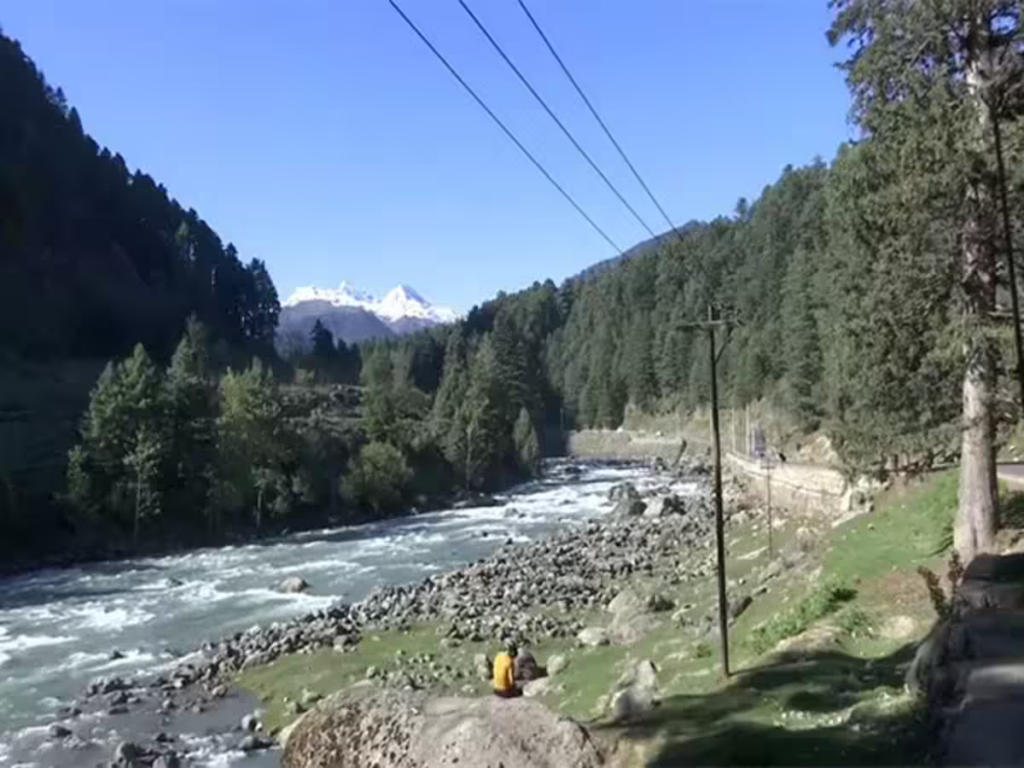
A year ago, Pahalgam was not supposed to be in the news. Known for its postcard landscapes, pine forests, and the Lidder River cutting through its heart, the town had long symbolized Kashmir’s fragile normalcy. Then came the attack, sudden, violent, and deeply disruptive. Twelve months later, the story of Pahalgam is no longer just about what happened that day. It is about what happened after.
What changed in the immediate aftermath?
The impact was swift and visible.
Hotels that once operated at full capacity stood empty. Tourists cancelled trips in waves. Local businesses, many entirely dependent on seasonal tourism, faced immediate uncertainty. For guides, pony handlers, and small shop owners, the attack wasn’t just a security incident. It was an economic shock.
Yet even in those early days, there were signs of resistance.
Some shopkeepers chose to keep their shutters up—not because customers were coming, but because closing felt like conceding to fear. One local sentiment captured it best: if businesses shut, fear wins. That quiet defiance would come to define the months ahead.
How does Pahalgam look today?
A year on, Pahalgam feels both familiar and changed.
Tourists are returning, but cautiously. The scenic beauty remains untouched, the same mountains, the same river, the same meadows, but the atmosphere carries a new awareness.
What stands out now:
- Heightened security presence: Armed personnel, patrol vehicles, and checkpoints are now part of daily life
- Cautious tourism recovery: Visitors are returning, but bookings remain more measured than before
- Visible vigilance: Safety checks and monitoring are more frequent and normalised.
The valley still looks like a postcard. It just comes with footnotes.
How have locals responded?
For residents, the memory of the attack hasn’t faded. It surfaces in everyday conversations, in subtle warnings to visitors, and in a shared understanding that stability here is never absolute.
And yet, life has resumed.
Markets are open again. Cafés are serving customers. Tourists pose for photos in front of the same landscapes that once framed breaking news alerts. The recovery isn’t dramatic, but it is real.
Economic recovery in motion:
- Small businesses are reopening gradually
- Tourism-linked jobs are returning, though unevenly
- Local confidence is rebuilding, step by step
What has changed the most?
The most significant shift isn’t physical, it’s psychological.
There is now a duality in Pahalgam:
- Caution, shaped by recent memory
- Resolve, driven by necessity and belonging
For many locals, leaving was never a realistic option. Staying and rebuilding became the only path forward.
This resilience doesn’t show up in headlines. It appears in smaller, quieter ways:
- Opening a shop despite uncertainty
- Guiding tourists through familiar trails
- Continuing daily routines without spectacle
Why this story matters beyond Pahalgam
What happened in Pahalgam reflects a broader reality in regions touched by conflict: recovery is rarely linear, and “normalcy” is often negotiated rather than restored.
Key takeaways:
- Tourism economies are highly vulnerable to security shocks
- Local communities play a central role in recovery
- Resilience is often understated, built through routine rather than rhetoric
For readers looking to understand Kashmir beyond headlines, Pahalgam offers a grounded, human perspective.
TL;DR
- Pahalgam faced a major attack a year ago that disrupted tourism and local livelihoods.
- The immediate impact was severe, with cancellations and economic uncertainty.
- A year later, tourism is returning, but with tighter security and cautious optimism.
- The real story is the resilience of locals—seen in everyday acts of rebuilding and staying.