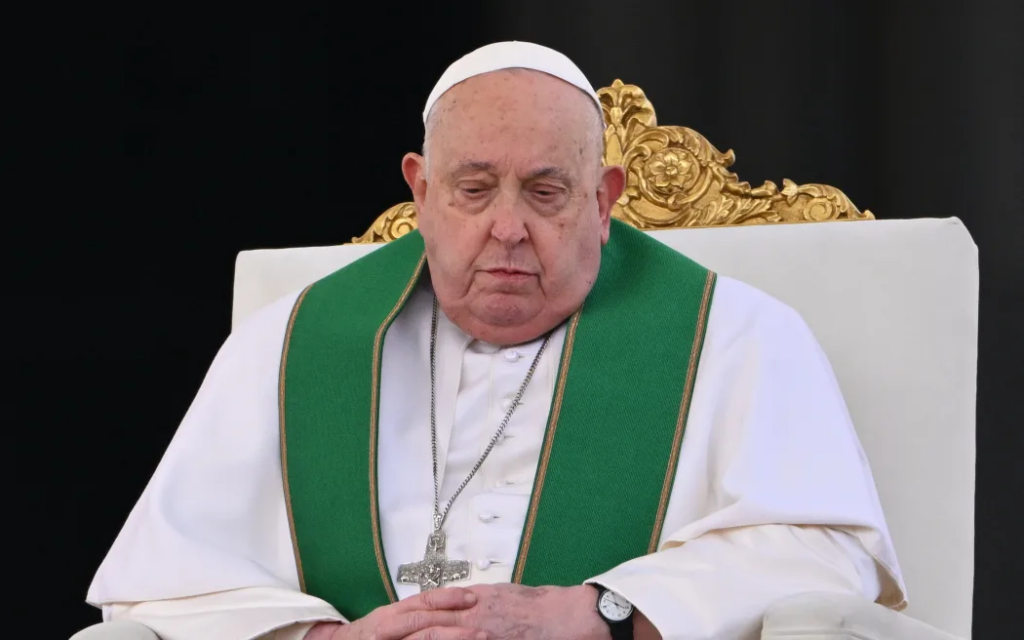
88-year-old pontiff remains hospitalized amid severe pneumonia battle
Three weeks after being admitted to Rome’s Gemelli Hospital, Pope Francis continues to struggle with double pneumonia, raising concerns about his fragile health. The 88-year-old has not been seen in public since his hospitalization, and the Vatican has not provided a timeline for his discharge or return to his usual responsibilities.
Medical experts caution recovery may take time
Doctors not involved in his treatment say the recovery process could be long and uncertain. Professor Christoph Lange, an expert in respiratory diseases, noted that patients in similar conditions have spent months in the hospital and warned that the risk of complications remains high.
“The best approach is to allow him ample time to recover, without rushing him back to work,” Lange told Reuters.
The pope’s weakened condition was evident in an audio message released Thursday, where he thanked well-wishers for their prayers. His voice sounded breathless and difficult to understand.
Vatican provides unprecedented health updates
Breaking past traditions of secrecy surrounding a pope’s health, the Vatican has been releasing regular medical updates. In a positive development, doctors announced they would skip Friday’s bulletin due to the pope’s clinical stability, instead issuing the next update on Saturday.
However, they continue to stress that his condition remains serious, and until his prognosis improves, he is not out of danger.
Pneumonia’s toll on the pope’s health
Medical experts caution that pneumonia of this severity is difficult to overcome, even for younger individuals. Professor Loredana Sarmati, an infectious disease specialist at Rome’s Tor Vergata University, emphasized that full recovery could take weeks or longer.
“Beyond his age, the pope has a history of respiratory problems. This only adds to the challenge,” she explained. Francis previously had part of a lung removed as a young man due to pleurisy.
Signs of stability, but concerns remain
Since his hospitalization on February 22, Pope Francis has experienced four episodes of breathlessness, with the most recent on March 3 due to a buildup of mucus in his lungs. The Vatican says he has not suffered another breathing crisis since Monday, nor has he had a fever since February 14. His blood test results remain stable, which doctors view as encouraging.
However, the lack of major improvement after three weeks of intensive care is concerning, according to a senior physician who recently retired from Gemelli Hospital. This doctor, who chose to remain anonymous, noted that prolonged breathing difficulties can strain the heart, a serious risk for a patient of Francis’ age.
Oxygen therapy and potential next steps
The pope has been receiving supplemental oxygen for two weeks, either through a breathing mask or a nasal tube. If his condition worsens, doctors may consider sedating him and inserting an oxygen tube into his throat, though this would be a last resort due to his age.
Medical experts also raised ethical questions about how much intervention the pope is willing to accept. In 2017, Francis spoke on end-of-life care, stating that it is morally legitimate to forgo “overzealous treatment”. However, it is unclear if he has given specific instructions about his own medical care.
Physiotherapy and long-term impact
As part of his rehabilitation, the Vatican has confirmed that Pope Francis is undergoing respiratory therapy to strengthen his lungs and physical therapy to recover from his longest hospital stay since becoming pope 12 years ago.
Professor Carlo Vancheri, a respiratory disease specialist, warns that even if Francis recovers, he may never fully regain his previous strength.
“He may heal, but some lung damage could remain,” Vancheri said, adding that a 100% recovery might not be possible.
Though the Vatican says he has been spending time sitting in a chair, it remains unclear whether he can walk or stand unaided.
With his condition still uncertain, the coming days will be crucial in determining his long-term health and ability to continue leading the Catholic Church.