

Quick Summary
- A Russian Antonov An-24 plane, flown by Angara Airlines, crashed near Tynda in the Amur region.
- All 49 people on board, 43 passengers (including 5 children) and 6 crew, are feared dead.
- Early reports suggest crew error in poor visibility may have caused the crash.
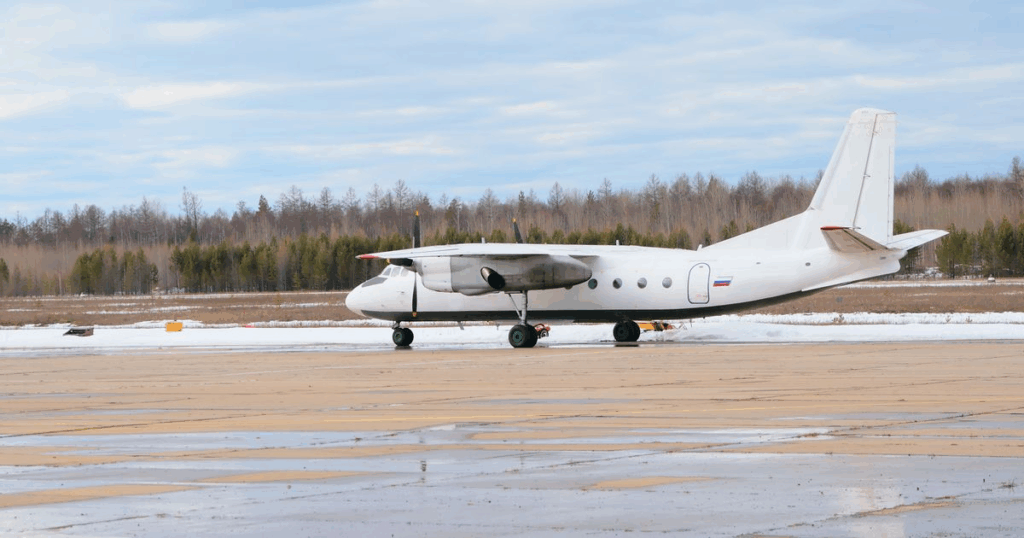
- The Antonov An-24 is a Soviet-era turboprop still widely used in Russia, raising concerns about aging aircraft and maintenance.
- The crash highlights the challenges facing aviation safety, especially in Russia’s remote regions, where older planes are more common.
- The tragedy is likely to renew debate over aircraft modernization and safety regulations.
What Do We Know About the Russian Plane Crash in Amur?
Angara Airlines Flight, an Antonov An-24, went missing from radar on Thursday morning as it approached Tynda, a remote town near Russia’s border with China. The aircraft was carrying 49 people—six of them crew, and five of the passengers were children.
Authorities initiated a search and rescue operation soon after contact was lost. Hours later, emergency services discovered the burning wreckage. According to Russia’s Ministry of Emergency Situations, the Mi-8 helicopter crew spotted the debris in a remote, densely forested, and mountainous area near the intended airstrip. There were no immediate signs of survivors; all on board are feared dead.
Why Did the Plane Crash? Latest Updates on Possible Causes
Russian news agency TASS and regional officials have indicated that a combination of pilot error and poor visibility is believed to have contributed to the crash during the plane’s attempted landing. Early reports are suggesting the crew may have made a critical error in adverse weather, though official investigations are still underway.
The An-24 is known as a workhorse for Russia’s regional and remote routes, but it’s also an aging model. Built in the 1950s and 1960s, many of these turboprop planes are still flying, especially where newer jets are impractical or too expensive.
What Kind of Aircraft Was Involved, and Why Is It Still Flying?
The Antonov An-24 is a Soviet-era regional propeller-driven plane. Over 1,000 were produced, and hundreds remain in service throughout Russia and neighboring countries. Their rugged design makes them popular for regions with unpaved runways or severe weather, like the Amur.
However, their age has brought renewed scrutiny. Recent crashes involving older Soviet-era aircraft in Russia have raised ongoing questions about maintenance practices, safety standards, and the challenges faced by operators forced to keep older fleets flying. For context, similar planes have been retired in other countries owing to stricter regulations and safety mandates.
What Challenges Do Search and Rescue Teams Face in Remote Russian Regions?
The eastern Amur region is a vast, forested expanse thousands of miles from Moscow, complicating immediate rescue efforts. Here’s why crashes like this one are especially difficult to manage:
- Dense forests and rugged terrain slow down ground teams.
- Severe weather often limits helicopter visibility and safety.
- Sparse infrastructure means less support for quick response.
The remoteness also means regional carriers, like Angara Airlines, depend on robust, older aircraft with proven performance in difficult environments—but at increased risk.
What Happens Next: Aviation Safety Questions and Policy Implications
A high-profile investigation will determine the exact cause of the crash. The spotlight will be on both Angara Airlines and Russia’s civil aviation authority regarding:
- The safety and maintenance of older planes.
- Crew training and protocols during bad weather.
- Funding and modernization for local air fleets.
This crash is likely to spark broader public debate within Russia and possibly internationally on aviation standards, especially in countries relying heavily on aging Soviet-era airplanes for regional connectivity.
Key Facts at a Glance
| Detail | Information |
|---|---|
| Aircraft | Antonov An-24 (Soviet-era turboprop) |
| Airline | Angara (Siberia-based) |
| Number On Board | 49 (43 passengers, 6 crew; 5 children among them) |
| Crash Location | Near Tynda, Amur region, Russia/China border |
| Suspected Cause | Crew error, poor visibility |
| Death Toll | All feared dead |


