

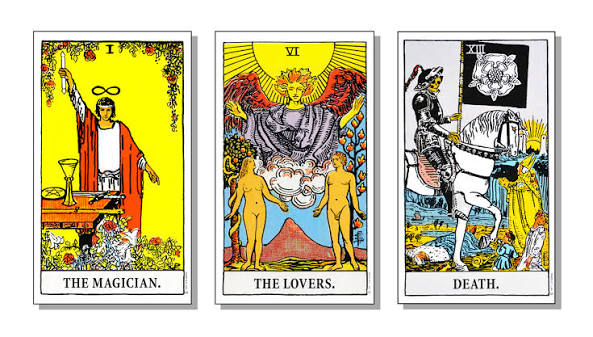
As the war in Ukraine continues to leave Russian families waiting for answers about missing and dead servicemen, some are turning to an unlikely source: clairvoyants, tarot readers and other occult practitioners.
For relatives caught between official uncertainty and the possibility of never receiving a definitive answer, mysticism can offer something the battlefield and bureaucracy often cannot — the feeling that there is still a way to find out what happened.
According to a report by The Telegraph, Russian families have been approaching mediums and fortune-tellers to determine whether missing soldiers are alive, dead or being held captive. Some practitioners claim they can communicate with servicemen believed to have died, while others use tarot cards or rituals to provide answers about a soldier’s fate.
The trend points to a broader phenomenon in wartime Russia: as uncertainty grows, so does the search for certainty outside conventional institutions.
Why are Russian families turning to clairvoyants?
The desperation is often rooted in the peculiar uncertainty surrounding soldiers officially listed as missing in action.
One woman identified as Tatyana recently posted a photograph of a soldier named Sergei on VKontakte, Russia’s largest social-networking platform. Sergei had reportedly been missing since June 12, 2026. Tatyana said she was posting the photograph at the request of his mother, who was seeking help from mystics and mediums to establish what had happened to him.
The appeal was simple: “Please help.”
For a family, however, the question is anything but simple. A missing soldier can occupy an agonizing middle ground. There may be no body, no confirmed death and no reliable information about whether the person was wounded, captured or killed.
That uncertainty can make almost any possible source of information seem worth pursuing.
Independent reporting has documented the scale of the problem. The Ukrainian “I Want to Find” initiative said it had received more than 200,000 inquiries concerning missing Russian servicemen between January 2024 and June 2026. It has established the fate of thousands of them, including servicemen found among prisoners of war and others identified among remains.
The figures do not represent the total number of missing soldiers. They represent families who actively sought information through that particular channel.
What do tarot readers and occult practitioners claim to offer?
The services being marketed to families vary widely.
Some practitioners claim to use tarot cards to determine whether a missing serviceman is alive. Others say they can communicate with dead soldiers or identify where a person’s remains are located.
Some offer protective rituals or spells intended to shield servicemen from harm. Others reportedly promise to help “bring back” missing relatives.
Russian media has reported that fortune-tellers are increasingly advertising services specifically aimed at families searching for people missing in the war. In one reported case, a fortune-teller allegedly told a woman that her missing relative had been wounded and later offered to arrange his evacuation for a large payment.
That creates a particularly dangerous environment for families who are already emotionally vulnerable.
The issue is not simply whether a person believes in tarot or supernatural practices. It is that a family searching for a missing soldier may be willing to pay for information that cannot otherwise be obtained.
The risk of exploitation
Authorities and Russian media have warned that scammers are exploiting the desperation of relatives.
Offers can include claims that a practitioner has access to military databases, knows someone inside the armed forces or can arrange a soldier’s release or evacuation.
A July 2026 investigation by Emerging Europe described a wider market in which intermediaries, alleged military lawyers, tarot readers and fortune-tellers approached families searching for missing servicemen. In one test, a fictitious missing soldier generated offers from people claiming they could locate him, arrange his release or use supernatural means to determine his whereabouts.
The problem is therefore larger than occult belief. It is also an information vacuum — and information vacuums are fertile ground for fraud.
Russia’s wider mysticism boom is already well documented
The growing interest among military families is taking place against a much broader rise in occult practices across Russia.
A March 2026 survey by the All-Russian Center for the Study of Public Opinion, or VTsIOM, found that 85% of Russians had experimented with some form of magical practice. The survey also found widespread belief in supernatural beings and protective forces.
VTsIOM attributed the increase partly to heightened anxiety caused by geopolitical and economic conditions.
Its explanation is significant because it frames mysticism less as a fringe curiosity and more as a coping mechanism. In circumstances where people feel that events are beyond their control, rituals and supernatural beliefs can provide a sense of agency.
The phenomenon is not new to Russia. Orthodox Christianity, folk beliefs and mystical practices have coexisted for centuries, while periods of political and economic upheaval have repeatedly produced renewed interest in fortune-telling and other forms of supernatural guidance.
The war has added an especially powerful source of uncertainty.
How big is Russia’s occult-services market?
The financial scale of the industry is striking, although estimates should be treated cautiously because the sector is difficult to measure.
Russian media reports have estimated the country’s esoteric-services market at roughly 2.4 trillion rubles in 2024, encompassing services associated with psychics, fortune-tellers, astrologers, witches and tarot practitioners.
That estimate has been widely cited in Russian and international reporting, but it should not be treated as an audited measurement of the entire industry.
There are signs of continued consumer interest even as individual parts of the market fluctuate. A 2026 analysis based on retail receipts found increased demand for protective charms and other magical objects in 2025, although demand for tarot cards itself fell slightly.
Why does war make mysticism more attractive?
The connection between crisis and supernatural belief is not uniquely Russian.
War creates several conditions that can push people toward practices promising certainty:
- Uncertainty: Families may not know whether a soldier is alive, dead or captured.
- Lack of information: Official updates can be slow, incomplete or difficult to obtain.
- Loss of control: Relatives have little ability to influence events happening hundreds of miles away.
- Grief without closure: When there is no body or confirmed death, mourning can remain unresolved.
- Hope: A missing soldier can still theoretically return home.
- Community influence: Relatives and online groups can introduce families to practitioners who claim to have answers.
This is where the psychological appeal of fortune-telling becomes clearer. A tarot reading cannot establish whether a soldier survived a battlefield engagement. But for someone waiting weeks or months without information, a reading can temporarily replace unbearable uncertainty with a narrative.
That distinction matters.
The emotional function of a belief can be powerful even when there is no evidence that the underlying claim is true.
The search for missing soldiers has moved online
The hunt for answers is also increasingly digital.
Families use social media to circulate photographs, names, military details and last-known locations. VKontakte, Telegram and other online communities have become places where relatives exchange information and seek help.
The same platforms can also expose vulnerable families to people offering fraudulent services.
A 2026 investigation by The New Yorker documented another form of digital searching, with Russian families using Google Maps and other online tools in attempts to establish what happened to missing soldiers.
Meanwhile, AI has created yet another way for families to interact with representations of relatives who died or disappeared.
BBC Russian reported in June that families were increasingly commissioning AI-generated videos featuring deceased or missing soldiers, including imagined reunions and farewell scenes.
Tarot cards, maps and artificial intelligence may appear unrelated. But they can serve a similar emotional purpose: filling an information gap created by death, disappearance and uncertainty.
Russian authorities and the Orthodox Church oppose occult practices
The growth of the industry has not gone unnoticed by Russian authorities or religious leaders.
Politicians have periodically called for restrictions on fortune-telling and advertising for esoteric services. Russian Orthodox figures have also criticized occult practices as incompatible with Christian teaching.
The tension is notable: even as mysticism attracts growing public interest, religious and political authorities have sought to discourage or regulate parts of the industry.
Yet criticism has not eliminated demand.
If anything, the wartime environment has created a particularly difficult contradiction. Families are being asked to cope with enormous uncertainty while simultaneously navigating limited information, grief and fear.
For some, conventional sources of information are not producing answers quickly enough.
What does the trend reveal about Russia’s wartime families?
The rise of clairvoyants and tarot readers should not simply be presented as evidence that Russians are becoming more superstitious.
It is also evidence of what prolonged uncertainty can do to families.
Independent investigations have estimated that hundreds of thousands of Russian servicemen have died since the full-scale invasion began. A joint investigation by Meduza and Mediazona, using court records and inheritance data, estimated approximately 352,000 Russian military deaths through the end of 2025, including about 90,000 deaths that earlier estimates had been unable to account for.
The precise number remains contested, and Russia has not provided a comprehensive public accounting of its wartime military deaths.
But the underlying reality is difficult to dispute: a vast number of Russian families have experienced death, disappearance or prolonged uncertainty since February 2022.
For those families, the question is often not abstract.
It is: Is he alive? Where is he? Will he come home?
When official channels cannot answer those questions, people may look elsewhere — even to sources that cannot reliably provide the truth.
The real danger may be the absence of an answer
The growth of occult services around missing soldiers is ultimately less about tarot cards than about uncertainty.
A family searching for a missing relative can become trapped between hope and grief. A fortune-teller can offer an answer in minutes, while official confirmation may take months — or never arrive.
That imbalance creates an opportunity for exploitation.
The reported expansion of Russia’s occult market, the rise in magical practices and the targeting of military families all point to the same underlying phenomenon: when people lose access to reliable information, the demand for certainty does not disappear. Someone else fills the gap.
In Russia’s wartime economy, that someone may be a government agency, an online investigator, a scammer — or a tarot reader laying cards across a table.
The cards may provide a story.
For families waiting for a missing soldier, however, what they need is an answer.




