
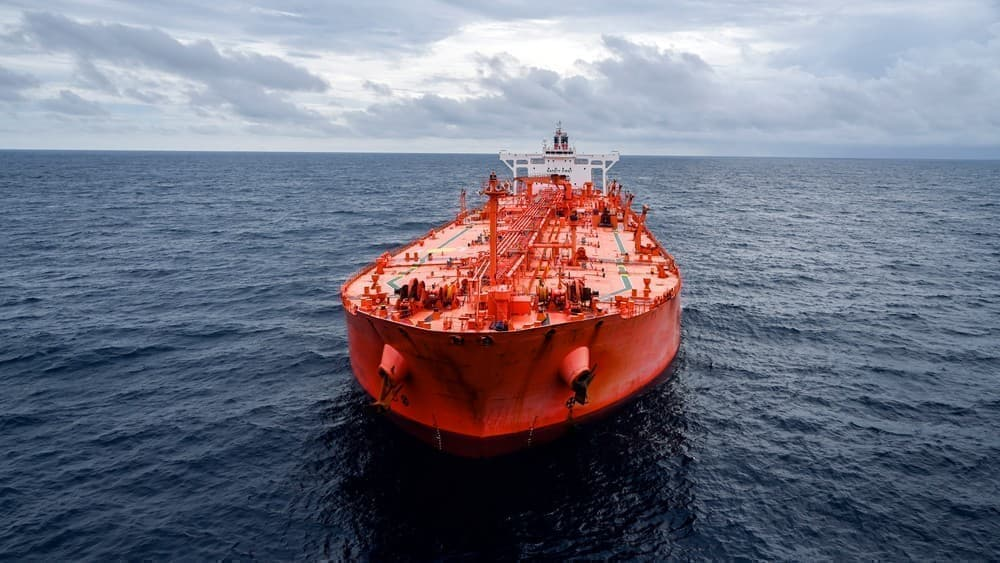
Russian oil exports were supposed to be one of the West’s most powerful pressure points after Moscow launched its full-scale invasion of Ukraine in 2022. Yet nearly four years into the war, the numbers tell a more complicated story.
A new report from the Centre for Research on Energy and Clean Air (CREA) finds that while Russian crude export volumes dipped slightly over the past year, they remain higher than they were before the invasion. In other words, sanctions have dented revenues, but they haven’t shut the spigot.
Here’s what the data shows, and why it matters.
Russian oil exports are still above pre-invasion levels
CREA’s analysis of shipping and trade data indicates that Russian crude export volumes in the fourth year of the war were about 6% above pre-invasion levels.
That’s striking for two reasons:
- The U.S., European Union, and G7 imposed multiple rounds of sanctions targeting Russian energy.
- Western nations also attempted to curb shipping access through measures aimed at Russia’s so-called “shadow fleet.”
Despite these efforts, Russia continues to move large volumes of oil onto global markets.
Where is Russian oil going now?
If Europe was once Russia’s primary energy customer, the geography of trade has now shifted dramatically.
According to the report, 93% of Russian crude exports during the most recent 12-month period went to:
- China
- India
- Turkey
This represents a wholesale reorientation of Russian energy flows toward Asia and parts of the Global South.
China and India are key buyers
Both China and India have increased purchases of discounted Russian crude since 2022. These imports often feed domestic refineries, with some refined products later sold into global markets, including countries that have sanctioned Russian oil.
That dynamic creates a legal gray zone. While direct imports of Russian crude may be restricted in some jurisdictions, refined products made from that crude can still circulate.
What is the “shadow fleet” and how does it work?
One of the more controversial elements of Russia’s export strategy is its use of a “shadow fleet.”
The shadow fleet refers to:
- Older oil tankers
- Ships with opaque or shell-company ownership
- Vessels operating under flags of convenience
- Ships that disable or manipulate tracking systems
These tankers help move oil outside traditional Western-dominated insurance and financing systems.
CREA identifies several enforcement gaps, including:
- Ships operating under false flags
- Weak oversight in certain maritime registries
- Re-export of refined fuels derived from Russian crude
These loopholes, the report argues, allow large volumes of oil to continue flowing despite formal restrictions.
If exports are strong, why is Russia earning less?
While Russian oil exports remain robust in volume, revenue tells a different story.
According to figures cited by AFP, crude export earnings fell 18% year-over-year, dropping to €85.5 billion in the 12 months leading up to February 24.
At the same time:
- Export volumes declined 6% year-over-year
- Russia has been forced to offer significant discounts to buyers
The reason is straightforward: price matters as much as volume.
Discounted crude cuts into war funding
To keep oil flowing, Russia has reportedly sold its crude at below-market prices to attract buyers willing to sidestep Western pressure.
That means:
- Lower margins per barrel
- Reduced tax intake for the Kremlin
- Less direct revenue is available to finance military operations
Still, €85.5 billion is not trivial. Even discounted oil provides substantial funding.
Are sanctions working or not?
The answer depends on how you define “working.”
What sanctions have achieved
- Reduced Russian oil revenues
- Forced heavy discounting
- Complicated logistics and increased shipping costs
- Limited access to Western insurance and services
CREA analyst Isaac Levi, a co-author of the study, noted that new measures and tighter enforcement have led to a “significant drop” in fossil fuel export earnings.
Where sanctions fall short
However, Levi also points to “significant loopholes” that remain unaddressed.
Key weaknesses include:
- Inconsistent enforcement across jurisdictions
- Indirect trade through refined fuels
- Limited oversight of tanker ownership structures
CREA is urging stricter measures, including a proposed ban on imports from any refinery or storage terminal that received a shipment of Russian oil in the previous six months.
That would represent a more aggressive secondary sanction approach, and could raise diplomatic tensions with countries that have continued buying Russian crude.
Why Russian oil exports still matter globally
Russian oil exports don’t exist in a vacuum. They’re part of a tightly interconnected global energy system.
If Russian oil were fully removed from the market:
- Global supply would tighten
- Oil prices would likely spike
- Inflation pressures could intensify worldwide
Western policymakers have had to balance two competing goals:
- Reduce Russia’s war funding
- Avoid destabilizing global energy markets
The current outcome, sustained exports at discounted prices, reflects that uneasy compromise.
What happens next?
Several scenarios could shift the trajectory of Russian oil exports:
- Stronger secondary sanctions targeting refineries that process Russian crude
- Improved maritime enforcement against shadow fleet vessels
- A global price rally that increases Russian revenue even at discounted rates
- Changes in buyer behavior in China, India, or Turkey
Each carries geopolitical risks.
For example, broader enforcement could strain Western relations with India, a key strategic partner in Asia. At the same time, rising oil prices could blunt the intended impact of sanctions.
The broader economic picture
Energy exports remain central to Russia’s economy. Oil and gas revenues fund:
- Military spending
- Social programs
- Currency stabilisation efforts
While Western sanctions have reshaped trade routes, they haven’t severed Russia from global markets.
Instead, they’ve accelerated the fragmentation of energy trade into competing blocs, a shift that may outlast the war itself.
TL;DR
- Russian oil exports remain about 6% above pre-invasion levels.
- 93% of crude now goes to China, India, and Turkey.
- Revenues fell 18% to €85.5 billion due to discounting.
- Sanctions have reduced earnings but haven’t halted exports.
- Loopholes, including shadow fleet tankers and refined fuel re-exports, continue to undermine enforcement.