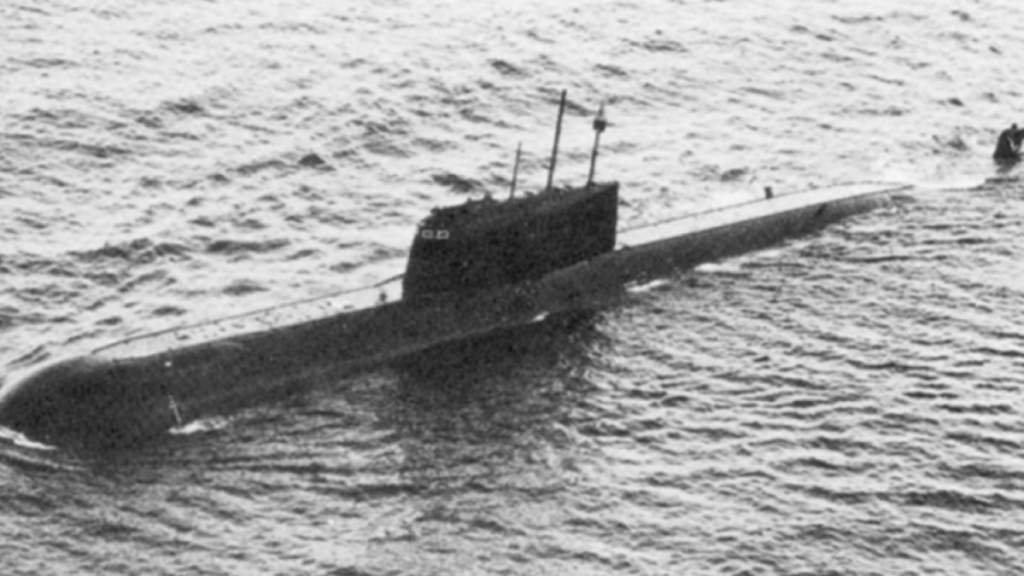
A Cold War-era disaster resting deep beneath the sea is back in the spotlight. The wreck of the Soviet nuclear submarine Komsomolets (K-278) is leaking radioactive material—but, according to new research, it’s not currently harming the ocean.
The findings, published in the Proceedings of the National Academy of Sciences in March 2026, offer a rare mix of reassurance and warning. While radioactive isotopes are escaping from the submarine’s reactor, they are dispersing so quickly in seawater that scientists have found no measurable environmental damage—so far.
TL;DR
- The Soviet submarine Komsomolets sank in 1989 with nuclear weapons onboard
- It is now leaking radioactive material from its reactor
- Scientists confirm no current harm to marine life due to rapid dilution
- Emergency sealing efforts by Soviet and Russian teams appear effective
- Long-term risks remain as the reactor continues to corrode
What Happened to the Komsomolets?
The Komsomolets (K-278) sank on April 7, 1989, in the Norwegian Sea after a catastrophic onboard fire.
The Accident
- A fire broke out in the rear section of the submarine
- Flames spread rapidly, described as turning parts of the vessel into a “blowtorch”
- 42 crew members lost their lives
- The submarine eventually sank to a depth of about 5,500 feet
Despite the chaos, the wreck settled upright on the seabed—and remains largely intact more than three decades later.
What Was Onboard?
- A nuclear reactor
- Two nuclear-armed torpedoes
- Advanced titanium-alloy hulls designed for deep-sea pressure
This combination made the wreck one of the most potentially dangerous underwater nuclear sites in the world.
What Did Scientists Discover About the Leak?
In 2019, researchers from Norway’s radiation and marine institutes conducted a detailed investigation using remotely operated vehicles.
How the Study Was Conducted
- Submersibles equipped with:
- Sonar imaging
- Video recording
- 40-litre water sampling containers
- Analysis of radioactive isotopes, including plutonium and uranium
What They Found
- Radioactive material leaking from:
- A ventilation pipe
- A nearby metal grill
- Clear evidence that:
- The submarine’s reactor fuel is corroding
- Radionuclides are being released into the surrounding water
Scientists confirmed the source by comparing isotope signatures unique to Soviet-era reactors.
Why Isn’t the Leak Causing Environmental Damage?
This is the most surprising part of the story.
The Ocean’s Natural Defence: Dilution
The study found that radioactive materials are being:
- Rapidly diluted in vast seawater
- Dispersed before reaching harmful concentrations
- Contained to a localised area
As a result:
- No measurable impact on marine ecosystems has been detected
- No contamination has been found in the surrounding marine life
Key insight: The ocean’s sheer volume is acting as a buffer—but it’s not a permanent solution.
What About the Nuclear Weapons Onboard?
One of the biggest fears was leakage from the submarine’s nuclear warheads.
The Good News
- Scientists found no evidence of plutonium leakage from the torpedo compartment
- This suggests the containment measures implemented decades ago are still working
Why That Matters
Plutonium is far more dangerous and persistent in the environment than many other radioactive materials. Its containment significantly reduces immediate risk.
How the Soviet Union—and Russia—Prevented a Bigger Disaster
The study credits early intervention efforts for preventing a far worse outcome.
Immediate Response After the Sinking
The Soviet Union recognised the risks early and took action:
- Regular monitoring using manned submersibles
- Continued oversight even after the USSR dissolved in 1991
The Critical 1994 Intervention
By the mid-1990s:
- Two nuclear torpedoes had become exposed to seawater
- Russian teams:
- Sealed torpedo tubes with titanium patches
- Reinforced exposed areas with additional plating
These measures appear to have held up for over 30 years.
Takeaway: Quick engineering fixes likely prevented a large-scale radioactive release.
What Risks Remain?
Even with reassuring findings, scientists are not declaring the site safe.
Ongoing Concerns
- Continued corrosion of the nuclear reactor
- Potential for increased leakage over time
- Structural degradation of the submarine
Long-Term Questions
- How long will the titanium patches remain effective?
- Could a structural collapse release more material?
- What happens if leakage accelerates?
Bottom line: The situation is stable—but not permanent.
Why This Story Matters Today
The Komsomolets wreck is more than a Cold War relic. It’s a case study in how nations manage long-term nuclear risks.
Broader Implications
- Highlights challenges of underwater nuclear waste containment
- Raises questions about ageing military infrastructure
- Demonstrates the importance of international scientific monitoring
Norway’s ongoing role in monitoring the site shows how responsibility for such risks can extend beyond the country that created them.
What Happens Next?
Monitoring will continue—and likely intensify.
What Scientists Will Watch
- Changes in leakage levels
- Structural integrity of the submarine
- Spread of radioactive isotopes
Future missions may involve more advanced submersibles or even intervention efforts if risks increase.
Final Take
The story of the Komsomolets is a rare example of a nuclear hazard that has been contained—but not eliminated. Decades-old engineering decisions, combined with the ocean’s natural buffering capacity, have so far prevented disaster.
But the clock is still ticking. The reactor is corroding, and the submarine won’t last forever. For now, the ocean is absorbing the risk—but it may not always be able to.