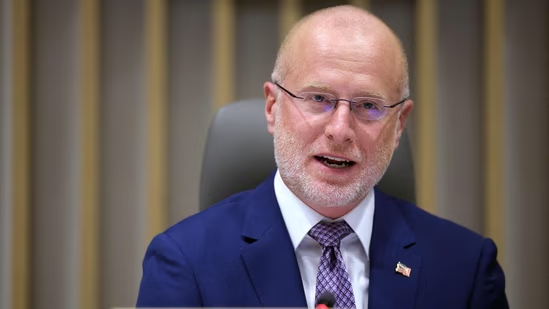
FCC Chairman Brendan Carr posted a warning on X that sounded like an ultimatum: broadcasters running “hoaxes and news distortions” about the Iran war will lose their licenses. The threat made headlines everywhere. But the real story isn’t what Carr said; it’s what happens in local newsrooms when the head of the federal communications regulator publicly targets journalists during wartime, even when his legal authority to follow through is essentially nonexistent.
The Core Story: What Did Carr Actually Say?
On Saturday, March 14, FCC Chair Brendan Carr posted on X that “Broadcasters that are running hoaxes and news distortions, also known as the fake news, have a chance now to correct course before their license renewals come up.” He added, “The law is clear. Broadcasters must operate in the public interest, and they will lose their licenses if they do not.”
The statement came hours after President Trump accused news networks of publishing “fake news” about Iran striking five U.S. tanker planes, as reported by CNN, CNBC, NPR, and CBS News. Trump claimed four of the five aircraft had “virtually no damage” and were already back in service.
Carr’s post was immediately amplified by the White House. Trump backed his FCC chief publicly, criticizing what he called “disgraceful” coverage of the war effort, according to The Washington Post.
Context & Global Impact: The Legal Reality vs. the Political Signal
- Broadcast licenses don’t expire until late 2028. Carr cannot unilaterally revoke a license mid-cycle based on news content without a formal enforcement proceeding that would almost certainly be struck down on First Amendment grounds.
- The FCC has never revoked a license over news content. In the agency’s 90-year history, license revocations have been reserved for technical violations, fraud, or character disqualification, not editorial decisions.
- The “Fairness Doctrine” is dead. The FCC eliminated it in 1987. There is no current regulatory framework giving the FCC authority to define what constitutes “fake news.”
- A Republican lawmaker broke ranks. At least one Republican member of Congress publicly rebuked Carr’s threats, calling them inconsistent with First Amendment protections, as reported by The Guardian.
The Chilling Effect Is the Point
Legal experts interviewed by NPR and CNBC emphasized that the real danger is not license revocation, it is self-censorship. Local television stations, which operate on thin margins and depend on their FCC licenses for survival, are particularly vulnerable to regulatory intimidation. Even an empty threat from the FCC chair can cause station managers to soften coverage or avoid controversial stories.
This dynamic is especially potent during wartime, when public sentiment tends to favor supporting military operations, and criticism can be framed as unpatriotic.
What It Means for the Average News Consumer
For the roughly 25 million Americans who still get their primary news from local broadcast television, Carr’s threat has a direct downstream effect. If local stations become more cautious about airing critical coverage, the information environment narrows. Viewers may not notice the stories that don’t get aired, the investigations that get shelved, or the questions that don’t get asked. The chilling effect is invisible by design.
What’s Next: Legal Challenges and Congressional Response
Democrats on the House Commerce Committee have signaled they will call Carr to testify about his statements. Free speech organizations, including the ACLU and Reporters Committee for Freedom of the Press, have issued statements condemning the threats and are reportedly exploring legal options.
The broader question is whether Carr’s approach represents an isolated provocation or a preview of a more systematic effort to use regulatory pressure against media outlets during the Iran conflict.
Frequently Asked Questions
Can the FCC actually revoke a broadcaster’s license for news coverage? In practice, no. The FCC has never revoked a license based on news content in its 90-year history. Any attempt would face immediate First Amendment challenges.
What did FCC Chair Brendan Carr threaten? Carr posted on X that broadcasters running “hoaxes and news distortions” about the Iran war should “correct course before their license renewals come up.”
Why does this matter if the threat is legally empty? Because the chilling effect on local newsrooms is real. Station managers may self-censor to avoid drawing regulatory attention, even if the legal threat itself is unenforceable.