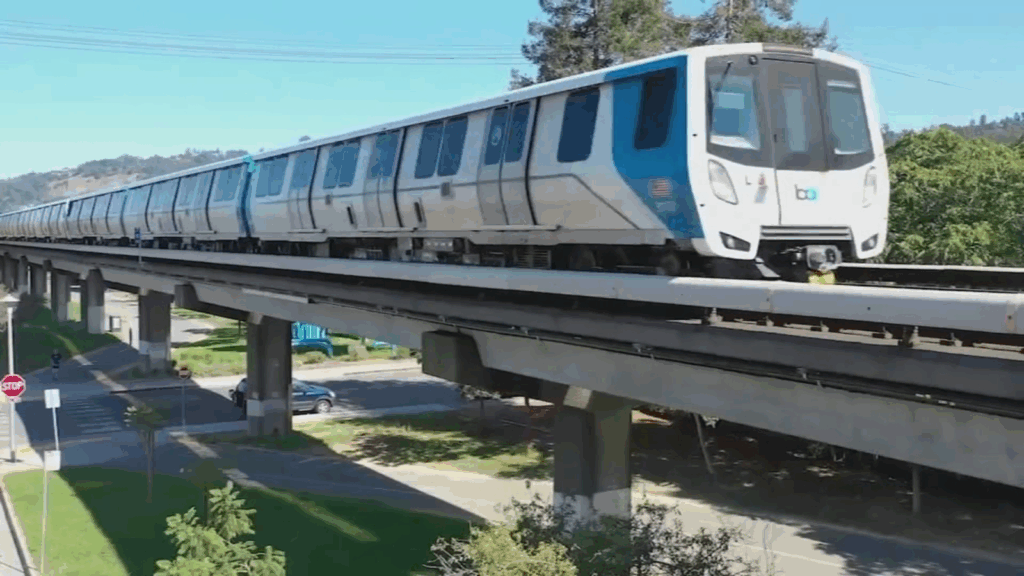
The San Francisco Bay Area woke up Friday to a massive transportation crisis after Bay Area Rapid Transit (BART) shut down its entire system due to a major computer failure. The shutdown has stranded tens of thousands of commuters and triggered ripple effects across the region’s already strained transit network.
What caused the BART shutdown?
BART officials said the issue began during an overnight network upgrade, which unexpectedly disabled critical computer equipment. By Friday morning, the transit agency confirmed it was unable to launch normal service.
In a public advisory, BART urged riders to “seek alternative means of transportation” and directed people to its online trip planner for rerouting options. Engineers are working to restore service, but officials have not provided a clear timeline for when trains might be back on track.
Why this shutdown matters
BART is one of the most vital arteries in the Bay Area’s transportation system. On a typical weekday, it carries about 180,000 riders, connecting commuters between San Francisco, Oakland, Berkeley, and the suburbs. For many, it is not just a convenience—it is the only practical way to cross the Bay efficiently during rush hour.
Without BART:
- Highways like I-80, I-580, and the Bay Bridge face extreme congestion.
- Ferry and bus systems risk overcrowding.
- San Francisco’s Muni buses and streetcars, which often act as feeders to BART, also get disrupted.
The San Francisco Municipal Transportation Authority (SFMTA) has already warned that delays across Muni are “likely unavoidable” as drivers attempt to absorb displaced BART passengers.
How are commuters coping?
Friday morning brought scenes of confusion and frustration at shuttered BART stations. Riders arrived to locked gates and darkened platforms, many scrambling to find last-minute rides.
Some turned to:
- Ride-sharing apps like Uber and Lyft, though surge pricing quickly pushed fares sky-high.
- Regional buses such as AC Transit, which reported heavier-than-normal loads.
- Casual carpooling, a Bay Area tradition revived during BART strikes of the past.
Social media has been flooded with photos of crowded bus stops and complaints about missed work, medical appointments, and school drop-offs.
Has BART faced similar crises before?
This isn’t the first time BART’s aging infrastructure has buckled under pressure. The system, which opened in 1972, has repeatedly faced challenges tied to outdated technology and underfunding.
- In 2019, a computer system outage briefly halted trains systemwide.
- Labor strikes in 2013 shut down service for several days, paralyzing commutes.
- A 2022 electrical equipment failure forced major delays across the network.
Friday’s collapse underscores the risks of running a half-century-old system that is increasingly dependent on complex digital networks.
What are the broader implications?
The shutdown highlights three critical issues for Bay Area transit:
1. Overreliance on BART
With limited redundancy, any systemwide outage immediately creates gridlock across the region. Unlike New York or Chicago, the Bay Area does not have multiple subway networks to fall back on.
2. Technology risks
As BART modernizes with automated train control and upgraded fare systems, outages caused by software or hardware failures may become more common—and more disruptive.
3. Public trust and funding
BART already struggles with declining ridership after the pandemic, safety concerns, and budget shortfalls. A high-profile failure like this could deepen skepticism about its reliability and fuel political debates about whether it deserves more taxpayer support.
What happens next?
Officials have promised updates throughout the day, but commuters are being advised to prepare for extended delays. Emergency coordination with regional transit partners is underway to move people through buses and ferries, though capacity remains limited.
For BART, the immediate priority is restoring service. But the bigger question is whether this incident forces a rethink of how the Bay Area invests in—and safeguards—its public transit lifeline.
TL;DR
A computer failure shut down the entire BART system Friday, stranding tens of thousands across the Bay Area. With 180,000 daily riders impacted, ripple effects hit Muni, buses, and highways. The crisis exposes the vulnerability of the region’s aging transit system and raises tough questions about reliability, technology, and funding.