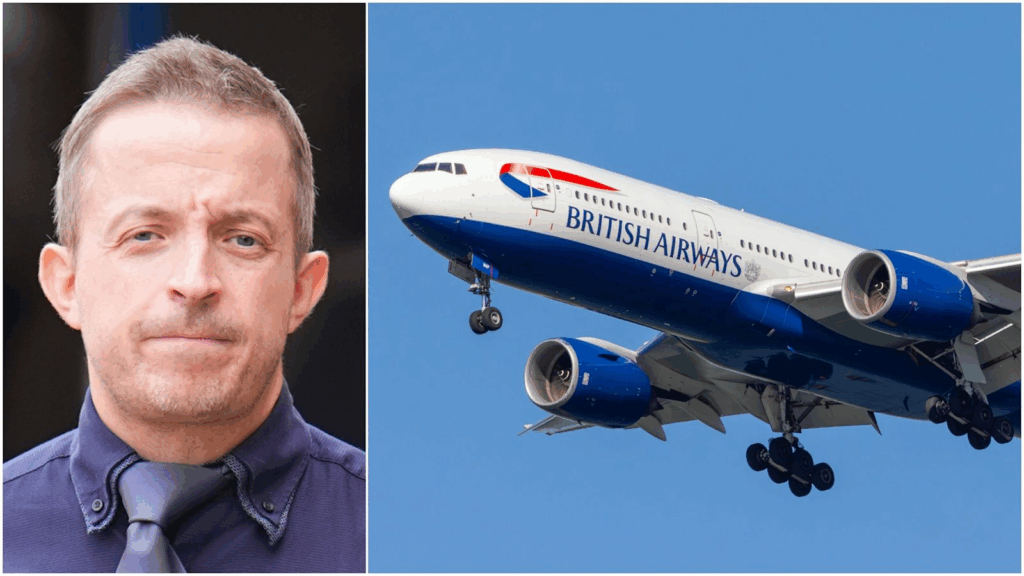
British Airways is facing renewed scrutiny after a 41-year-old flight attendant was discovered naked and under the influence of drugs during a flight from California to London. The midair incident, which unfolded in front of stunned colleagues and passengers, has raised serious questions about crew fitness and airline safety protocols.
What happened on the flight?
The attendant, identified in court as Haden Pentecost, reportedly began acting erratically mid-flight, showing signs of agitation, sweating, and incoherent speech. Prosecutors told Uxbridge Magistrates’ Court that Pentecost locked himself in the toilet, complaining of stomach cramps and claiming he needed to change clothes.
When a colleague eventually opened the lavatory door, he was found naked, disoriented, and apparently unaware of his condition. Crew members dressed him and seated him among the passengers while the captain was notified.
A health professional on board was asked to assess his condition, and staff monitored him every 20 minutes until the plane landed at Heathrow. Medical responders later confirmed he had dilated pupils and an elevated heart rate and tested positive for methamphetamine and amphetamine.
Pentecost had earlier failed to participate in mandatory pre-flight safety checks and was removed from duty by his manager before the incident escalated.
Court proceedings and charges
Pentecost admitted in court to performing an aviation role while under the influence of drugs, a serious charge under UK aviation law. The court granted him bail, with sentencing scheduled at Isleworth Crown Court. He has since been dismissed by British Airways.
The incident comes at a time of heightened global scrutiny on airline crew conduct, with regulators emphasizing the zero-tolerance policy for substance use in safety-critical roles.
A pattern of troubling incidents at British Airways
This is not the first time British Airways has faced embarrassment over staff misconduct on flights:
- Earlier this year, another male steward was found dancing naked in a business-class lavatory during a San Francisco-to-London service. He was reportedly incoherent, dressed in First Class pajamas by colleagues, and restrained for the remainder of the 10-hour flight carrying nearly 470 passengers.
- Police arrested the steward on arrival, and fellow crew members alleged he had ingested pills while on duty.
Such cases have sparked debates about whether airlines are doing enough to screen and monitor staff for substance abuse.
Why this matters: safety and trust in the skies
Airline crews are not just service staff, they are trained safety officers responsible for emergency procedures, passenger security, and first aid during flights. Any impairment due to drugs or alcohol directly jeopardizes safety.
Aviation safety experts point out that:
- Even one incapacitated crew member increases the workload on others, especially on long-haul flights.
- In-flight medical episodes involving crew can disrupt operations and erode passenger trust.
- Repeated misconduct cases can damage an airline’s global reputation.
British Airways, one of the world’s largest transatlantic carriers, has not issued a detailed public statement on the latest incident but is understood to have terminated Pentecost’s employment immediately.
How airlines test and monitor crew
Airlines worldwide are required by aviation regulators to implement strict drug and alcohol testing programs, but enforcement varies by jurisdiction. In the US, the FAA mandates random testing, while in the UK, the Civil Aviation Authority (CAA) requires checks following incidents or suspicions of impairment.
Calls are now growing for more frequent random testing and stronger mental health support systems for crew members to prevent similar events.
The bigger picture
Cases like these, though rare, highlight the intense pressures of airline work. Flight attendants often endure long shifts, jet lag, and irregular sleep schedules — factors that can lead to substance abuse in vulnerable individuals.
The challenge for airlines is balancing staff welfare with strict enforcement of safety rules. Industry observers suggest British Airways and the wider aviation sector will need to reassess protocols and strengthen accountability to maintain public trust.