Quick Summary
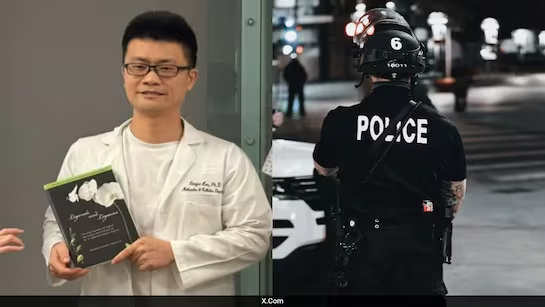
A Chinese doctor, Dr. Yunhai Li, was arrested at Houston airport for allegedly stealing US-funded breast cancer research and attempting to take it to China. Authorities found sensitive data on his laptop, and he faces felony charges for theft of trade secrets. The case highlights rising concerns about medical research espionage, the protection of taxpayer-funded discoveries, and the balance between open science and national security.
A Chinese medical researcher has been arrested in Texas for allegedly stealing sensitive, US-funded breast cancer research and attempting to transfer it to China. The case has sparked fresh concerns about intellectual property theft in the biomedical field, highlighting the growing intersection of science, national security, and geopolitics.
What happened at Houston airport?
On July 9, federal agents at Houston’s George Bush Intercontinental Airport stopped 35-year-old Dr. Yunhai Li, a former researcher at MD Anderson Cancer Center. According to the Harris County District Attorney’s Office, a routine inspection uncovered sensitive medical data stored on his laptop.
Li had recently resigned from MD Anderson on July 1 and, investigators allege, transferred nearly completed research on a breast cancer vaccine to a server in China before attempting to leave the country.
He was charged with:
- Theft of Trade Secrets (third-degree felony), punishable by two to ten years in prison and fines up to $10,000.
- Tampering with a Government Record (class A misdemeanor), which could result in up to a year in jail and fines up to $4,000.
Authorities also noted that federal charges may follow, given the international dimensions of the case.
What research was allegedly stolen?
Li was part of a team working on a vaccine aimed at preventing the spread of breast cancer—a project funded in part by US taxpayer dollars. While details remain sealed due to the investigation, officials confirmed the data contained proprietary and unpublished research that could accelerate similar efforts overseas.
District Attorney Sean Terre emphasized the public impact of the crime:
“Houston is proudly home to some of the most groundbreaking medical institutions in the world—publicly funded centers that are saving lives each day thanks to their innovative research. We have zero tolerance for any attempts that hurt our nation and our community’s ability to pioneer critical medical breakthroughs.”
Why does this matter?
Economic and scientific stakes
Medical research is a multi-billion-dollar industry, with breakthroughs in cancer treatments often protected under strict intellectual property laws. A single clinical discovery—like a viable vaccine against breast cancer—could not only save lives but also define the global leadership of medical institutions for decades.
Losing such research to espionage has consequences:
- Delayed scientific progress in the US, as data integrity and authenticity come into question.
- Financial losses for institutions and taxpayers funding the research.
- Geopolitical leverage for countries that gain access to advanced medical discoveries without investing in the same research infrastructure.
A broader pattern of research theft
This case echoes previous incidents involving intellectual property theft in US academic and medical institutions. The Department of Justice has, over the past decade, investigated several cases of researchers accused of transferring sensitive biomedical data to China.
For example:
- In 2019, the DOJ charged researchers linked to Harvard University for concealing ties to Chinese institutions.
- Multiple incidents at MD Anderson itself have drawn scrutiny, with the FBI previously warning about systematic efforts to target US-funded research.
These cases underscore an ongoing tension between the open, collaborative nature of science and the need to safeguard sensitive, high-value discoveries.
How does the US protect medical research?
To counter threats of espionage, federal agencies and research institutions have ramped up protective measures. These include:
- Strict vetting of foreign research collaborations.
- Enhanced cybersecurity protocols for research data.
- Disclosure requirements for funding sources and institutional ties.
- Closer coordination between the FBI and universities to flag suspicious activities.
Yet, striking the right balance remains difficult. Overly aggressive restrictions risk stifling international cooperation that fuels scientific progress, while lax oversight leaves room for exploitation.
What comes next for Dr. Li?
Li is currently facing state charges, but federal prosecutors may step in, especially if investigators determine that the stolen data was part of a coordinated effort to benefit foreign institutions. Conviction on federal espionage-related charges would carry far steeper penalties.
Legal experts suggest his case could test how far the US justice system is willing to go in treating biomedical data theft as a matter of national security, rather than simply academic misconduct.
The bigger picture: science, security, and trust
The case of Dr. Yunhai Li is not just about one researcher, one dataset, or one institution. It illustrates a larger struggle unfolding at the intersection of:
- Medical innovation: with discoveries that could transform cancer treatment.
- Economic competition: where intellectual property defines global leadership.
- Geopolitical rivalry: especially between the US and China in high-stakes fields like biotechnology, AI, and quantum computing.
For US policymakers, the incident adds pressure to secure federally funded research while ensuring that the scientific community retains its openness and collaborative spirit. For the public, it raises a deeper question: How do we safeguard life-saving discoveries without shutting the doors on the global exchange of knowledge that makes them possible?