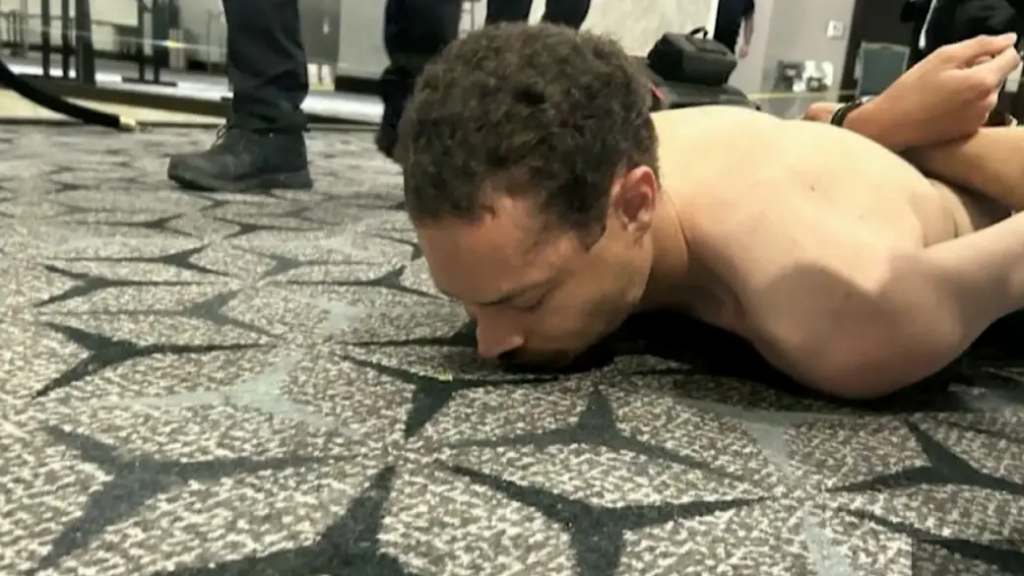
The phrase “DOJ bombshell” is rarely used lightly. But in the case of Cole Tomas Allen, federal prosecutors say the evidence paints a chilling picture: a multi-week plan, cross-country travel with weapons, and a targeted attempt on U.S. leadership at one of Washington’s most high-profile gatherings.
According to the U.S. Department of Justice, Allen’s alleged plot to assassinate Donald Trump at the White House Correspondents’ Dinner was not impulsive. It was deliberate, logistical, and dangerously close to success.
What does the DOJ bombshell reveal about the alleged plot?
The DOJ’s account lays out a timeline that reads less like chaos and more like choreography.
A three-week runway to violence
Prosecutors say Allen spent nearly three weeks preparing the attack. That planning phase included:
- Booking a hotel stay well in advance
- Mapping travel across multiple states
- Transporting firearms discreetly
- Identifying a high-value political target
Court filings show he reserved a three-night stay at the Washington Hilton on April 6, nearly three weeks before the April 25 event. That detail matters. It suggests premeditation, not reaction.
Why advance booking matters
Booking the event venue ahead of time gave Allen:
- Physical proximity to the target
- Time to familiarize himself with the layout
- Reduced suspicion compared to last-minute arrangements
For investigators, this strengthens the case for intent. It transforms the narrative from “armed individual” to “planned assassination attempt.”
How did the suspect travel and prepare?
The logistics of the journey are as striking as the alleged motive.
Cross-country movement with weapons
Allen reportedly traveled by train from California to Chicago, then onward to Washington, D.C.
Authorities say he carried:
- A 12-gauge pump-action shotgun
- A Rock Island Armory 1911 .38 caliber pistol
The ability to transport weapons across such a distance without interception raises questions about gaps in detection systems across transit networks.
A system under scrutiny
While airlines have strict security protocols, rail travel in the U.S. operates under a different framework.
This context helps readers understand how such a journey may have been possible.
What happened at the Washington Hilton?
The alleged attack unfolded in seconds but carries long-term implications.
The moment of confrontation
At approximately 8:40 PM on April 25, Allen approached a security checkpoint leading to the ballroom where the dinner was being held.
According to prosecutors:
- He ran through a magnetometer
- He was carrying a shotgun
- He opened fire, striking a Secret Service officer
The officer, protected by a ballistic vest, survived. That single piece of equipment likely prevented a fatality and possibly a broader catastrophe.
Rapid response prevented escalation
The injured officer returned fire, striking Allen and bringing the situation under control within moments.
This response highlights:
- The importance of layered security
- The role of trained personnel in high-risk events
- How seconds can determine outcomes in threat scenarios
Was Donald Trump the intended target?
Federal officials are unequivocal.
Kash Patel stated that evidence was “abundantly clear” that Allen intended to kill the president and target senior officials.
What supports that conclusion?
Investigators are reportedly relying on:
- Travel patterns aligned with the event timeline
- Choice of location and access point
- Weapons consistent with mass-casualty intent
Darren Cox described the incident as a “brazen attempt” targeting multiple high-ranking figures.
Why intent matters legally
In federal prosecutions, intent is everything.
Proving intent elevates charges from weapons violations to:
- Attempted assassination
- Terror-related offenses
- Crimes against federal officials
This distinction significantly impacts sentencing and the broader legal framing of the case.
Why this DOJ bombshell matters beyond one incident
This is not just about one suspect or one event. It exposes structural vulnerabilities.
Security at high-profile political events
The White House Correspondents’ Dinner is considered a “hardened” event with:
- Secret Service presence
- Controlled access points
- Pre-screened attendees
Yet, the suspect allegedly breached the outer layer. That raises questions about:
- Screening effectiveness
- Crowd flow management
- Insider vs. outsider threat models
The evolving nature of threats
Modern threat actors don’t always fit predictable profiles.
This case underscores:
- The shift toward lone actors with long planning windows
- The blending of mobility and anonymity
- The difficulty of detecting intent before action
What happens next in the legal process?
The case now moves into the federal court system, where prosecutors must translate evidence into conviction.
Likely legal steps
- Formal charges and indictment
- Evidence disclosure and pre-trial motions
- Trial or plea negotiations
What prosecutors must prove
To secure a conviction, the DOJ will need to demonstrate:
- Premeditation
- Target identification
- Capability and intent to execute the attack
Each element must be supported by documented evidence, not inference.
What questions remain unanswered?
Even with detailed filings, gaps remain.
Key unknowns
- What motivated Allen? Ideology, grievance, or personal factors?
- Did he act entirely alone?
- Were there warning signs missed by authorities or acquaintances?
These questions will likely shape both the trial narrative and future policy responses.
TL;DR
- The DOJ says Cole Tomas Allen planned the alleged attack for nearly three weeks
- He booked the event hotel in advance and traveled cross-country with weapons
- He allegedly opened fire at a security checkpoint at the Washington Hilton
- A Secret Service officer survived due to a ballistic vest and returned fire
- Authorities say Donald Trump was the intended target
- The case highlights security gaps and the growing complexity of lone-actor threats