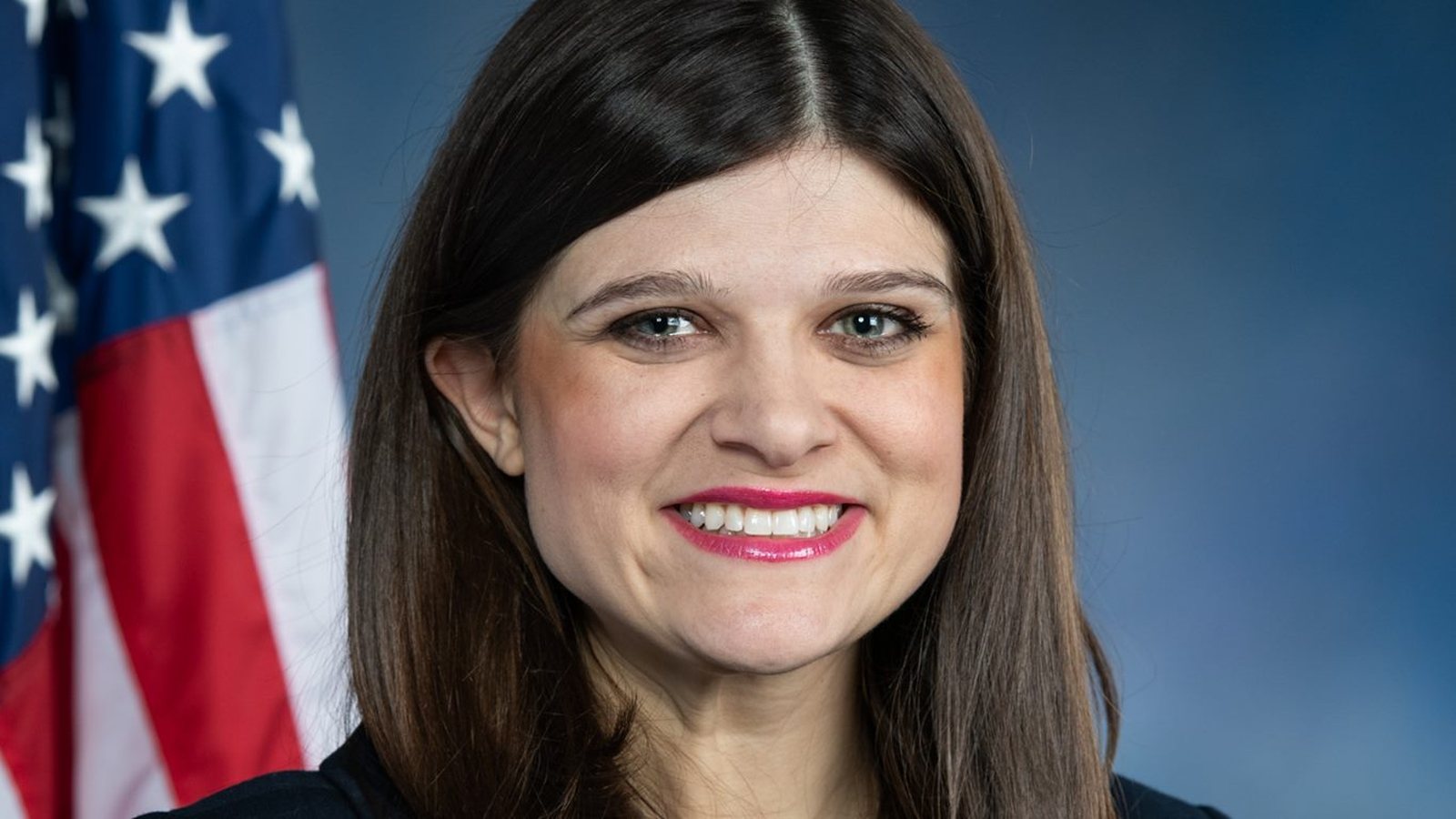
Democratic Rep. Haley Stevens endorsed Republican Mike Rogers for Michigan’s open Senate seat on Sunday, November 1. The move came less than 48 hours before Election Day. Three months earlier, she narrowly lost the Democratic primary to Abdul El-Sayed.
Haley Stevens announced the decision after attending a church service with Rogers in Detroit. In a video posted to social media, she said El-Sayed had told her “I was no longer welcome in his campaign and that I should stay away, and he’s right,” NPR reported. “And that’s why I am endorsing Mike Rogers for the U.S. Senate today.”
The seat belongs to retiring Democrat Gary Peters, and Michigan could help decide which party controls the Senate. So a sitting Democrat crossing the aisle on the final weekend drew instant fury from her party. Republicans, including President Trump, praised her.
A feud over Israel that broke into the open
The split had been building for weeks. According to NPR, Stevens had said El-Sayed was not doing enough to reassure Jewish and Black voters who backed her.
Part of the dispute traces to Hasan Piker, a streamer El-Sayed campaigned with during the primary. In her endorsement, Stevens said she does “not stand with Hasan Piker.” In August, Piker implied that Jews’ support for Israel puts them at risk of personal violence. El-Sayed then said Piker did not speak for the campaign but stopped short of disavowing him, NPR reported.
Tensions sharpened late last week. Stevens’s fiancé, civil rights attorney Jason Turkish, said he planned to vote for Rogers. Stevens told CNN she would still vote for El-Sayed, Bridge Michigan reported with the Associated Press.
She then urged El-Sayed to denounce an ad by Cenk Uygur of The Young Turks. It blamed Israel for high grocery prices. NPR quoted her objection: the ad said Michiganders’ money “has to be set aside ‘for killing Palestinians.'” El-Sayed’s campaign said it had nothing to do with the ad and criticized its contents on Saturday.
The unity rally she was asked to skip
Democrats had planned a show of unity for Sunday. Stevens was set to appear at a Detroit church event with El-Sayed and Rep. Jim Clyburn of South Carolina.
On Friday, Stevens set a condition for attending, NPR reported. El-Sayed had to reject the ad and apologize for rhetoric she found inflammatory. Rep. Debbie Dingell, who helped organize the event, then asked Stevens to stay away, and Stevens agreed.
“I’m the one who pulled it because it had become way too distracting,” Dingell told the AP, per Bridge. “The bishop was getting upset, because this is a real church service.”
The event went ahead without Stevens. She appeared instead at Perfecting Church in Detroit with Rogers. “We have to stand with country. We can’t stand with hate,” she said afterward, according to Bridge.
She also framed the endorsement as a single break with her party. “I’m not turning my back on Democrats. It is this one vote,” she told reporters, according to the AP account published by PBS NewsHour.
How both parties responded
Democratic leaders reacted within hours. Senate Minority Leader Chuck Schumer called it a “despicable betrayal,” NPR reported.
Michigan Democratic Party Chair Curtis Hertel said her decision “shows that she has abandoned everything she claims to care about.” He later wrote that Stevens “is not a current member of the Michigan Democratic Party, nor will she be in the future.” By Sunday night, her photo was gone from the party’s list of elected officials online, Bridge reported.
Her own office began to empty out. Chief of staff Justin German resigned and said “many” other employees had done the same, according to Bridge. He urged Michiganders to vote for El-Sayed.
Republicans welcomed her. Rogers called the endorsement “courage in politics.” He told reporters, “Candidly, I’m glad I’m not running against Haley Stevens today.”
Former Republican Party chair Ronna McDaniel praised her for “putting our state before party.” Trump wrote on social media that Stevens said “what few people are willing to say,” Bridge reported.
El-Sayed said he doesn’t think about Stevens. “None of this matters,” he told reporters outside a “Souls to the Polls” event, according to NPR. He pointed instead to families worried about school conditions, food and medical bills.
Why a losing candidate’s endorsement could still count
Stevens is not on the November ballot. She gave up her House seat in Michigan’s 11th District to run for the Senate, Ballotpedia reported in April 2025.
What she brings is a slice of the Democratic coalition. El-Sayed won the August 4 primary 48.5% to 47.5%, per AP figures cited by Bloomberg Government. Stevens carried Wayne County, which includes Detroit, and neighboring Oakland County, with support from Black and Jewish voters, Bridge reported.
Those are the same places where Democrats need big turnout on Tuesday. The primary was decided by about a point. Even a small share of her voters following her could matter.
The polls show a close race. A Marist poll taken October 15 to 18 had El-Sayed at 50% and Rogers at 48% among likely voters. That is within the margin of error.
A Glengariff Group survey taken October 19 to 22 put El-Sayed ahead 51.4% to 45.1%, WDIV reported. Both were completed before the endorsement.
Timing limits the effect, too. Early voting began October 24, and more than 1.8 million Michiganders had already voted by Friday, according to the AP. Those ballots were cast before Stevens made her choice.
Democrats are leaning on in-person turnout this year. Mail ballot requests have fallen as Democrats switch to voting in person, as we reported. That puts more weight on the final weekend.
A rift that outlasts Tuesday
If elected, El-Sayed would be the country’s first Muslim senator, according to Bridge. Rogers, a former congressman, ran unopposed for the Republican nomination.
The fight also exposes a wider Democratic split over Israel and how candidates talk about it. NPR noted that this divide is likely to outlast Election Day. The party will face it again in the 2028 presidential primaries.
Counting is a flashpoint elsewhere, as our report on the Justice Department’s ballot lawsuits in Alaska and California shows. In Michigan, Tuesday night’s returns from Wayne and Oakland counties will show whether Stevens’s old strongholds moved toward Rogers.